

How Jacob Luna is steering synthetic trust in healthcare with Purdue University’s online Doctor of Technology program
When you consider the trajectory of your career ambitions as a child to where you are today, would those two frequencies align? Most people end up changing their professional goals somewhere along their life journeys, but for one Doctor of Technology (DTech) student, his career north star has been clear since day one.
In all aspects of life, Jacob Luna has been driven by two questions founded in his fascination with technology: “What’s the cause of a problem and how do I understand it better?” After his youngest daughter was diagnosed with a rare illness that only real-world data could treat, he was compelled to protect the integrity of transparent data with the help of Purdue University’s online DTech program.
Throughout his education and career, Luna has sought to better understand how information security and synthetic data (data that is not directly created by a human and has instead been artificially generated) intersect. With such an aptitude for understanding the way complex concepts work today, it’s difficult to imagine his upbringing in Washington State being the tech-free landscape that it was. It wasn’t until his father brought home one of the very first Windows PCs that Luna got his first exposure to technology.
“I remember at a very young age, maybe six or so, I took our family computer apart for no other reason other than wanting to understand how it worked,” said Luna. “What’s even more remarkable is that I managed to get it back together and working again.”
After high school, he began to consider a career as a pilot, keeping his interest in technology more of a passion. But a chance meeting early in his college years would soon rekindle his drive to pursue technology.
Become a technological trail blazer with Purdue’s online Doctor of Technology
“My father had asked me to meet with a mentor in the IT space,” said Luna. “I had always had a way with technology, and he pitched IT as a great way to help fund my aeronautics schooling. But that shift into IT and system administration was eye-opening because I was able to observe more about the business, leading me further down that path.”
Luna began working as an IT administrator within healthcare before transitioning into high-risk security environments later in his career, all while pursuing an education. With multiple credentials in business and technology across a wide ecosystem of schools, Luna was no stranger to studying while working full time. While he knew he had always wanted to pursue a doctorate, his decision to enroll at Purdue was not about simply earning another degree. He needed a stronger ‘why.’
A risk assessment gives way to determination
While searching for that purpose, he recalled a study by one of his professors from a prior educational institute. That study noted that ‘by the year 2030, synthetic data is going to outpace real data.’ While that prospect alone set Luna into motion with his statement of purpose, it wasn’t until 2025 when Luna’s youngest daughter was diagnosed with an extremely rare degenerative illness that the reality of that data set in. This illness, if not acted on, was guaranteed to be fatal.
The family faced two paths: one more conservative approach, which carried short-term side effects damaging to their non-verbal infant, which, if ineffective, would result in a high-risk surgical intervention, or jumping straight to the high-risk option. The high-risk option required multiple surgical interventions, yet real-world data showed it offered a possibly better outcome. The higher-risk option carried a high risk of permanent nerve damage resulting in paralysis, along with other complications of lengthy surgical intervention for very young pediatric patients. Reviewing the real data, the choice for Luna was ‘impossible’.
Informed by real-world data, counseled by faith-based leaders and supported by his communities, he and his family were able to make the decision that would ultimately save his daughter’s life.
Luna and his family spent a year in and out of the children’s hospital, specialists’ offices and PT/OT sessions, but today, his daughter is safely recovering. It was through those moments of vulnerability that he spent with his daughter that he realized his purpose to pursue a doctorate: the data that contributed to saving his daughter’s life.
“There are families just like ours that will have to make life-impacting decisions based on data,” said Luna. “Having gone through a decision as impossible as that was, I don’t ever want another family to be in that position and wondering if the data they’re reading should be trusted.”
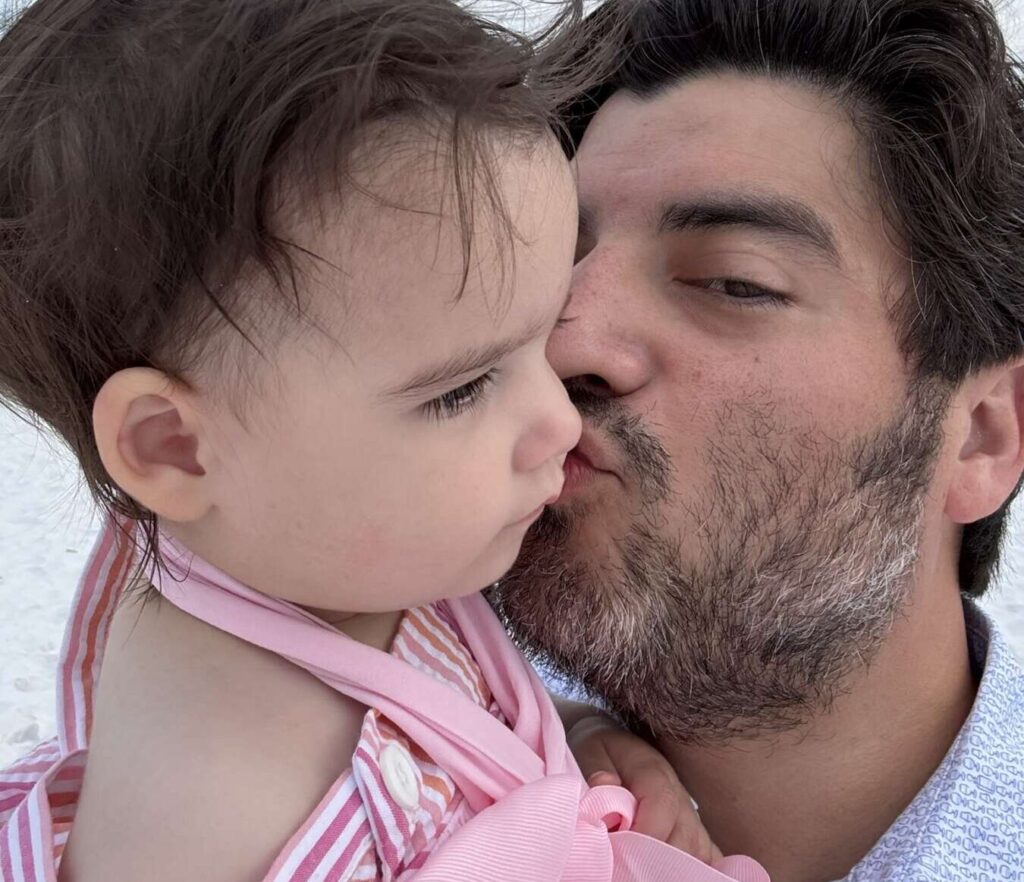
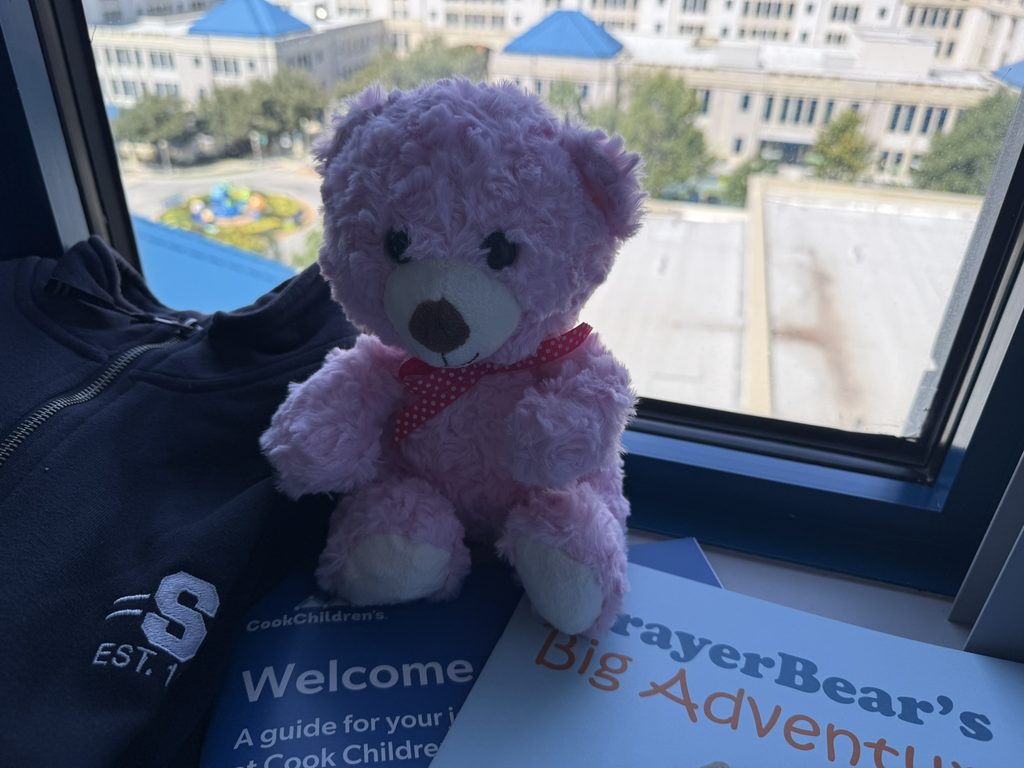

Prior to beginning his work at Purdue University, Luna knew Purdue would be the perfect place to pursue his passion right after applying, thanks to the support of the university’s enrollment counselors:
“I think I was in my enrollment counsellor’s inbox for two years before I joined the program,” said Luna. “Even though it was a difficult time, they knew my situation and purpose. I wasn’t just a number to Purdue. These are people who genuinely want students to be a part of these programs because they stand by them. They want to provide you with an education that’s not only quality but respects your time as a person.”
A commitment to defending today and securing tomorrow
As a first-year DTech student, Luna’s research is being built on the foundation of synthetic trust to better understand how synthetic data will be used in clinical decision-making. Prior to beginning his research, Luna worked with Jung Han, visiting assistant professor in the Department of Technology Leadership and Innovation at the Purdue Polytechnic Institute; Stephen Elliot, associate dean of academic programs in the Purdue Polytechnic Institute; and Kevin Rose, associate professor of organizational leadership and human resource development in the Department of Technology Leadership and Innovation at Purdue University’s Polytechnic Institute, to help tailor his research gap.
What I’ve come to realize during this program is how empathetic the professors’ approach is. How they engage and heralded tectonic shifts in my research methodology affirms I’m in the right place to do the work I’m seeking to do.
Jacob luna
Purdue University Doctor of Technology student
As such, his experience in the program is focused on the broader contributions to the pre-existing body of work that improves decision-making for pediatric patients with rare infectious diseases. Throughout his studies, he works closely with experts in the field to help him navigate the evolving landscape of information security, notably where frontier AI models have changed the way professionals look at incident and vulnerability management.
“I will be satisfied if I can help provide data transparency to clinicians, physician researchers, and most importantly parents and caregivers,” said Luna. “I want to help those unfamiliar better understand the difference between synthetic and real data as Generative AI continues to proliferate into the healthcare industry.”
Today, Jacob is a leader at ADP, guiding a team of global security consultants tasked with forging trust and confidence in their security program. Much like his college mentor, Luna serves as board chair of the Dallas-Fort Worth chapter of NextGen Cyber Talent, as well as a board member for Fort Worth-based nonprofit Lena Pope, working to equip underprivileged and underserved talent with a strong foundation through counseling, education and behavior interventions. He also serves as an adjunct instructor at a local community college and as an advisory committee member for the Information Technology — Cybersecurity Program, a National Security Agency Center of Academic Excellence program — all while pursuing his doctorate.
For professionals balancing their careers and personal commitments, Luna shares a piece of honest advice on returning to higher education: follow your north star.
“One thing I try to impart upon folks that want to pursue higher education is that you’ve got to love what you’re doing,” said Luna. “You’ve got to have a really strong desire to get your purpose across the line. It’s going to challenge you, and you’ve got to be willing to pay that bill — not the financial bill, but the commitment bill. But if you love what you’re doing, it’s going to be worth it.”
To learn more about Purdue’s online Doctor of Technology program, visit the program’s webpage.