
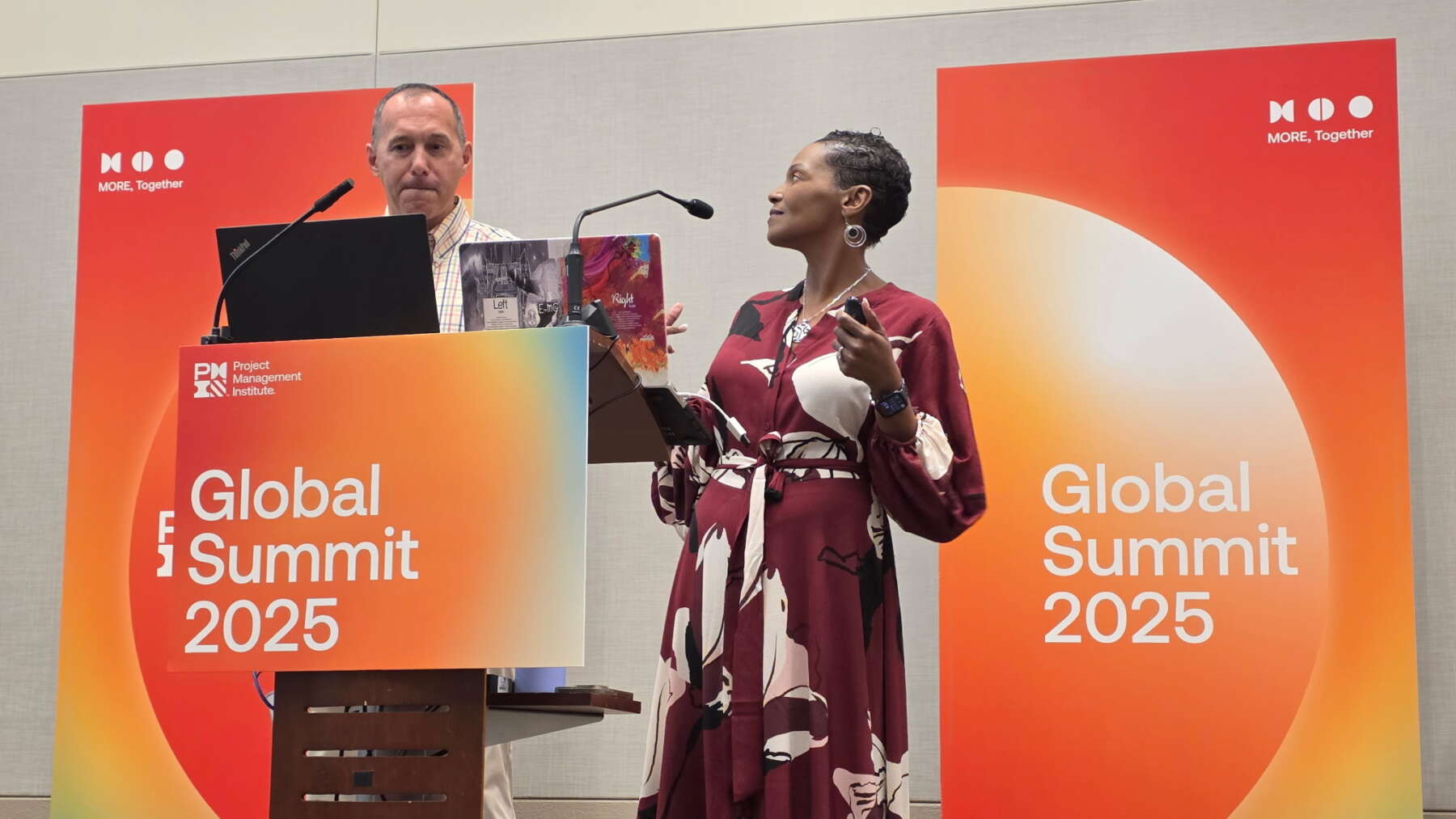
Beyond Authority: Katrenia Reed Hughes on the importance of influence, leadership and human connection in project management
Katrenia Reed Hughes, associate professor of organizational leadership at Purdue University in Indianapolis, knows there is not just one path to becoming an effective leader. Her professional journey has included work in psychology, organizational development, corporate learning and higher education. Across those experiences, Reed Hughes has remained interested in how people build trust, navigate influence and lead effectively across different environments.
“It feels like sometimes other people have a book that we don’t have that teaches them how to become a super professional,” Reed Hughes said. “A large part of my work is helping people realize that leadership is not reserved for the loudest voice in the room or the person with the highest title.”
While Reed Hughes knows the secret of good leadership doesn’t come from the pages of a book, her teaching, research and industry engagement have helped shape her perspective on how professionals build influence and lead effectively. In project management especially, success often depends on the ability to “lead without authority.”
The “authority myth” and the power of influence
Recently, Reed Hughes served as a featured speaker at the Project Management Institute’s PMXPO 2026 global virtual event, which brings together thousands of project management professionals from around the world. Her presentation, “The Authority Myth: Why Influence Matters More in Project Management,” explored how effective leadership is often driven more by communication, trust and relationship-building than by formal authority alone.
Reed Hughes’ research into this subject was influenced by her experiences working with young professionals. During audience engagement surrounding the session, many early-career professionals reported that what they needed the most at work was influence without authority — that is, the ability to move projects forward and lead conversations, even with relatively little organizational power.
“This is particularly relevant for young people,” Reed Hughes said. “They’re saying that they’re brand new in their organization, and they don’t have a lot of influence or power yet, but they’re still accountable for the results.”
Learn to lead in project management with Purdue University’s online Project Management Graduate Certificate
For young professionals, accountability without authority can feel overwhelming. That’s why Reed Hughes wanted to give her audience concrete, practical tips for being strong relationship-builders and communicators. While formal authority can be elusive, relationship-building is accessible to everyone, and it can be achieved through small, daily actions.
“It’s about how you show up every day,” Reed Hughes said. “Staying curious, asking thoughtful questions, listening actively and building strong relationships before you need them — that’s the biggest thing.”
The response to Reed Hughes’ presentation was immediate and impactful. Her session reached over 20,000 project management professionals, generated nearly 80,000 impressions and received over 700 online questions. The message was clear: leading without authority was not a niche issue; rather, it was a concept that could help multitudes of young professionals lead more effectively.
Relationship-building: Cultivating influence
Throughout her organizational experience, Reed Hughes observed that great project managers didn’t all possess the same personality or the same traits. Some were highly relational and extroverted, while others led more quietly. But, most of them had one thing in common: they were good at managing relationships, not people.
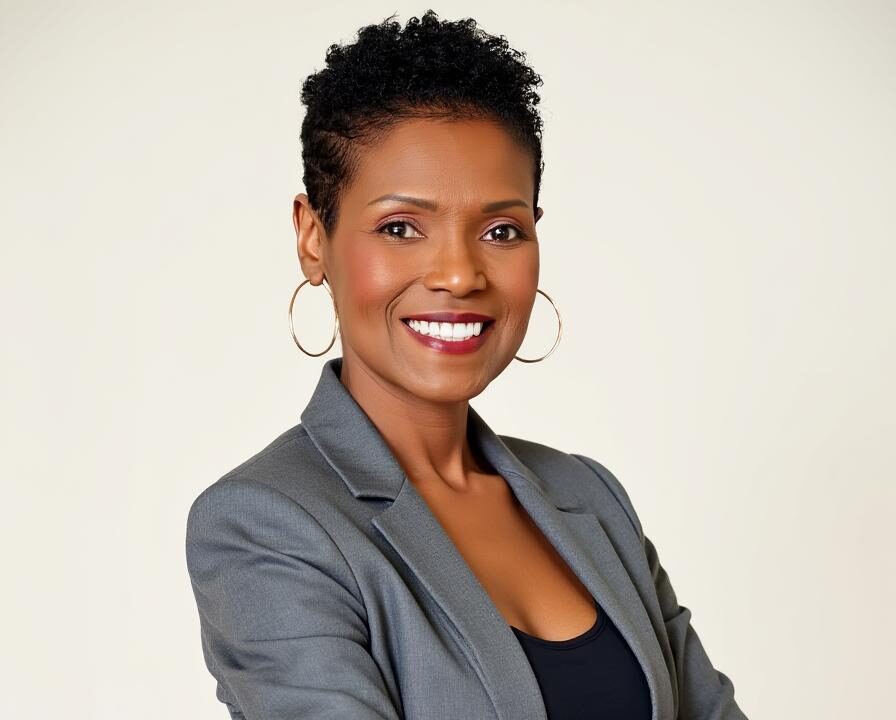
When someone is really good at managing a relationship, it makes you want to take time out of your day to talk with them and work with them.
Katrenia Reed hughes
Associate Professor of Organizational Leadership
According to Reed Hughes, strong professional relationships are rooted in trust, consistency and reliability. In turn, trust leads to influence. People who are trusted are also influential, and it’s influence, not authority, that most project managers need.
“Authority does play a role when decisions need to be made,” Reed Hughes said. “But authority is not enough to lead well. Influence plays a bigger role.”
From Reed Hughes’ perspective, everyone has the capacity to be a relationship builder, regardless of personality style or natural strengths.
“There is no style of person that makes a good leader,” Reed Hughes said. “You have to use the strengths that you have and surround yourself with people who are good at the things you aren’t good at.”
“I’m not an extrovert,” Reed Hughes continued. “I have to push myself to be in a social situation. But I use that energy when I need it. It’s not something I need to have all the time.”
Future Directions: Centering relationships in an AI-mediated world
Currently, Reed Hughes is thinking a lot about the role artificial intelligence (AI) plays in project management and how this new technology is changing the project management landscape. Rather than running from this change, Reed Hughes has embraced AI as a collaborator. In her view, AI foregrounds how important it is to continue building strong relationships, both in human relationships and in how professionals collaborate with AI tools.
“AI has changed what is possible in project management,” Reed Hughes said. “But AI cannot build a relationship. It cannot read a room. It cannot navigate the political dynamics of a stakeholder meeting or earn the trust of a skeptical team member.”
That’s where project managers come in — they can excel at the interpersonal skills that cannot be automated. And, because AI is so adept at completing technical tasks, it can give project managers more time to focus on relationship-building.

In a world where AI is handling more of the technical work, those human skills are becoming more valuable, not less.
katrenia reed Hughes
Associate Professor of Organizational Leadership
“In a world where AI is handling more of the technical work, those human skills are becoming more valuable, not less,” Reed Hughes said.
Becoming a strong relationship builder can also help professionals get more out of their interactions with AI. Reed Hughes has noticed that professionals get more value from AI when they approach it intentionally by providing context, asking thoughtful questions and engaging critically with the outputs they receive.
“The way you prompt, the context you provide and the intentionality behind the interaction all shape the outcome,” Reed Hughes said. “In that sense, it is not entirely different from working with people.”
Lead with Purdue University
Purdue University’s Project Management Graduate Certificate makes it easier for professionals to lead without authority by teaching leadership theories, PM principles, strategic project planning, and how to leverage influence to get the job done. Offered online in a flexible format, the program is aligned with the Project Management Institute’s Body of Knowledge® (PMBOK®) and prepares students for the Project Management Professional (PMP®) exam.
For learners interested in applying graduate credit to a master’s degree, all credits from the Project Management Graduate Certificate can be transferred to the online Master of Science in Organizational Leadership and Supervision.
Learn more by visiting the Project Management Graduate Certificate’s webpage.