
Purdue launches new online veterinary clinical pathology program in partnership with Laboratory Retrievers, LLC
Companion animals — dogs and cats — are excellent communicators, expressing a nuanced system of nonverbal cues and vocalizations that can help their human owners understand what they want and need. When it comes to feeling unwell, however, dogs and cats have an instinctual tendency to hide feelings of pain and weakness, making it difficult for humans to understand important warning signs.
That’s where Laboratory Retrievers, LLC, comes in. This team of experts seeks to promote better care for companion animals by advancing veterinary clinical pathology, the science of using blood and other tissue samples to objectively diagnose disease. One of the Laboratory Retrievers’ main objectives is to give more opportunities for veterinary professionals to practice clinical pathology skills, and, through a new partnership with Purdue University, the group seeks to do just that.
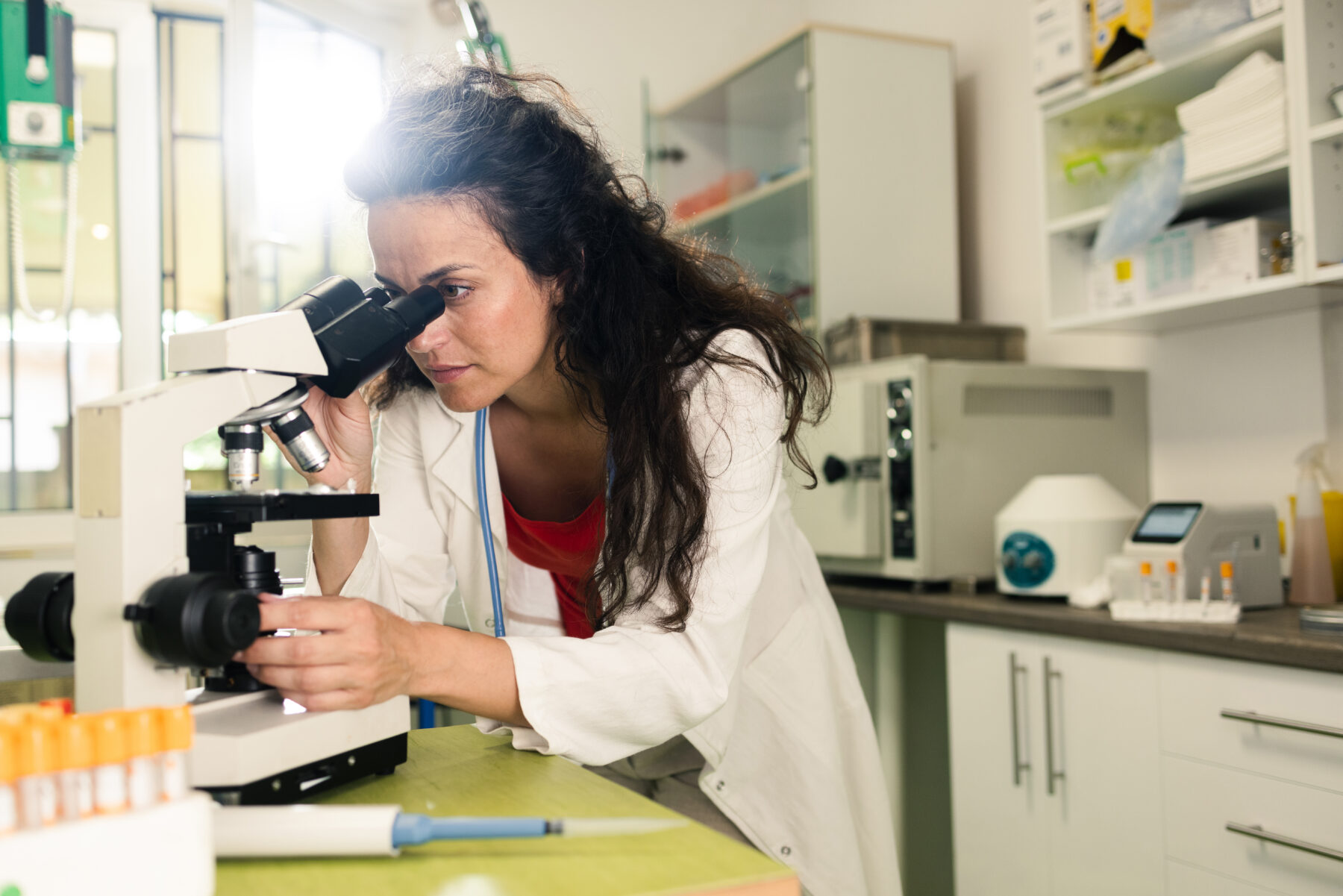
Purdue’s new Laboratory Retrievers continuing education program is an online learning experience for veterinary professionals, created by Laboratory Retrievers, LLC, and Purdue University’s College of Veterinary Medicine. The program uses interactive modules and case studies to prepare veterinary professionals to confidently interpret CBC (Complete Blood Count) data, analyze cytograms and recognize blood cell morphologic abnormalities in minutes.
In 2026’s course, participants work through a series of four self-paced modules, with the option to attend weekly one-hour live sessions led by the program’s expert instructors. The program is delivered 100% online, and participants can even use their computers as virtual microscopes for blood cell morphologic assessments. The program’s goal is to provide maximum flexibility while maintaining a highly interactive educational experience through a combination of online case studies and interactive sessions
Learn more about veterinary clinical pathology
The Laboratory Retrievers, LLC, are Al Rebar, DVM, PhD, DACVP; Dennis DeNicola, DVM, PhD, DACVP; and Fred Metzger, DVM, MRCVS, DABVP. Together, they have over 100 years of experience in veterinary clinical pathology and clinical practice. Rebar is a diplomate of the American College of Veterinary Pathologists, and he served as a veterinary clinical pathology faculty member in the Department of Comparative Pathobiology (CP) at Purdue for 40 years. He also served as a department head and dean of the Veterinary College. DeNicola is also a diplomate of the American College of Veterinary Pathologists, and he was a Purdue faculty member in CP for 21 years. During his tenure, he directed the teaching hospital clinical pathology laboratory and was the primary clinical pathology educator for veterinary students, interns and residents. Metzger is a diplomate of the American Board of Veterinary Practitioners, adjunct professor at The Pennsylvania State University and founder of the VCA Metzger Animal Hospital in State College, Pennsylvania. All three of the Laboratory Retrievers have been recognized as distinguished alumni of Purdue’s College of Veterinary Medicine.



According to Rebar, the Laboratory Retriever’s partnership developed as a result of many years of academic mentorship and professional collaboration. Rebar taught both DeNicola and Metzger, and he also mentored DeNicola during his PhD training and influenced Metzger when he was in the early stages of his career. Rebar, DeNicola and Metzger have continued to collaborate extensively. After decades of working together, the three experts have a professional and academic chemistry that is hard to recreate.
“Our shared history has resulted in a rare teaching chemistry that makes complex clinical pathology approachable, engaging and unintimidating for learners at every stage,” said Rebar.
All three retrievers, as they like to call themselves, also bring their own expertise to the partnership. Rebar takes a systematic approach to laboratory data, emphasizing discipline and question-driven inquiry. DeNicola has deep expertise in laboratory methodology, quality control, instrumentation and interpretation. Metzger focuses on practical insights and clinical relevance.
Considering that the retrievers have a long-time connection to Purdue, this new partnership with the College of Veterinary Medicine is also about giving back. Purdue helped the retrievers start their careers and make an impact on veterinary medicine. Now, the group wants to give back to the College of Veterinary Medicine and enhance its clinical pathology legacy by donating a portion of profits from the course back to the college.
The first module for Purdue’s online Laboratory Retrievers continuing education program starts in March of 2026. Students can sign up for modules individually or register for all four at a discounted rate. Learn more on the program’s webpage.