

What is professional development? How small courses can create big career opportunities
If there’s anything definitive about today’s job market, it’s change. New digital technologies like artificial intelligence (AI) are changing the organizational landscape, forcing professionals and organizations to rethink what skills matter most. In this new zeitgeist, it’s more important than ever that professionals can embrace change and stay ahead of the curve by continually upskilling.
According to the McKinsey Institute, 80% of tech leaders say that training and professional development is the most effective way to reduce employee skills gaps and prepare workforces for the future. Investing in professional development benefits companies and employees in equal measure. According to Gallup, companies that invest in professional development report 11% higher profitability and are twice as likely to retain employees than companies that don’t invest. From an employee’s perspective, taking professional development courses can lead to higher engagement at work, and research from Healthcare shows that professional development is positively associated with job satisfaction.
What is professional development?
A professional development course, credential or training is an educational opportunity designed for professionals who are already in the workforce. These trainings can focus on making professionals better qualified for their current roles, preparing them for new roles or improving their skillsets generally.
Explore professional development opportunities at Purdue University
Unlike traditional academic programs, professional development courses do not result in a degree upon completion. Instead, learners leave professional development courses with a new skill or competency. In many cases, the course will result in a badge or credential that learners can add to their resumes or LinkedIn profiles to show prospective employers they’ve completed targeted, skills-based coursework.
Why does professional development matter?
In the current, technology-enabled job market, the skills it takes to successfully complete a job change over time. Ten years ago, most professionals didn’t need to know anything about machine learning or AI to be competitive in the workforce. Now, professionals in a wide range of industries are expected to have working knowledge of AI and other digital communication technologies to get jobs or become eligible for promotions. To build that working knowledge, professionals need to continually learn about new technologies and where their industries are headed.
“I took the prompt engineering courses because I was interested in learning more than the surface level of AI,” said Ryan Olson, a senior front end web developer who took Purdue University’s AI Microcredential courses to upskill. “Everyone was using it as they would any search engine, but there was more it could do. I wanted to know how far and how useful it was.”
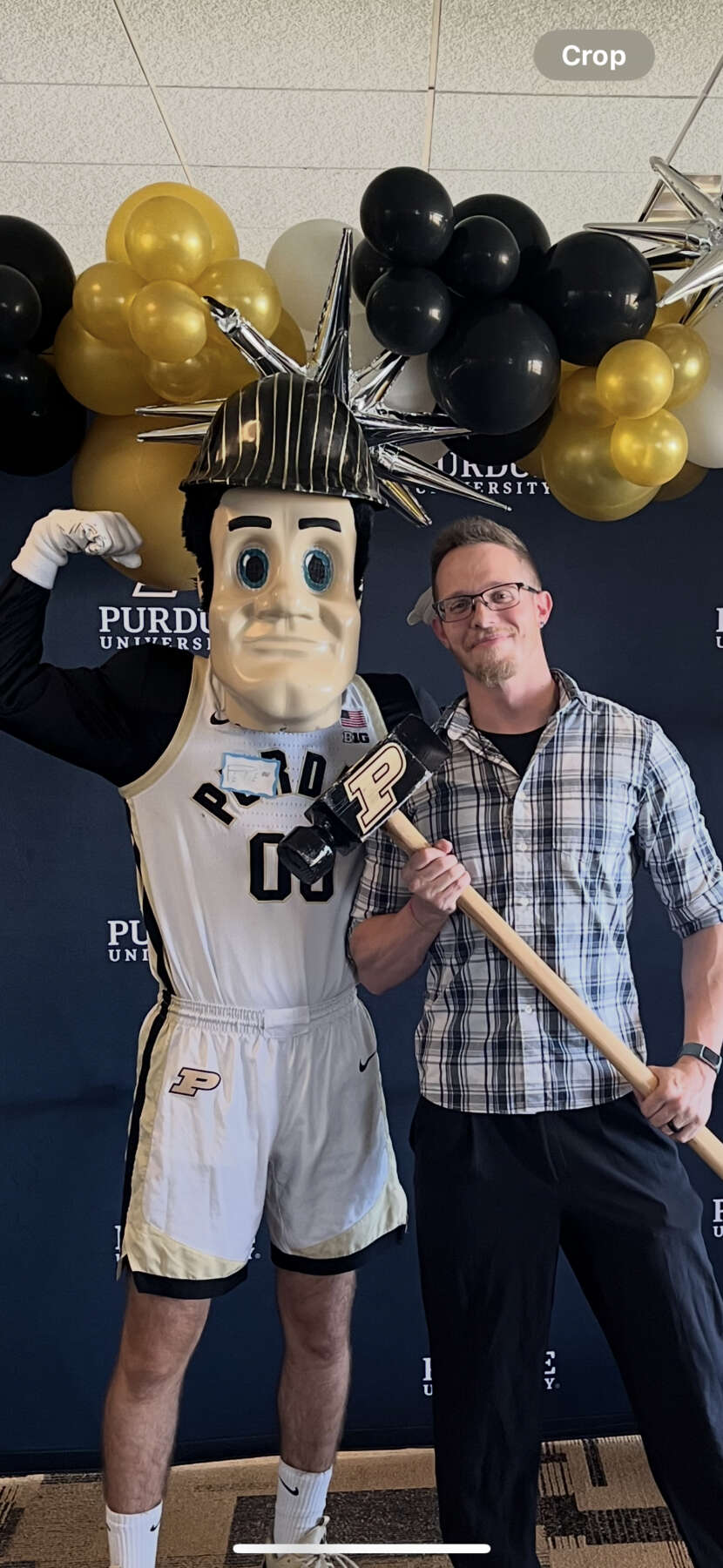
The course taught me to how to feed and speak to the AI almost as if it was a cohort or a peer, and we were working on a project together
Ryan Olson
Senior Front End Web Developer
Professionals may also need to learn new skills when they change job roles, shift to a different industry or take on more responsibilities in their current roles. Professional development courses and trainings are designed with professional learners in mind and, increasingly, many are offered online in a flexible, streamlined format.
What are the benefits of professional development?
Completing professional development courses in in-demand areas like AI, data science can lead to career stability, more job opportunities and a stronger professional network. Learn more:
Professional development can help learners “future-proof” their careers by teaching them new skills
In the age of AI, many professionals worry about getting left behind. In truth, AI is not the first technology to cause disruptions in the workforce. Technologies like email and smartphones also caused a paradigm shift and emphasized the need for a workforce with new skills. The point? In order to thrive in the job market, professionals have always needed to update their skills, change and adapt to new technologies.
Investing in continued education can help professionals stay ahead of the curve and prepare themselves for what’s next, even in a job market defined by uncertainty. There are many professional development courses and training that cover in-demand skills like AI, data analysis and automation. By familiarizing themselves with these topics, learners can demystify new technologies and prepare themselves for the changes hitting their industries, while also ensuring they remain a valuable asset.
“Just as an individual in today’s world, you’re exposed to data constantly, and what I realize now is that a lot of that data is presented in a confusing or deceptive way, and understanding what it’s really saying is difficult,” said Matthew Kerkhoff, a video producer who took Purdue’s Data Storytelling professional development course to boost his data skills.
In the classes, you learn how to present data effectively, but you also learn how to evaluate data and understand it better. Being able to increase your data literacy…those are skills that anyone can use.
Matthew Kerkhoff
Video Producer
Professional development can enhance a learner’s hiring potential and job prospects
According to Fortune, 71% of employers would hire a professional who has AI experience over a professional who does not. In fact, many employers look more at a prospective employee’s skillset than they do other qualifications when making hiring decisions. In the modern skills economy, what a professional can do matters as much as where they went to school or what their degree is in.
Jason Pigg, a seed production associated who completed Purdue’s Agronomy E-Learning Academy, said that taking professional development courses helped him build critical technology skills and increase his career opportunities. His courses also resulted in a Crop Professional Certificate — a credential that shows his company what he can do.
“Some of [what I learned in the course] was just sharpening up on things I already knew and refreshers,” said Pigg. “Since I’m already in [an agronomy] role, I’m utilizing some of that information to make sure I’m doing things correctly and to make sure I have the latest information.”

The e-learning program is a great way for professionals to continue to stay sharp and learn from the best in the field.
Jason Pigg
Seed Production Associate
For Pigg, taking professional development courses meant becoming more qualified for a management position. In the agriculture field, where technology is constantly shifting, investing in upskilling is necessary for advancement.
Professional development can lead to more networking opportunities
According to LinkedIn, 85% of jobs are the result of networking. Through seeking out professional development opportunities, learners can get connected with other professionals in similar roles and industries. Plus, many professional development courses are taught by industry-experienced practitioners who bring their own networks and experiences into the classroom.
“[Our program] puts you shoulder to shoulder with some of the top industry professionals in the business,” said Christian Rogers, an instructor in Purdue’s Themed Entertainment Design Certificate, a series of online professional development courses that teach students how to break into the competitive themed entertainment industry.
“Weekly meetings with the professors and interviews with local themed attraction designers provided invaluable information as well as an inside perspective on the industry,” said Rachel Carter, a graduate of the program who got to work directly with practitioners and expert instructors during her courses.
Invest in professional development with Purdue University
Around the world, Purdue University is synonymous with quality, rigor and affordability. Our online professional development courses are no different — offering learners an industry-focused, recognized and convenient way to build in-demand skills.
Purdue has dozens of professional development courses to choose from, including ABET-accredited AI microcredentials, Business Essentials courses, programs in data analytics and digital business, and industry-specific classes in semiconductors. Some of Purdue’s graduate program even offer pathways for learners to transfer professional development courses into credits for a graduate program, such as Purdue’s noncredit-to-credit pathway for the online Master of Science in Organizational Leadership and Supervision.
Visit Purdue’s online program website to explore all professional development opportunities and learn more.