Westwood Lecture Series fall lineup announced
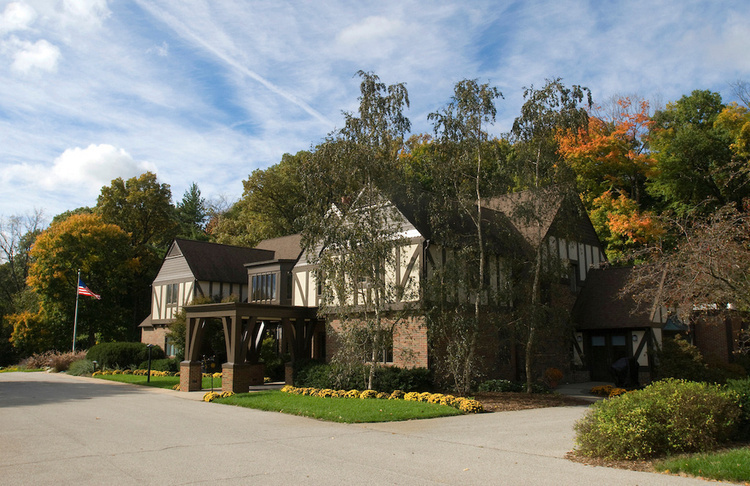
Westwood residence (Purdue University photo)
Purdue President Mung Chiang has announced the fall lineup for the Westwood Lecture Series, which provides an opportunity for university faculty to interact with colleagues on scholarly work from a wide range of fields.
The Westwood Lecture Series is a program aimed at enhancing the intellectual vibrancy of the West Lafayette campus.
Each lecture will take place from 4:30-5:30 p.m. at Westwood, the Purdue president’s residence.
Space is limited to the first 50 faculty who register online, unless otherwise noted. Registration will be available beginning two weeks prior to each lecture. Look for details in Purdue Today.
Fall 2025 Westwood Lecture Series events

Sept. 12: Roger C. Wiens, professor of earth, atmospheric, and planetary sciences in the College of Science, will present his groundbreaking exploration of Mars and its habitability with instruments that he developed for two generations of NASA rovers.
Wiens is a leading planetary scientist with extensive expertise in Mars exploration and spectroscopy instrument development. He is a senior fellow at Los Alamos National Laboratory and leads the international SuperCam team on NASA’s Perseverance rover, which deployed in Jezero Crater in 2021. In this lecture, Wiens will highlight his work with both ChemCam and SuperCam on NASA’s rover, innovative instruments that have revolutionized the study of Mars’ surface.
This event also celebrates Wiens’ 2024 Herbert Newby McCoy Award, Purdue’s highest honor for contributions to the natural sciences, recognizing his groundbreaking contributions to planetary science and instrumental role in advancing NASA’s Mars exploration efforts.

Sept. 30: Matthew Waninger, managing director of the Crossroads Pediatric Device Consortium, will share insights into the consortium, which is dedicated to accelerating the development, approval and availability of innovative medical devices for children.
Waninger is a three-time Purdue graduate with a PhD in electrical engineering and more than 25 years of experience in medical device research and product development. He previously held leadership roles with Cook Medical and founded the new MED Institute, a contract research organization to support medical device entrepreneurs. In this lecture, Waninger will discuss his role and the work of the Crossroads Pediatric Device Consortium — a partnership among Purdue’s Weldon School of Biomedical Engineering, the Department of Pediatrics at Indiana University School of Medicine, and industry partners Cook Medical and OrthoPediatrics.
This lecture will be open exclusively to members of the Purdue University Retirees Association and reflects Purdue’s commitment to offering meaningful educational and social opportunities for retirees who remain closely connected to the university.

Oct. 21: Cathie Aime, professor of botany and plant pathology in the College of Agriculture, will discuss a One Health approach to studying fungal biodiversity and disease.
Aime leads a pioneering research lab that uses a One Health framework to study the systematics, biodiversity and evolution of fungi to better understand their broader impact on ecosystems and health. She also directs the Purdue University Herbaria, which examines and hosts some of the world’s most important rust fungal specimens, lichens and nonvascular plants. In this lecture, Aime will discuss her innovative work sequencing the coffee leaf rust genome to aid in disease resistance efforts.

Nov. 11: Michelle Thompson, associate professor of earth, atmospheric, and planetary sciences in the College of Science, will present findings from the analysis of asteroid Bennu samples returned by NASA’s OSIRIS-REx mission.
Thompson’s research focuses on the alteration of airless planetary surfaces caused by exposure to the space environment, a process known as space weathering. She served as a science team member of JAXA’s Hayabusa2 mission, is deputy lead of the Contact Pad Working Group on NASA’s OSIRIS-REx mission and is the principal investigator of the PRECISE NASA Planetary Science Enabling Facility. In this lecture, Thompson will highlight her team’s analysis of asteroid Bennu samples to better understand the evolution of airless planetary bodies in our solar system.
Faculty-Staff News
In Print: ‘Teaching the Arthurian Tradition’
September 24, 2026

Undergraduate Research Expo accepting research talk and poster abstract submissions
September 24, 2026

Road to Retirement continues through Friday – there’s still time to participate
September 24, 2026

John Martinson Honors College seeks faculty applicants for 2027-28 teaching opportunities
September 24, 2026