Category: Seasonal Information

Return of the Asparagus!

Asparagus is one of the first vegetables to peer through the cool soil in spring, and what a welcome sight! The heavy snows this past winter provided excellent moisture and insulation for the plants, so the crop is off to a great start. Precisely how to harvest is the subject of some debate among asparagus gardeners. Some prefer to harvest only the very young spear tips. This ensures that only the tender portion of the…Read more about Return of the Asparagus![Read More]

Hydrangea Popular, Yet Confusing

Try to have a discussion about hydrangea among your gardening friends, and you’re likely to start a rather lively debate. What type to grow, when to prune, why doesn’t it flower and how can I change the flower color from pink to blue are among the most frequently asked hydrangea questions. There are many different species of hydrangea, not to mention cultivars of those species. So, these questions are a bit difficult to answer, unless…Read more about Hydrangea Popular, Yet Confusing[Read More]


New Vegetable Varieties 2010

What better way to melt the snow than a cozy read through garden catalogs with all their promise of mouth-watering produce for the coming season! Here’s a look at just a few of the new vegetable seed offerings for 2010. Try a few alongside your old standby favorites so that you can compare performance in your garden. Basil ‘Amethyst Improved’ is a dark purple basil with large, thick, curled-down leaves similar to the classic variety…Read more about New Vegetable Varieties 2010[Read More]


Baptisia australis Perennial of the Year for 2010

If someone asked me to design my idea of the “perfect” perennial, it would come pretty darned close to being this year’s selection for Perennial of the Year. Gorgeous purple-blue flowers, widely adaptable, native, well-behaved, relatively pest-free, and long-lived garden plant all describe Baptisia australis, which was named the Perennial Plant of 2010 by the Perennial Plant Association (PPA). Native to much of the Eastern United States, B. australis is a legume and can fix…Read more about Baptisia australis Perennial of the Year for 2010[Read More]


Hakonechloa Grass Named 2009 Perennial Plant of the Year

The Perennial Plant Association (PPA) has announced that Hakonechloa macra ‘Aureola’ its 2009 Perennial Plant of the Year. Also known as Japanese Forest Grass, this graceful, well-behaved grass provides color and texture nearly year round. Unlike most other ornamental grasses, Hakonechloa gives its best performance in partial shade, forming a dense, cascading clump about 1-2 feet tall and up to 3 feet in spread. Its compact, weeping habit is perfect for softening the edge of…Read more about Hakonechloa Grass Named 2009 Perennial Plant of the Year[Read More]


Spice Up Your Holidays

Some of the most popular spices used this time of year are harvested from various parts of exotic tropical plants, lending a special flavor to our holiday recipes. True cinnamon comes from the bark of the semi-tropical evergreen tree Cinnamomum zeylanicum, native to Ceylon and Southwest India and hardy in the U.S. Gulf states. For the best quality cinnamon, the bark is cut in strips from two-year-old branches, just as the new foliage leafs out…Read more about Spice Up Your Holidays[Read More]


Onions Don’t Need To Be a Crying Shame

An onion by any other name still may not smell sweet to most of us. Onions are notorious for causing malodorous breath and a trickle of tears. In both cases, sulfur-containing compounds are the culprits. According to legend, Western cowboys referred to onions as “skunk eggs,” thanks to the sulfur compound’s ability to permeate the lungs. The sulfur is contained within a volatile oil that enters the lungs and then is exhaled with the breath….Read more about Onions Don’t Need To Be a Crying Shame[Read More]


Storing Leftover Garden Seed

If you didn’t use up all of the garden seed you bought this year, much of it can be stored for use in next year’s garden, depending on the plant species. Seeds of some plants, such as corn, parsley, onion, viola (pansies), verbena, phlox and salvia, are not very long lived, lasting only 1 or 2 years at best. Other seeds, including beans, carrots lettuce, peas, radishes, snapdragon, cosmos, sweet William and zinnia will remain…Read more about Storing Leftover Garden Seed[Read More]


Storing Leftover Garden Seed

If you didn’t use up all of the garden seed you bought this year, much of it can be stored for use in next year’s garden, depending on the plant species. Seeds of some plants, such as corn, parsley, onion, viola (pansies), verbena, phlox and salvia, are not very long lived, lasting only 1 or 2 years at best. Other seeds, including beans, carrots lettuce, peas, radishes, snapdragon, cosmos, sweet William and zinnia will remain…Read more about Storing Leftover Garden Seed[Read More]


All-American Selections New Flowers and Vegetables for 2010

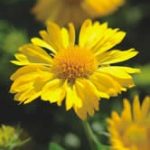
Four exciting new flowers have been chosen as All-America Selections (AAS) 2010, based on superior performance in test gardens throughout the country. Gaillardia ‘Mesa Yellow’ is the first hybrid blanket flower bred for compact growth habit and prolific flowering. The early, 3-inch daisy-like flowers are excellent for cutting but will attract butterflies if left on the plants. The plants form a neat mound, reaching up to 2 feet in full sun, perfect for containers and…Read more about All-American Selections New Flowers and Vegetables for 2010[Read More]


Page last modified: October 18, 2016

Indiana Yard and Garden – Purdue Consumer Horticulture - Horticulture & Landscape Architecture, 625 Agriculture Mall, West Lafayette, IN 47907

© 2026 Purdue UniversityAn equal access/equal opportunity universityCopyright ComplaintsMaintained by Indiana Yard and Garden – Purdue Consumer Horticulture

If you have trouble accessing this page because of a disability, please contact Indiana Yard and Garden – Purdue Consumer Horticulture at homehort@purdue.eduAccessibility Resources