Designing Mākau Through Hawaiian Language and Biomimicry
Tuesday, January 27th, 2026
Lesson Overview:
Students explore invasive species and ecosystem challenges in Hawaiʻi by using Hawaiian language as the primary lens for learning.
Through Hawaiian vocabulary, cultural knowledge, and engineering design, students design a mākau (Hawaiian fishing lure) as a response to invasive fish, connecting STEM problem-solving with language, place, and responsibility to the ocean.
Lesson Scenario:
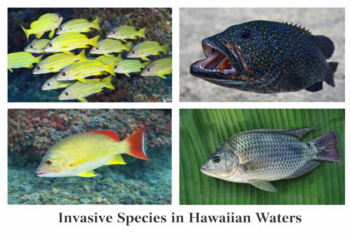
In Hawaiian coastal and freshwater environments, invasive fish species threaten native ecosystems and traditional ways of interacting with the ocean.
To understand this problem from a Hawaiian perspective, students use Hawaiian language to learn about native and invasive species, fishing practices, moon cycles, and ecological relationships.
Students then apply this understanding to design a mākau (fishing lure) that can be used during a Mauka-to-Makai field experience to help address invasive species while honoring cultural values and sustainable practices.
Lesson or Unit Objectives:
Students will be able to:
-
- Use Hawaiian language to describe native (iʻa maoli) and invasive (iʻa ʻōpala) species
- Understand invasive species as an ecological and cultural issue in Hawaiʻi
- Learn traditional and contemporary Hawaiian fishing concepts and practices
- Apply engineering design and biomimicry to create a fishing lure (mākau)
- Use CAD and 3D printing as tools to realize design ideas
- Test and reflect on their designs during field-based fishing experiences
- Articulate their kuleana (responsibility) to care for the ocean and ʻāina
Age Level or Subject:
-
- Grade 8-12, Hawaiian Language I & II, Integrated STEM, Engineering Design, Place-Based
Lesson Plan Download
Kauwila Lure Lesson Edited on 1_5_2025 LURE HI TRAILS 7 E Unit Plan