Registration open for Sept. 12 Westwood Lecture on advancing Mars exploration
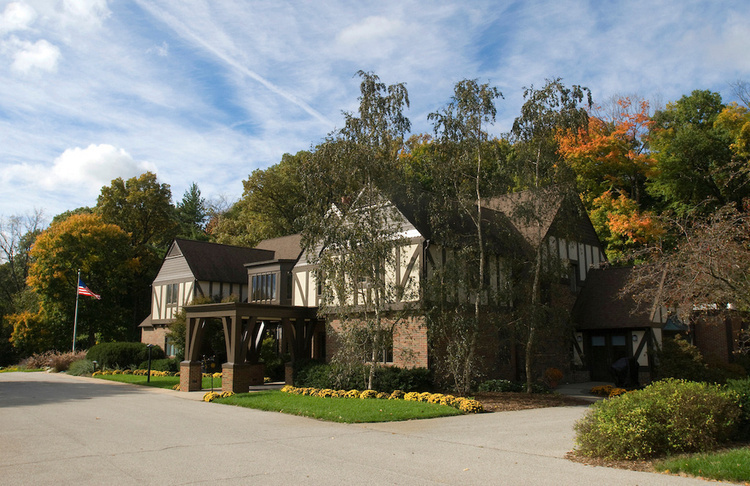
Westwood residence (Purdue University photo)
Registration is open for faculty to attend the Westwood Lecture Series on Sept. 12.

Roger C. Wiens, professor of earth, atmospheric, and planetary sciences in the College of Science, will present his groundbreaking exploration of the Red Planet with instruments that he developed for two generations of NASA rovers from 4:30-5:30 p.m. at Westwood, the Purdue president’s residence.
The Westwood Lecture Series is an opportunity for Purdue faculty and staff members engaged in the research topic to interact with colleagues on scholarly work. The program is aimed at enhancing the intellectual vibrancy of the West Lafayette campus.
This event will also celebrate Wiens’ 2024 Herbert Newby McCoy Award, Purdue’s highest honor for contributions to the natural sciences, recognizing his groundbreaking contributions to planetary science and instrumental role in advancing NASA’s Mars exploration efforts.
Space is limited to the first 50 faculty who register online.
“Spectacular Failures and Brilliant Successes on the Path to Mars: How We’re Finding Potential Biosignatures There and Paving the Way for Astronauts”
Roger C. Wiens
Professor of Earth, Atmospheric, and Planetary Sciences
College of Science
Abstract: The path to Mars is fraught with challenges, not only a myriad of technical hurdles but also political ones. In this lecture, Wiens will share his successes and setbacks in developing instruments for two generations of Mars rovers, Curiosity and Perseverance, and the groundbreaking discoveries his teams have achieved with them. Specifically, he will highlight what scientists call “potential biosignatures” — features used to identify evidence of life in Earth’s early rock records — and their possible parallels on Mars. Finally, he will discuss how we are progressing toward the day when humans take their first steps on Martian soil.
Bio: Wiens is a leading planetary scientist with extensive expertise in Mars exploration and spectroscopy instrument development. He earned a Bachelor of Science in physics from Wheaton College and a PhD in physics from the University of Minnesota, where he wrote the first thesis on the composition of the Mars atmosphere measured in the laboratory, sourced from Martian meteorites. He served as a developer and flight payload lead of NASA’s Genesis cosmochemistry mission, the first robotic mission to return from deep space, and developed and led exploration with the ChemCam laser remote sensing instrument for NASA’s Curiosity rover, which landed 2012. He currently leads the SuperCam instrument team on NASA’s Perseverance rover, which deployed in Jezero Crater in 2021, and is a senior fellow of Los Alamos National Laboratory, where he developed these instruments before joining Purdue’s planetary science faculty in 2022.
Wiens was knighted by the French Ministry of Education for his collaboration with the French national space agency, for forging strong ties between the French and American scientific communities, and for inspiring many young, ambitious earthlings. He holds an honorary doctorate from the University of Toulouse and is the namesake of Asteroid 41795 WIENS.
Upcoming fall 2025 Westwood Lecture Series events

Sept. 30: Matthew Waninger, managing director of the Crossroads Pediatric Device Consortium, will share insights into the consortium, which is dedicated to accelerating the development, approval and availability of innovative medical devices for children.
Waninger is a three-time Purdue graduate with a PhD in electrical engineering and more than 25 years of experience in medical device research and product development. He previously held leadership roles with Cook Medical and founded the new MED Institute, a contract research organization that supports medical device entrepreneurs. In this lecture, Waninger will discuss his role and the work of the Crossroads Pediatric Device Consortium — a partnership among Purdue’s Weldon School of Biomedical Engineering, the Department of Pediatrics at Indiana University School of Medicine, and industry partners Cook Medical and OrthoPediatrics.
This lecture will be open exclusively to members of the Purdue University Retirees Association and reflects Purdue’s commitment to offering meaningful educational and social opportunities for retirees who remain closely connected to the university.

Oct. 21: Cathie Aime, professor of botany and plant pathology in the College of Agriculture, will discuss a One Health approach to studying fungal biodiversity and disease.
Aime leads a pioneering research lab that uses a One Health framework to study the systematics, biodiversity and evolution of fungi to better understand their broader impact on ecosystems and health. She also directs the Purdue University Herbaria, which examines and hosts some of the world’s most important rust fungal specimens, lichens and nonvascular plants. In this lecture, Aime will discuss her innovative work sequencing the coffee leaf rust genome to aid in disease resistance efforts.

Nov. 11: Michelle Thompson, associate professor of earth, atmospheric, and planetary sciences in the College of Science, will present findings from the analysis of asteroid Bennu samples returned by NASA’s OSIRIS-REx mission.
Thompson’s research focuses on the alteration of airless planetary surfaces caused by exposure to the space environment, a process known as space weathering. She served as a science team member of JAXA’s Hayabusa2 mission, is deputy lead of the Contact Pad Working Group on NASA’s OSIRIS-REx mission and is the principal investigator of the PRECISE NASA Planetary Science Enabling Facility. In this lecture, Thompson will highlight her team’s analysis of asteroid Bennu samples to better understand the evolution of airless planetary bodies in our solar system.
Faculty-Staff News
Research Starts Here: Sharing discoveries and exploring its impact
October 6, 2026
Explore benefits, wellness resources at Wednesday’s Your Path Wellness Fair
October 6, 2026

Purdue employees can save 50% on Boilermaker half-marathon, 5K through Friday
October 6, 2026
This week’s ‘Thumbs Up’ recipients
October 5, 2026