Autumn Gardening Stories


All-America Winners for 2004

If you’re looking for something new to add to next year’s garden, All-America Selections (AAS) has chosen five new flowers and three vegetables for 2004. These new cultivars have been judged superior in their class based on their performance in test gardens all over the country. Two new Celosia cultivars head this year’s list of winners. ‘Fresh Look Yellow’ is a low-maintenance, colorful addition to the bedding garden, sporting large, golden-yellow plumes that reach up…Read more about All-America Winners for 2004[Read More]

Compost is Recycling Naturally

Composting is a great way to recycle the plant debris in your garden, including both crops and weeds. It’s easy to do–nature does it on its own all the time. But with proper management, you can help nature move along a little faster, if needed.   Compost returns some nutrients back to the soil, but the main benefit is in the improved soil structure. Adding organic matter, such as compost, will increase soil aeration and…Read more about Compost is Recycling Naturally[Read More]


Evergreen Needles Don’t Last Forever

Evergreens provide green color all year long but that doesn’t mean that the individual needles live forever. Evergreens shed their older needles to make room for new growth, but what makes them evergreen is that they retain some foliage all year long instead of shedding all of the leaves at once. Evergreen needles have varying life spans, depending on the species. Arborvitae and pine needles live for 2 years while spruce needles live 3-10 years….Read more about Evergreen Needles Don’t Last Forever[Read More]

 Categories:

Putting the Garden To Bed

While gardeners may still have several more weeks to enjoy what’s left of the growing season, it will soon be time to put our gardens to bed for winter. Flowers and vegetables whose foliage has begun to brown and shrivel should generally be removed before winter. Removing the spent foliage is an excellent way to reduce the chance for fungi and insect pests to over winter. Herbaceous perennials should be cut back to just above…Read more about Putting the Garden To Bed[Read More]


Reflowering Poinsettias

If you saved last year’s poinsettia plant, and you want it to flower in time for the holidays, now is the time for action. Poinsettias need about 8 weeks of special handling to force them to re-bloom. Poinsettias are sensitive to photoperiod — the length of the day. Actually, it’s the number of hours of darkness that is most important. Poinsettias flower during short days, with long periods of darkness each night. In the home…Read more about Reflowering Poinsettias[Read More]


Late-Season Bloomers

Just when the colors of summer flowers are fading, late-blooming perennials are ready to take center stage. In addition to the usual fare of coneflowers, mums and ornamental grasses, many lesser-known characters are ready to perform. Agastache foeniculum, also known as Blue Giant Hyssop, packs 4-5 inch long dense spikes of bright blue flowers on 3 foot tall, upright plants. Butterflies and hummingbirds love this plant, as do bees. Japanese Anemone (Anemone x hybrida) offers…Read more about Late-Season Bloomers[Read More]


All America Winners for 2003

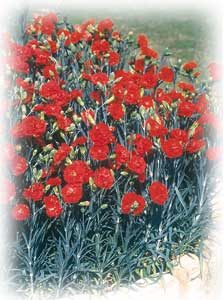
This year brought a bumper crop of new garden plant introductions. Ten ornamental garden plants and two garden vegetables have been awarded the prestigious honor of All America Selections (AAS) for 2003. These new cultivars have been judged as superior in their class based on their performance in test gardens all over the country.   Carnation ‘Can Can Scarlet’ was selected for its fragrance and versatility as a bedding plant, as well as a cut…Read more about All America Winners for 2003[Read More]


Where Chocolate Comes From

When you cuddle up with a steaming cup of hot cocoa during these chilly fall days, you might be pondering where chocolate comes from. Chocolate comes to us courtesy of the cacao plant (pronounced ca-cow), Theobroma cacao. The name Theobroma is an appropriate one as its translation is “food of the gods.” The plant is believed to have originated in the Amazon area of South America at least 4,000 years ago. The Aztecs and other…Read more about Where Chocolate Comes From[Read More]


Gardening Online at Purdue University

Gardeners will find a wealth of information at their fingertips from the Purdue University Cooperative Extension Service. And the best part is, thanks to the Internet, this information is available 24 hours a day, 7 days a week, including holidays! Several departments at Purdue have Web sites of interest to gardeners. Horticulture offers a broad range of information on the Consumer Horticulture Web site, including current news releases, Extension publications, upcoming events and a list…Read more about Gardening Online at Purdue University[Read More]


Pears Best Ripened Off the Tree

One advantage to growing your own fruit trees is that you can get tree-ripened fruit, a real rarity in the grocery store. But, unlike other fruits, pears will reach their best quality when ripened off the tree. When left to ripen on the tree, most cultivars of pears leave something to be desired in terms of texture and flavor. Tree-ripened pears often turn soft and brown at the core and have an excessively grainy texture….Read more about Pears Best Ripened Off the Tree[Read More]


Page last modified: December 2, 2016

Indiana Yard and Garden – Purdue Consumer Horticulture - Horticulture & Landscape Architecture, 625 Agriculture Mall, West Lafayette, IN 47907

© 2026 Purdue UniversityAn equal access/equal opportunity universityCopyright ComplaintsMaintained by Indiana Yard and Garden – Purdue Consumer Horticulture

If you have trouble accessing this page because of a disability, please contact Indiana Yard and Garden – Purdue Consumer Horticulture at homehort@purdue.eduAccessibility Resources