What if many of our health care issues could be solved not with drugs but with engineering? It just might be possible.“What IF we could engineer better health?” is the question to be explored by Miles O’Brien, science correspondent for “PBS NewsHour,” and Dr. Ali Rezai, director of the Rockefeller Neuroscience Institute at West Virginia University, during a Jan. 31 event. The event is a part of Purdue’s Ideas Festival. |
|
|
|
|
|
|
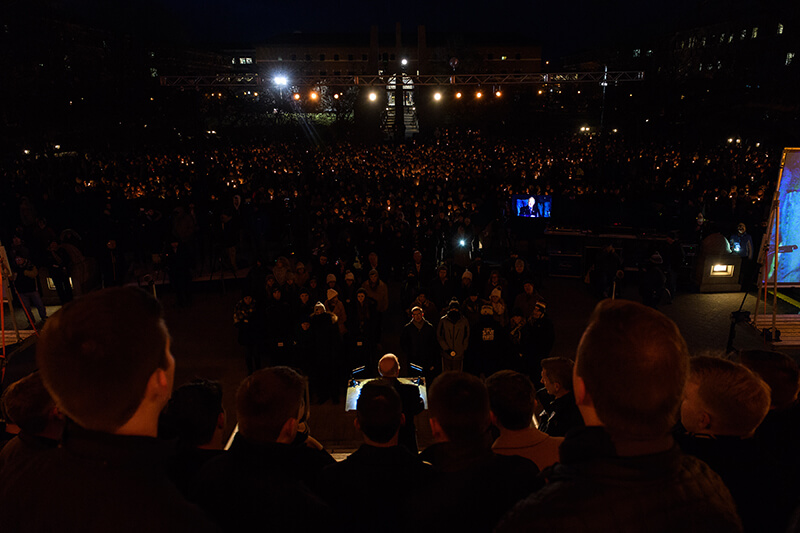
The Purdue community honored Tyler Trent, the alumnus and superfan whose spirit in the face of cancer captivated hearts around the nation, with a candlelight memorial on Wednesday (Jan. 9) in front of Hovde Hall. Trent inspired the Purdue family and millions more around the globe this year as he shared his journey battling a third bout of osteosarcoma, a rare bone cancer, and showed what it means to be a Boilermaker. The archived livestream of the memorial is available here, and President Mitch Daniels’ remarks are here. |
|
|
|
|
|
|
|
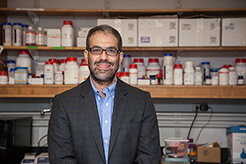
Bloodstream infections are notoriously deadly. Not because they’re untreatable, but because they work fast and are hard to diagnose. Mohamed Seleem, a professor of microbiology in the College of Veterinary Medicine, is trying to change this with a faster method for diagnosing these infections. |
|
|
|
|
|
|
|
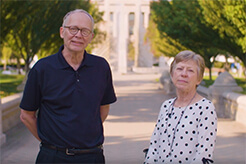
The Ideas Festival, the centerpiece of Purdue’s sesquicentennial celebration, is connecting world-renowned speakers and Purdue expertise in a conversation on the most critical problems and opportunities facing our world. Festival co-chairs Christine Ladisch and Mark Lundstrom discuss the year-long initiative on the Giant Leaps blog.
|
|
|
|
|
|
|
|
Here is a sampling of recent news reports about Purdue from media across the nation and the world. | |
|---|
|
|---|
|
|
|
|
|
| Purdue Today is the official Purdue University communication for faculty and staff |
|
|
|
|
| | | | | | | |