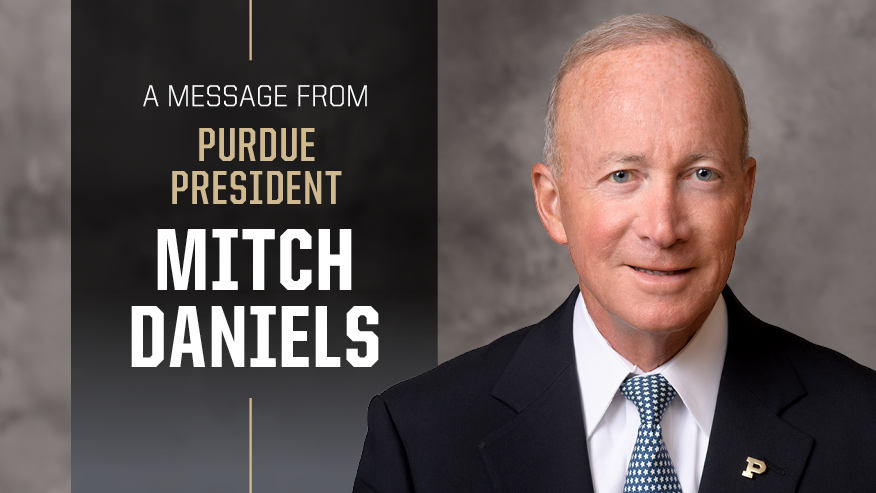
Today, Purdue President Emeritus Mitch Daniels begins serving as Purdue’s interim president. In a message to the Boilermaker community, Daniels reflects on the university’s momentum, the opportunities ahead and Purdue’s continued commitment to excellence during the search for its next president.
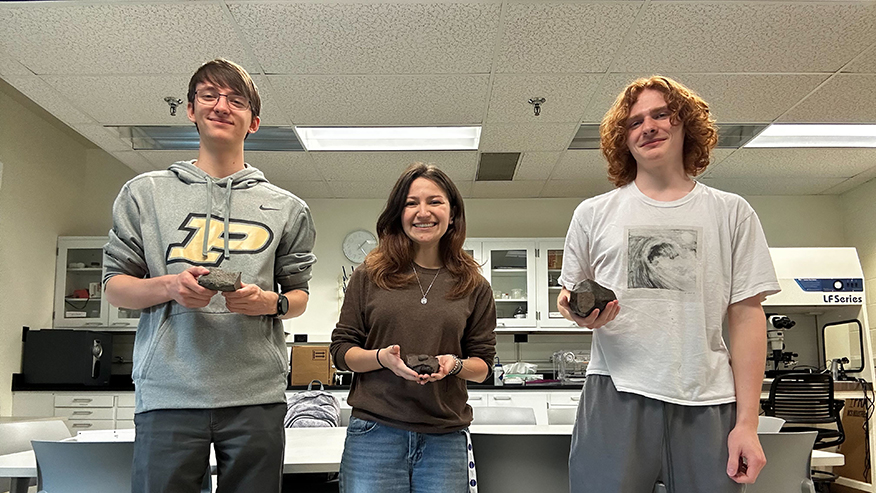
Three Purdue undergraduates in the Department of Earth, Atmospheric, and Planetary Sciences are getting hands-on experience with meteorite research through the Stahura Meteorite Undergraduate Research Fund. Trent Sample, Benjamin Kenworthy and Brianna Petruccelli spent the spring 2026 semester studying meteorite samples from a collection on loan to EAPS, using petrographic microscopy and scanning electron microscopy to classify samples and better understand materials from the earliest history of the solar system.
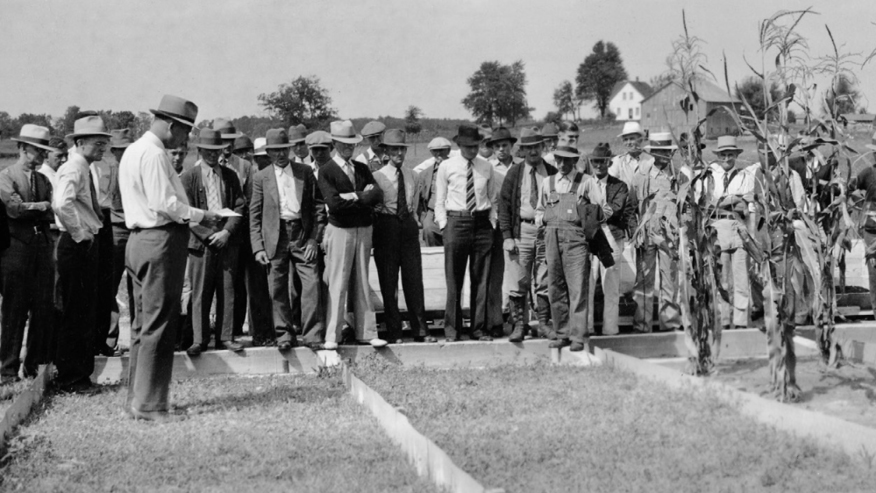
As America turns 250, Purdue’s College of Agriculture reflects on more than 150 years of listening first — to farmers, communities, students and the natural world — and responding with science-based answers that shape food, land and life. Purdue’s land-grant mission continues to guide research, teaching and outreach.