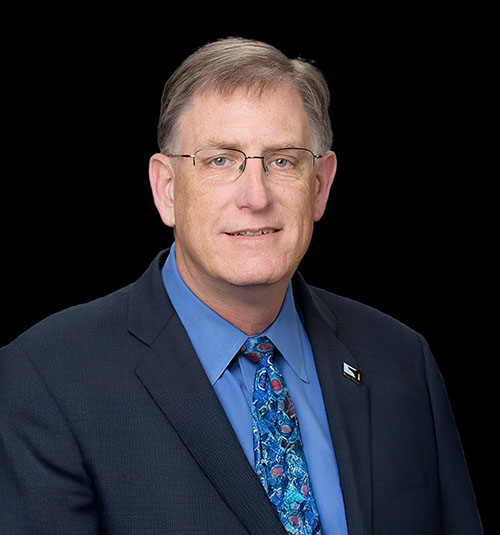
Dan Dumbacher, Chair
Professor of Engineering Practice, School of Aeronautics and Astronautics, Purdue University

Purdue University bestows the Neil Armstrong Space Prize upon those whose contributions to space in the preceding decade are deemed the most consequential for humanity. The prize is evaluated in three categories: discovery, innovation, and human achievement in space.
Nominations for the 2027 Neil Armstrong Space Prize will be accepted July 20, 2026 through November 1, 2026 at 5:00 p.m.
The inaugural Neil Armstrong Space Prize laureates were announced on April 21, 2026.
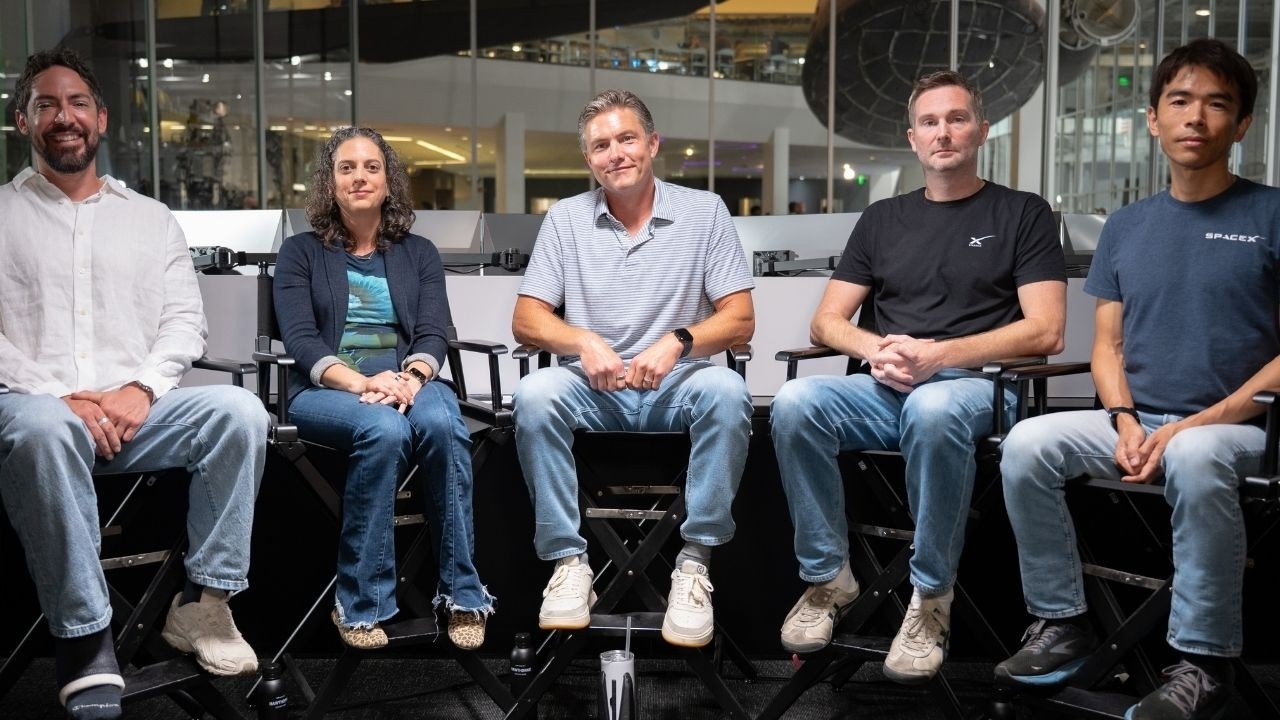
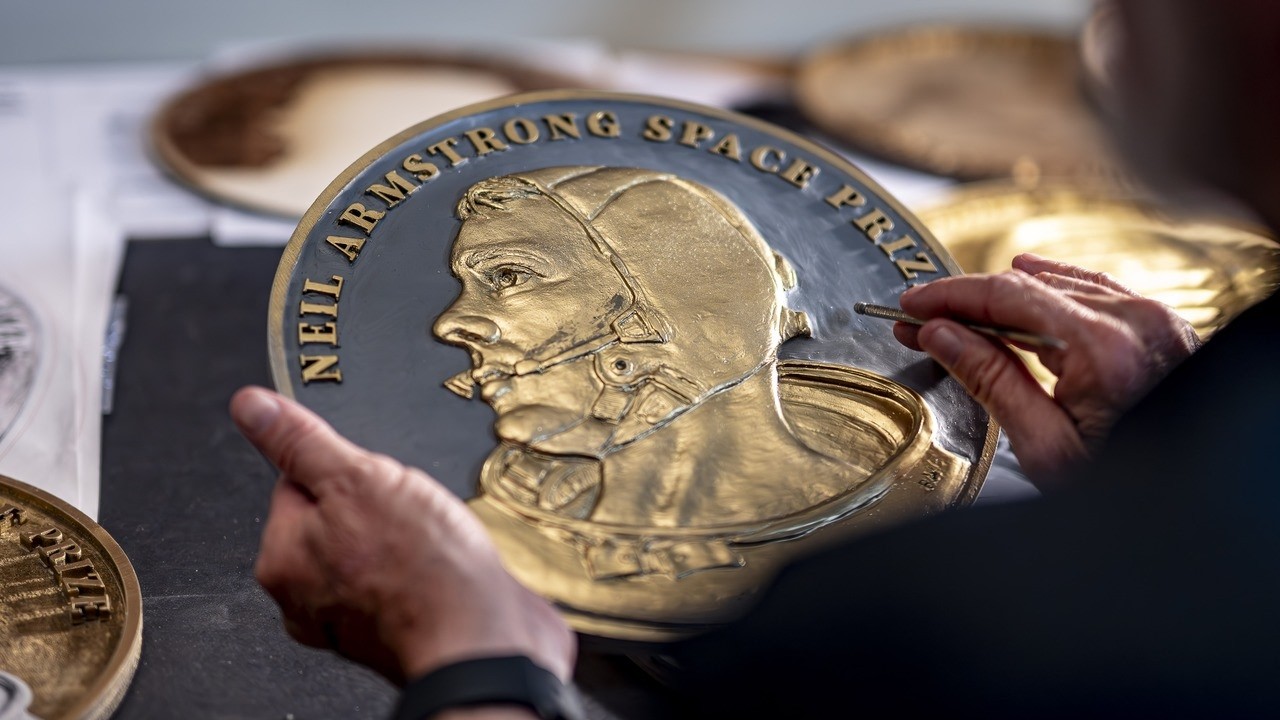
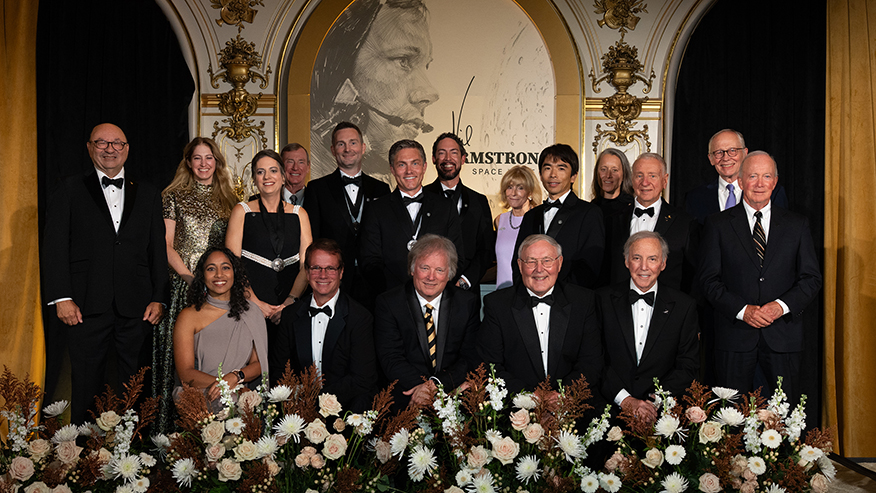

Purdue University’s Neil Armstrong Space Prize was awarded to the SpaceX Falcon 9 Booster Landing Team, recognizing their globally impactful work on the Falcon 9 reusable two-stage rocket system.
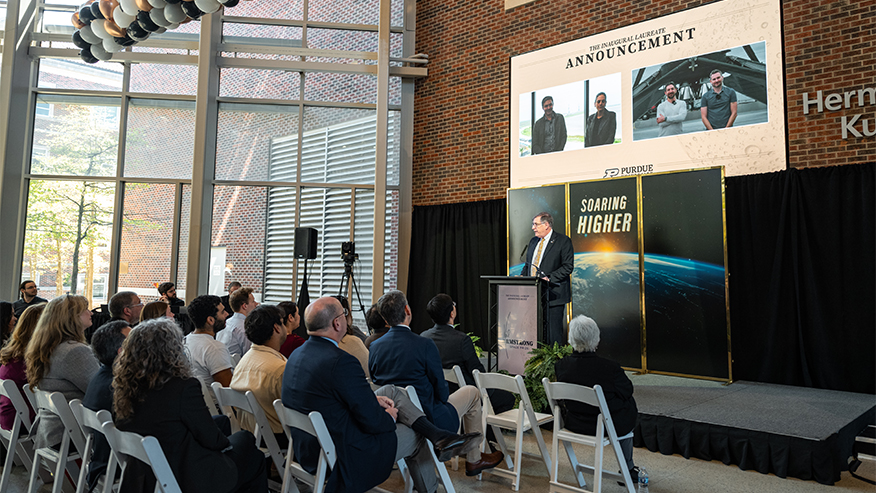
The 2026 Neil Armstrong Space Prize was announced Tuesday (April 21) at Purdue University, heralding the Falcon 9 Booster Landing Team as the inaugural laureate of the Neil Armstrong Space Prize, for their cutting-edge work on the Falcon 9 reusable two-stage rocket system.
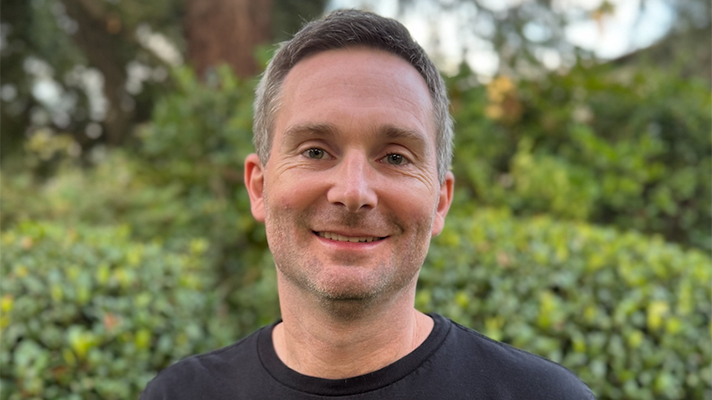
As Senior Principal Mars Landing Engineer at SpaceX, Lars Blackmore leads vehicle-level development of Starship’s entry and landing system. Lars pioneered the “bellyflop” style of unpowered flight in which the spacecraft flies similarly to a skydiver, using its belly to protect the engines from extreme heating, then executes a flip that allows the vehicle to land vertically under engine power.
Lars joined SpaceX in 2011, initially serving as senior GNC engineer before leading the interdisciplinary team who made the Falcon 9 first stage capable of landing.
Prior to SpaceX, Lars worked at NASA’s Jet Propulsion Lab, where he co-invented the G-FOLD algorithm for precision vertical landing on Mars. He also developed control algorithms and flight software for the Soil Moisture Active Passive mission, currently in orbit.
Lars received bachelor’s and master’s degrees in engineering from Cambridge University, and a PhD in control and estimation from the Massachusetts Institute of Technology.
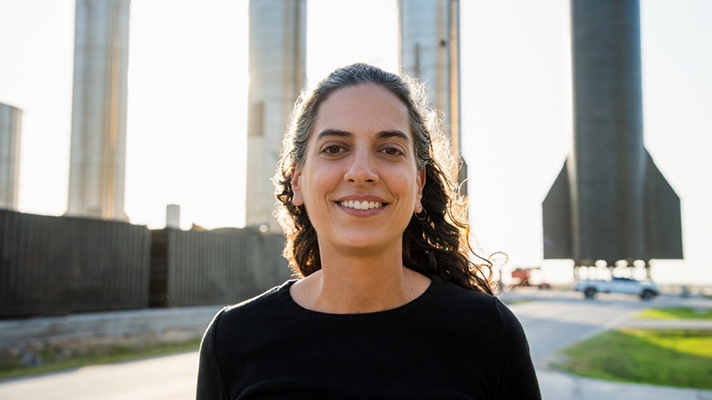
Shana Diez is the Senior Director of Starship Reliability at SpaceX, where she is responsible for managing all vehicle, launch pad, and operational risk for the Starship program. She oversees risk mitigation for operations from pre-flight through post-flight safing as well as anomaly resolution, while also working closely with the Federal Aviation Administration to drive strategy and execution of all Starship launch licensing. Shana is also responsible for reliability of hardware built in the factory at SpaceX’s Starbase, Texas, manufacturing facility.
Shana joined SpaceX in 2007 as an analyst on thermal fluids for Merlin engines. She later led analysis on the Dragon spacecraft’s Draco thrusters as well as the vehicle’s propulsion systems, before becoming manager of reusability development, where her team contributed to the development of Falcon 9 becoming the first orbital class rocket to land for future reuse. In 2017, Shana became Director of Engineering Change, driving the revamp of new tools and processes that enabled an increased flight rate for both Falcon 9 and Dragon. Three years later, Shana transitioned full-time into the Starship program, leading teams in production and vehicle operations before moving into her current role with the Starship team.
Shana earned her bachelor’s and master’s degrees in aerospace engineering from the Massachusetts Institute of Technology.
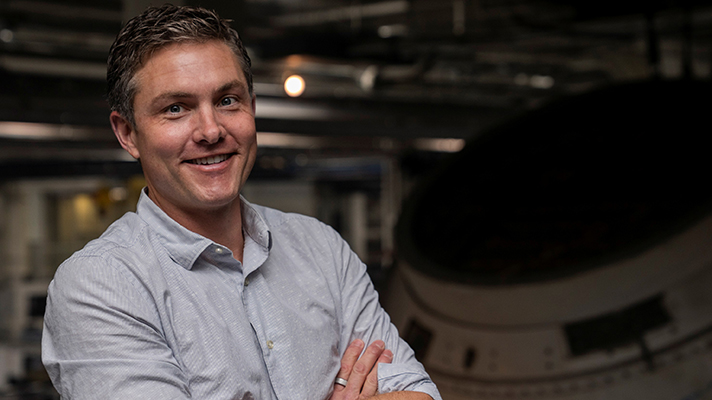
Jon Edwards is the Senior Vice President of Falcon and Dragon at SpaceX, where he is responsible for the design, performance, operations, and program strategy of the Falcon rockets and Dragon spacecraft — the systems that form the backbone of the world’s most active orbital launch enterprise.
Jon joined SpaceX in 2004 as a propulsion development engineer. As responsible engineer for the Falcon 1 second stage and Kestrel engine, he contributed to Falcon 1’s successful orbital launch in 2008 and to the early development of Dragon. He later served as responsible engineer for the Falcon 9 second stage, contributing to the rocket’s first successful launch in 2010. He went on to become the Falcon 9 Product Director, where he led the program through the first successful recovery of an orbital-class rocket booster – a breakthrough that proved rockets could return from space and fly again. Jon subsequently served as Vice President of Falcon Engineering, helping turn that first recovery into routine reuse and establishing Falcon 9 as the most reliable and rapidly reusable rocket in history.
With more than two decades at SpaceX, Jon has led the development of Falcon Heavy, secured Falcon 9’s human-rating certification, advanced rapid reusability to qualify the Falcon booster and fairings for up to 40 flights each, and built the teams behind SpaceX’s industry-leading launch cadence.
Jon earned his bachelor’s and master’s degrees in aeronautical and astronautical engineering from Purdue University and an MBA from Indiana University.
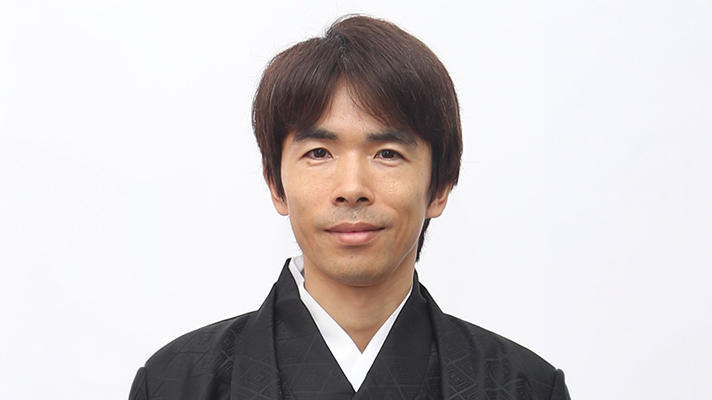
As principal GNC engineer at SpaceX, Yoshiaki Kuwata has extended Falcon entry and landing algorithms to Super Heavy, enabling consistent booster catches and demonstrating Starship V3 booster entry and precision control using three grid fins.
After joining SpaceX in 2012, Yoshiaki developed the algorithms that successfully landed Falcon 9’s first stage at a landing site — the first time in history the first stage of a rocket landed propulsively from a suborbital trajectory. Building upon Falcon, he then created the algorithms for Starship’s subsonic entry and landing, demonstrating flap control and executing the “bellyflop” maneuver in suborbital flight tests.
Prior to joining SpaceX, Yoshiaki was a technologist at NASA’s Jet Propulsion Laboratory and held a position at the Massachusetts Institute of Technology as a postdoctoral associate, where he worked on the planning and control systems for the DARPA Urban Challenge 2007.
Yoshiaki graduated from the University of Tokyo with a bachelor’s degree in aeronautics and astronautics, and he earned his Ph.D. in aeronautics and astronautics from the Massachusetts Institute of Technology.
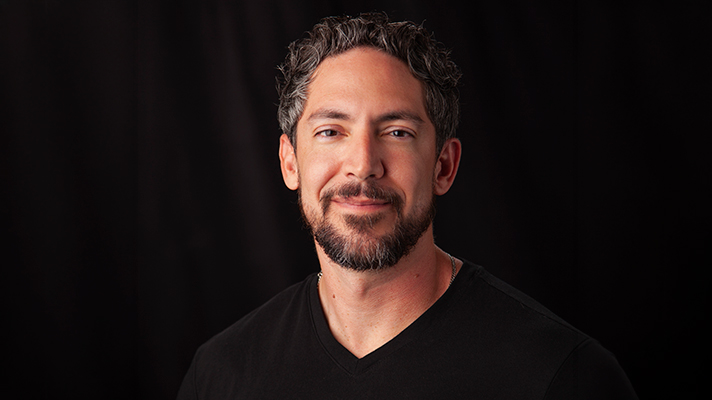
Eduardo Velazquez is the Director of Crew Starship engineering at SpaceX, overseeing the engineering, architecture, production, integration, and testing of Starship vehicles supporting human spaceflight, including the spacecraft that will return humans and cargo to the Moon, commercial low-Earth orbit, and cislunar spaceflight.
Joining SpaceX in 2011 as a manager of multibody dynamics, Eduardo served as the technical lead for the Vehicle Simulations Group responsible for the analysis of major kinematic structures in the Falcon 9 launch vehicle and Dragon spacecraft, as well as astronaut logistics during all phases of flight. Eduardo has helped design Falcon 9’s landing legs, the payload and stage separation systems, along with Dragon’s solar arrays, parachutes, and heatshield. As senior manager, he created and led analysis for composite materials, dynamics, loads, and multibody analysis, before overseeing the design and testing of flight-proven hardware. Prior to his current role, Eduardo directly led the Human Landing System engineering team for lunar and crew-specific systems.
Eduardo received his bachelor’s degree in aerospace engineering from San Diego State University and earned his master’s degree and PhD from the University of California San Diego. He has served in various positions for the California chapters of the Society for the Advancement of Material and Process Engineering and the American Institute of Aeronautics and Astronautics.
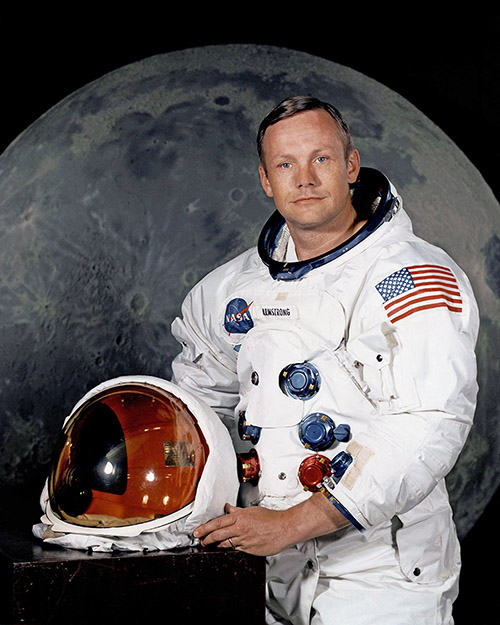
On July 20, 1969, Neil Armstrong became the first person to step onto the moon’s surface, speaking the famous words, “That’s one small step for a man, one giant leap for mankind.” He served as commander of this historic Apollo 11 mission, on which he also became the first person to land a spacecraft on the moon.
In 1947, Armstrong enrolled at Purdue under the Holloway Plan, which covered college tuition for applicants who would attend the first two years of college, then complete two years of flight training and one year of service as an aviator in the U.S. Navy before returning to college for their final two years of academic study. Armstrong graduated from Purdue in 1955 with a Bachelor of Science degree in aeronautical engineering.
He received an honorary doctorate from Purdue in 1970 and countless awards and honors, including the Presidential Medal of Freedom and Congressional Gold Medal. In 2007, Purdue dedicated the Neil Armstrong Hall of Engineering, the flagship of the College of Engineering.
July 20, 2026
Call for Nominations
November 1, 2026
Nominations Due
Spring 2027
Prize recipients announced
Nominations for individuals or teams from around the globe are welcome. The impact of the nominated discovery, innovation, or achievement is essential and will be closely assessed to assure the highest honor to be bestowed by the Neil Armstrong Space Prize.
Nominees should consist of individuals or teams who have made noteworthy contributions to the fields of Discovery, Innovation, and Human Achievement in space.
Self-nominations are not encouraged. It is expected that the nominated person and their accomplishment be recognized by peers and experts within the space community for their contribution and impact to the space ecosystem.
Professor of Engineering Practice, School of Aeronautics and Astronautics, Purdue University
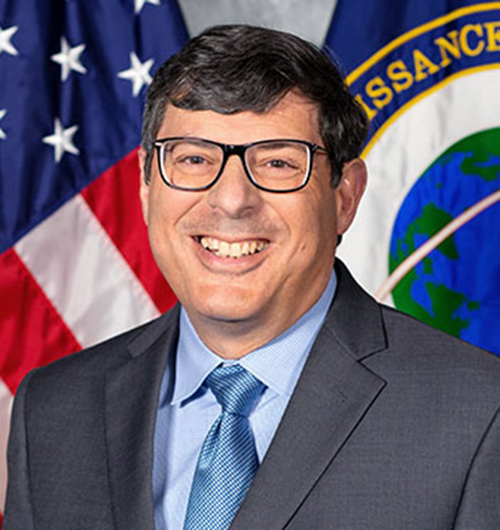
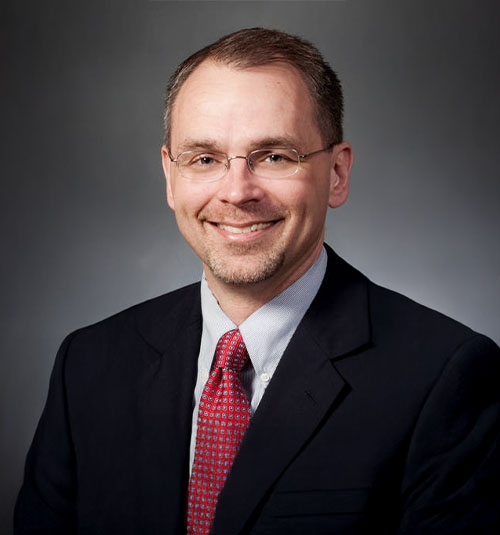
Aerospace Executive
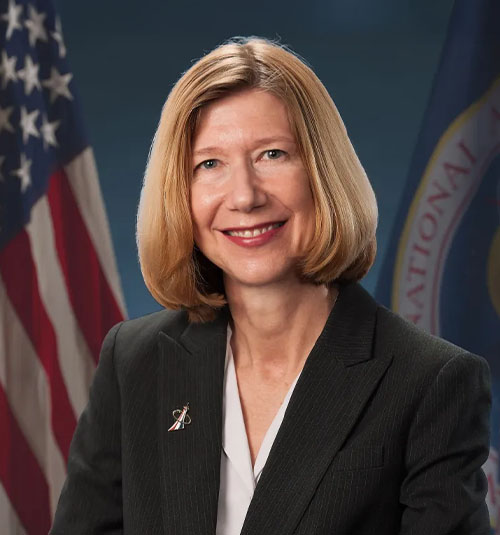
Commercial Space Consultant, Retired NASA Human Exploration and Space Operations Associate Administrator
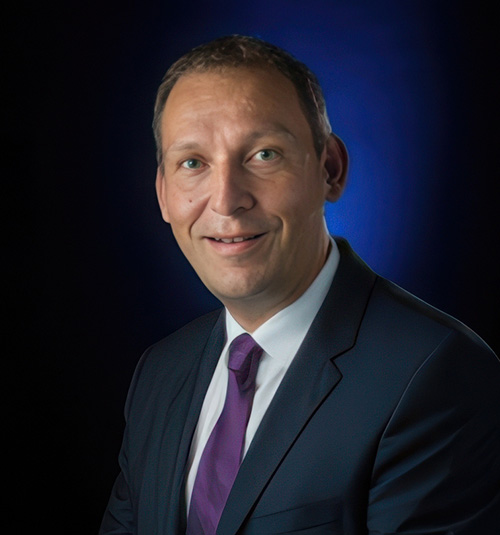
Swiss–American astrophysicist, ETH Zurich Space Director, professor, board member, advisor, and international speaker
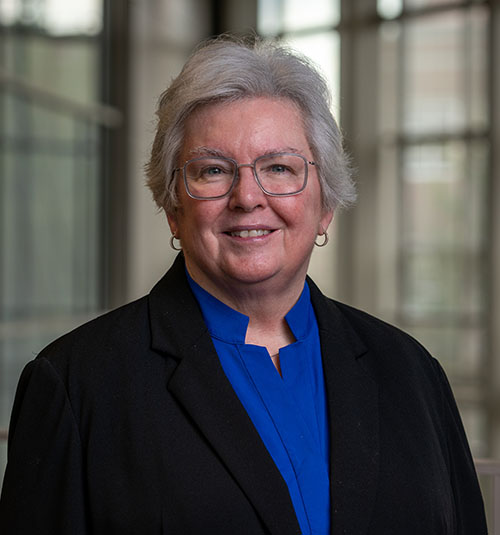
Hsu Lo Distinguished Professor of Aeronautics and Astronautics, Purdue University

Distinguished Professor of Mechanical Engineering and Chancellor Emeritus, University of California, Santa Barbara

Support the Legacy
Commemorate an extraordinary legacy of world-changing giant leaps by supporting the space prize. Conceived to recognize the hearts and minds boldly redefining our place among the stars—and designed to stand alongside the Nobel and Fields prizes.


