Purdue-Google summit advances physical AI, manufacturing and workforce readiness
Indianapolis event highlights real-world AI research while preparing students for careers in industries from manufacturing to drug discovery
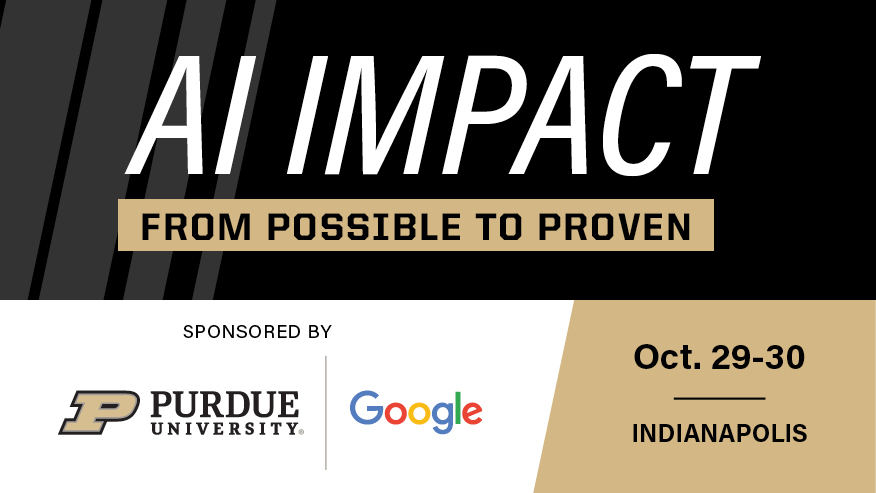
INDIANAPOLIS — Purdue University and Google Public Sector will bring together academic, industry and government leaders this month to explore how manufacturers and technology companies can move physical AI from experimentation and pilot programs to scalable implementation with measurable results, while preparing the next-generation workforce to lead with job-ready skills.
AI Impact: From Possible to Proven will advance the discussion on what role technology plays in transforming industries and reshaping the future of manufacturing in Indiana and across the U.S. The event is Oct. 29-30 in Indianapolis, and registration closes Wednesday, Oct. 21, at 5 p.m. ET.
At Purdue, artificial intelligence spans both physical AI and generative AI. Physical AI, advanced through the Institute for Physical Artificial Intelligence (IPAI), ranges from robotics to self-driving cars, while generative AI, driven by initiatives like Purdue’s AI Forge, accelerates content creation and discovery.
Physical AI sits at the core of a deepening, multiyear partnership announced in January between Purdue and Google Public Sector — one that spans cloud infrastructure, joint research through IPAI and a shared commitment to preparing every graduate with the AI skills in high demand by employers.
“When we launched the first Purdue + Google AI Summit, our goal was to bring together leaders from academia, industry and government to explore the transformative potential of AI,” said Dimitrios Peroulis, Purdue’s senior vice president for partnerships and online. “It is exciting to see that vision continue to grow as organizations move from AI experimentation to real-world impact.”
Purdue now requires an AI working competency for graduation, starting with incoming freshmen this fall semester. Purdue is among the first universities in the nation to embed AI competency into every degree program to better prepare students for the workforce.
The summit speaker lineup reflects the wide scope of AI’s impact — from federal legislation and transportation policy to enterprise cybersecurity and digital transformation in agriculture — offering a cross section of dialogue.
Among the featured speakers and panelists:
- Seval Oz — assistant secretary for research and technology, U.S. Department of Transportation
- Brian Lutz — chief digital and information officer, Vylor LLC (formerly Corteva Agriscience)
- Snehal Antani — co-founder and CEO, Horizon3
- Suresh Sangiah — senior vice president, Palo Alto Networks
Purdue interim President Mitch Daniels will deliver opening remarks to kick off the summit’s second day. The event will also feature state-level leadership discussing the state’s role in the AI landscape.
As part of the summit, AnalytiXIN — a strategic initiative of the CEOs of Indiana Corporate Partnership (CICP) — is hosting a series of workshops. CICP is an industry-led nonprofit that brings together Indiana’s business, university and philanthropic leaders to advance economic growth and innovation.
Supporting Purdue and Google Public Sector in this event are Purdue’s IPAI, Office of Industry Partnerships and Office of Research.
Physical AI is a core component of Purdue Computes, a comprehensive university initiative that emphasizes four key pillars of Purdue’s extensive technological and computational environment — computing departments, physical AI, quantum science and semiconductor innovation.
IPAI is part of Purdue Computes. It advances research bridging digital AI with real-world physical applications, from agriculture to manufacturing to transportation, through dedicated research centers and industry partnerships.
About Purdue University
Purdue University is a research institution ranked among the top 10 public universities in the United States. More than 111,000 students study at Purdue across multiple campuses, including more than 57,000 at our main campus locations in West Lafayette and Indianapolis. As a land-grant university committed to affordability and accessibility, Purdue’s main campus has frozen tuition 14 years in a row, enabling more students than ever to graduate debt-free.
Media contact: Derek Schultz, dcschultz@purdue.edu
Purdue Computes News
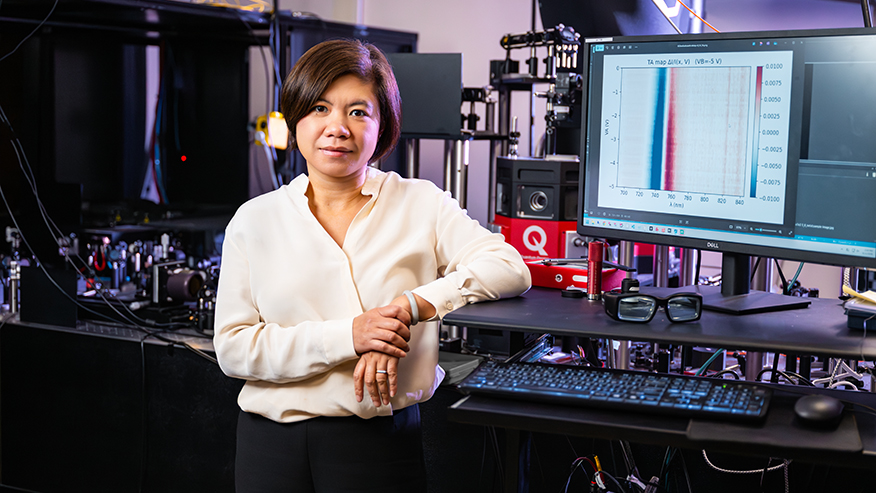
‘Movies’ of interaction between light and matter help advance quantum tech
October 6, 2026

Purdue and University of Illinois, 2 engineering powerhouses, team up to strengthen semiconductor workforce in U.S.
September 22, 2026
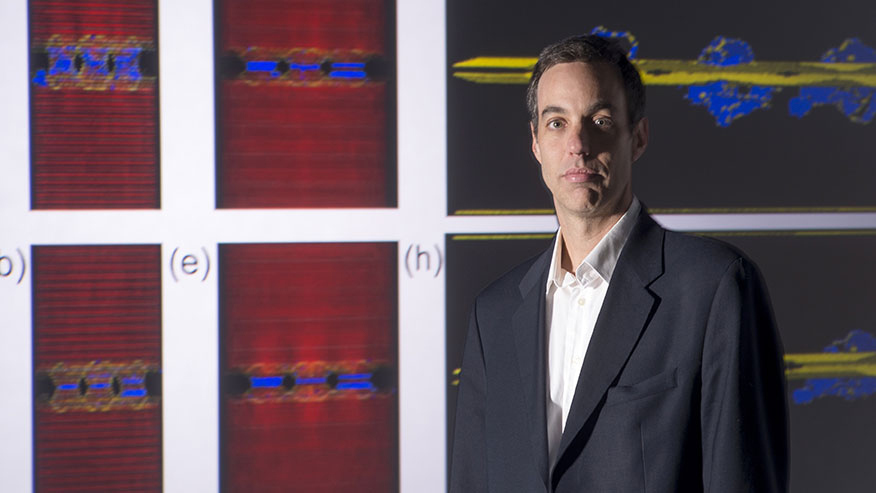
Purdue secures $19M from NSF to develop AI-driven programmable labs for semiconductors, advanced materials
August 5, 2026
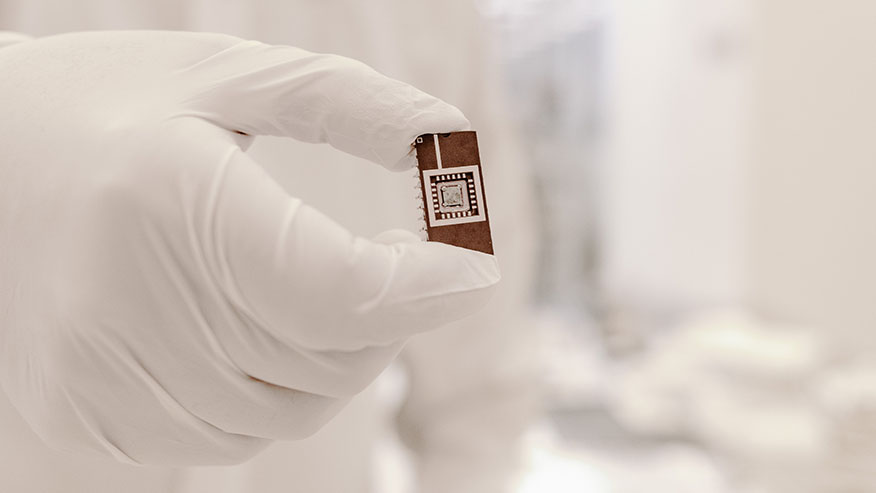
Purdue expands semiconductor professional education portfolio to advance global workforce development
July 8, 2026