Earhart expedition update: Underwater survey of Taraia Object begins
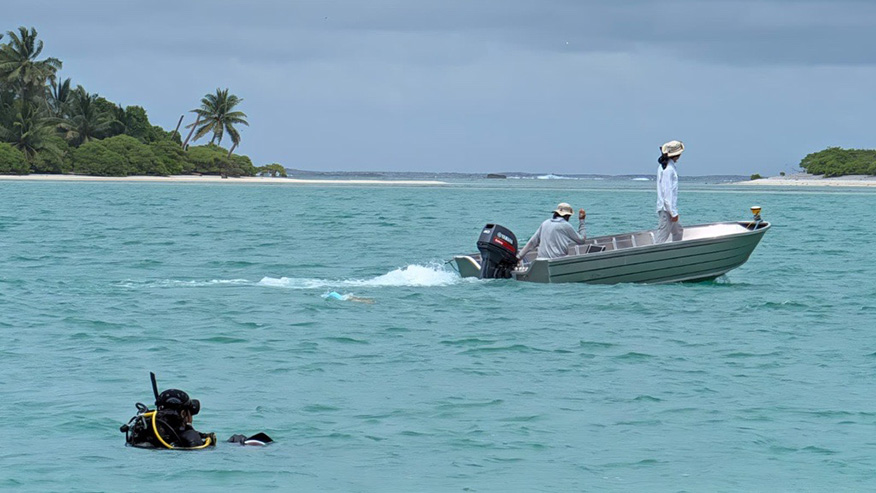
Work began Wednesday (Oct. 14) with an underwater survey at the heart of an investigation into an anomaly that could be what remains of Amelia Earhart’s Lockheed Electra 10-E. The Taraia Object expedition, a joint effort between the Archaeological Legacy Institute, Purdue Research Foundation and Purdue University, is pursuing clues to one of aviation’s biggest mysteries. (Photo provided)
NIKUMARORO, Kiribati — The search in Nikumaroro’s lagoon for what could be Amelia Earhart’s Lockheed Electra 10-E is underway. On Wednesday (Oct. 14), members of the Taraia Object expedition, a joint effort between the Archaeological Legacy Institute, Purdue Research Foundation and Purdue University, began the underwater survey at the heart of their investigation.
The 17-person team traveled five days by sea from Tarawa, Kiribati, to Nikumaroro, a remote atoll in the South Pacific. The team’s goal is to search for evidence of the castaway hypothesis, the theory that when Earhart and her navigator Fred Noonan disappeared in July 1937 on the third-to-last leg of her round-the-world flight attempt, the pair landed on this uninhabited island. Work on Nikumaroro is focused on inspecting the Taraia Object, first noticed in satellite imagery in 2020 and later confirmed to be visible on aerial photos taken of the island’s lagoon as far back as 1938.
The Purdue Research Foundation originally funded the Lockheed Electra “Flying Laboratory” through the Amelia Earhart Fund for Aeronautical Research as part of Purdue’s pioneering efforts in aviation. Earhart intended for the plane to be returned to Purdue upon completion of her historic flight.
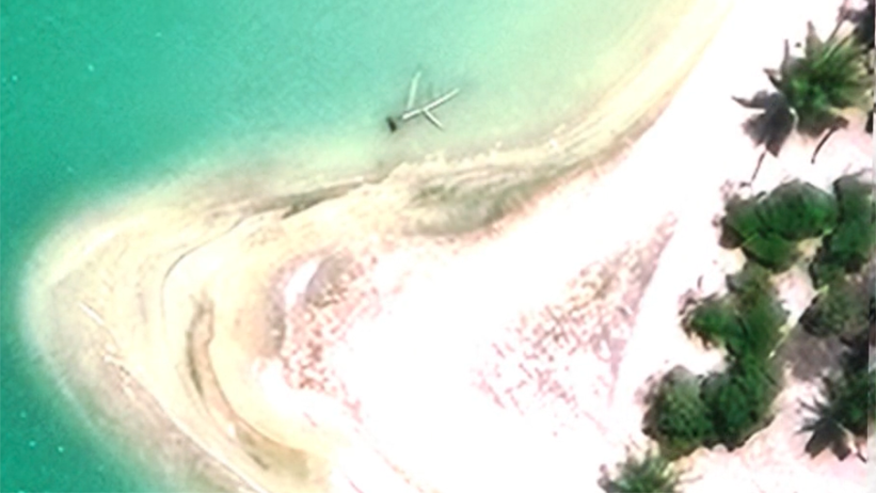
In the first day of field operations, the maritime archaeology team began surveying the lagoon using a magnetometer and side-scan sonar technology. The magnetometer is used to detect ferrous metals, which could include steel cabling and other metal components from the mostly aluminum Electra, while sonar technology is used to search for objects under sediment on the lagoon floor. The data gathered from these tools will be analyzed to create a more complete and accurate picture for the application of later search techniques, which include the use of a hydroprobe and a water induction dredge to remove sediment from identified objects.
“We’re following our game plan,” said Rick Pettigrew, executive director of the Archaeological Legacy Institute. “It’s too early to reach conclusions as we’ve got a lot of science left to apply.”
Onshore, the solar-powered tech system that will provide connectivity for monitoring devices, including a remote camera and water level transducer, was set up and is operating successfully. These tools will provide ongoing information about Nikumaroro’s weather and tidal flows that has never before been available.
Onshore Earhart work begins
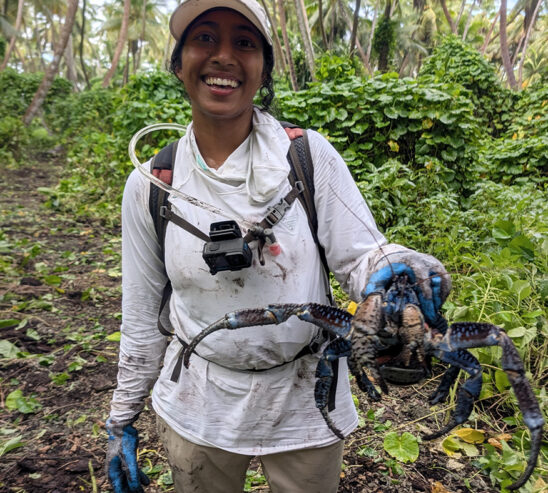
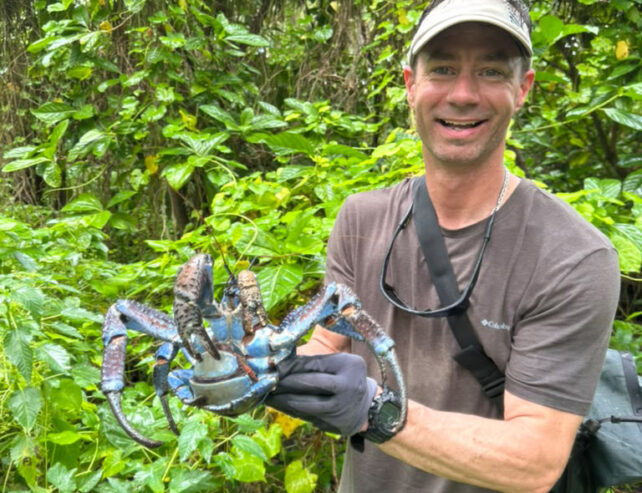
Boilermaker Sirisha Bandla holds a coconut crab, one of Nikumaroro’s features.
Onshore Earhart work begins
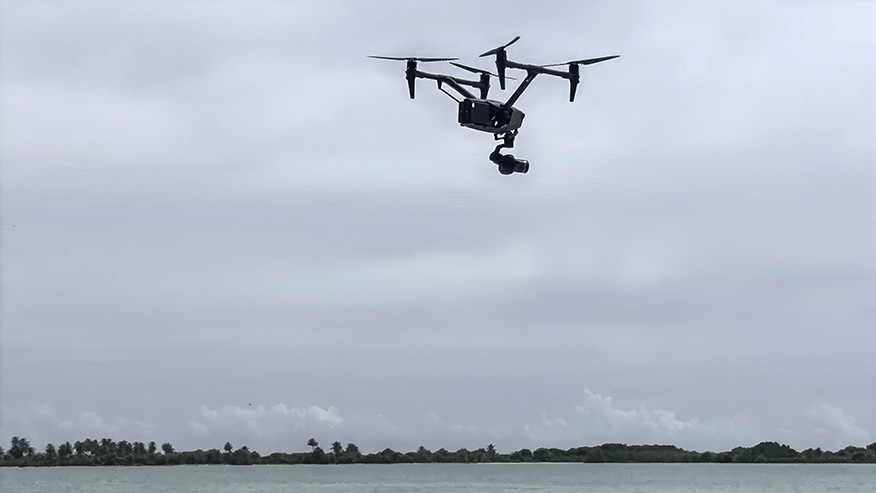
The team uses a drone to examine the Taraia Object in Nikumaroro’s lagoon.
Onshore Earhart work begins
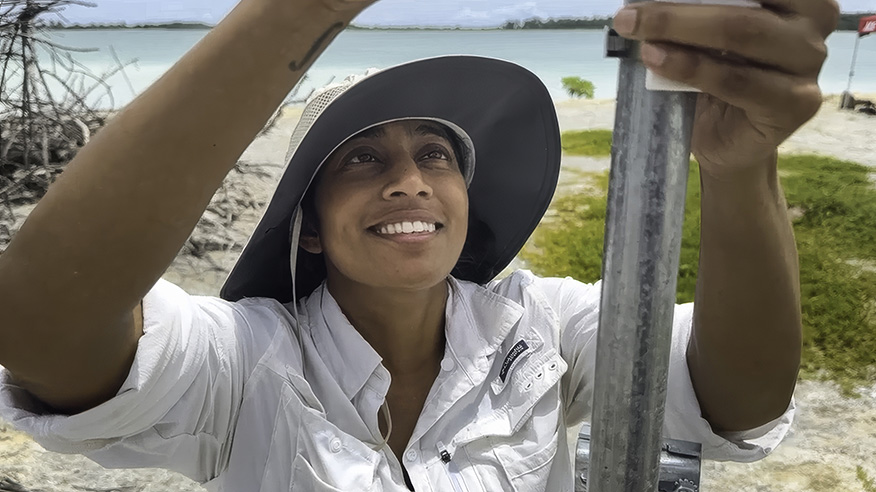
Boilermaker Sirisha Bandla sets up equipment in a staging area.
Onshore Earhart work begins
The island is infamous for its large coconut crabs, like this one.
Onshore Earhart work begins
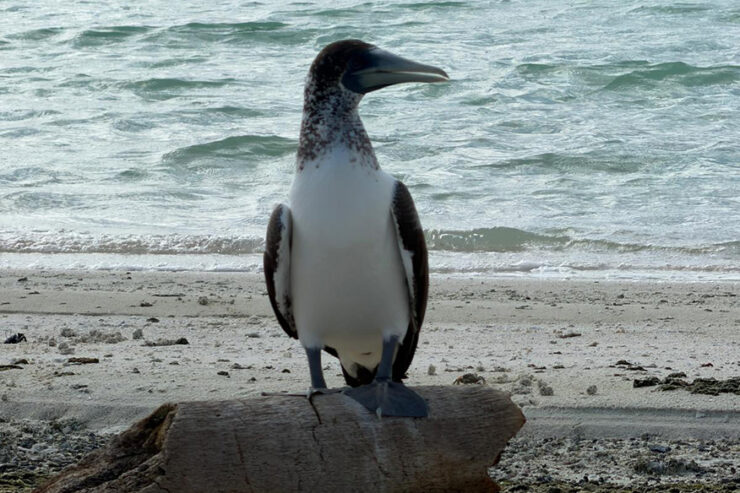
Nikumaroro is designated as an Important Bird Area by BirdLife International.
Onshore Earhart work begins
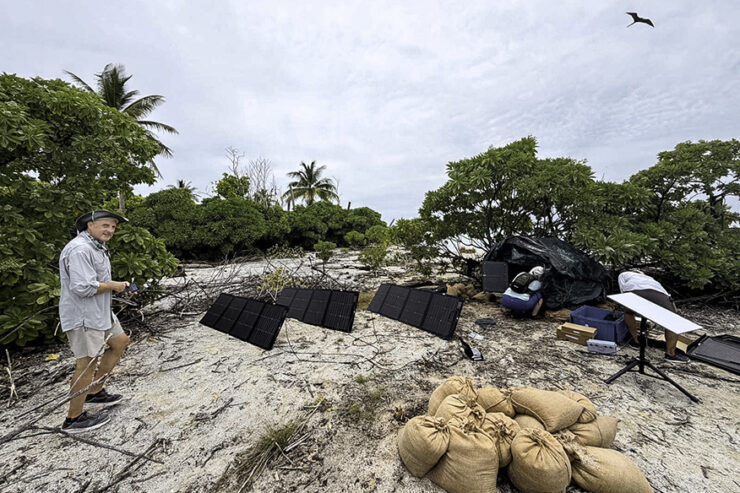
Boilermaker Steve Schultz surveys equipment the expedition team is using.
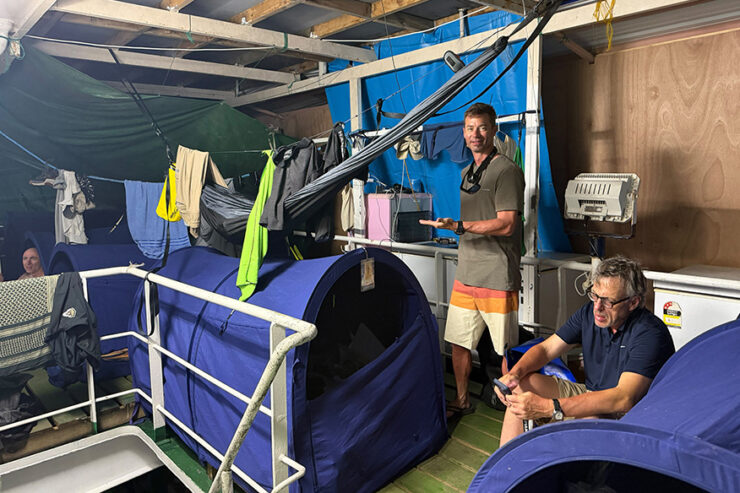
Onshore Earhart work begins
The expedition team returns to the Marin Mainiku each evening to sleep on board.
Nikumaroro is part of the Phoenix Islands Protected Area and has been designated as an Important Bird Area by BirdLife International. Three representatives from Kiribati are part of the expedition team.
The underwater work marks a critical phase of the expedition after the team spent Tuesday (Oct. 13) establishing operations on the island. The crew cleared a trail across the island, created staging areas and reached the Taraia Peninsula ahead of schedule, allowing team members to conduct an initial survey for surface artifacts and assess conditions in the lagoon before beginning the underwater survey.
Nikumaroro is located halfway between Australia and Hawaii and lies close to 400 miles southeast of Howland Island, the planned destination of Earhart and Noonan on the fateful final leg of their attempt to circumnavigate the globe.
Earhart began her attempt to circumnavigate the globe and set a record for long-distance flight in late May 1937, flying out of Oakland, California. Already an aviation legend in the 1930s, Earhart came to Purdue in 1935 and worked for two years as a women’s career counselor and advisor in the university’s aeronautics department. The recently opened Amelia Earhart Terminal at the Purdue Airport honors her legacy as a valued Boilermaker. She is also remembered across campus through facilities, programs and clubs.
Related coverage
- Earhart expedition update: Crew arrives onshore, sets up operations on Nikumaroro
- Earhart expedition update: Crew arrives at Nikumaroro, launches critical phase of Amelia Earhart plane search
- Earhart expedition update: Crew at sea, expected to arrive on Nikumaroro in 72 hours
- Earhart expedition update: Crew begins 6-day sea voyage to South Pacific atoll Nikumaroro
- Earhart expedition update: Crew arrives at Tarawa, prepares for departure
- Earhart expedition update: Crew departs from Purdue University Airport
- 1 week out: Countdown to the search for Amelia Earhart’s plane begins
- ‘This Is Purdue’ four-part miniseries ‘Finding Amelia’
The expedition is being supported by Columbia Sportswear, DHL Express, Fiji Airways, Kiribati National Shipping Line, the Niswonger Foundation, Bulova and RECON Offshore, along with additional organizations providing financial, operational, logistical, technical, philanthropic, diplomatic and in-kind support, including Alvantor, Arrants Expeditions, Brownie’s Third Lung, Forestry Suppliers, GreenGood Labs, The Museum of Flight, the Naval Aviation Museum Foundation, Randolph USA, and Tricor.
About Archaeological Legacy Institute
Archaeological Legacy Institute is a 501(c)(3) nonprofit based in Eugene, Oregon, and organized to share the human cultural heritage widely through the use of cutting-edge media technology. ALI’s core project is The Archaeology Channel (http://www.archaeologychannel.org), a free streaming-media website featuring video and audio programs on archaeology, indigenous peoples and cultural heritage. This combines with news site Archaeologica.org, the social media site ArchaeoSeek.com, and subscription video-on-demand platform Heritage Broadcasting Service (heritagetac.org) to form a unique constellation of online services and resources for those keen to learn about and enjoy cultural-heritage information, events, programming and discussions. Through The Archaeology Channel Tours, ALI also organizes in-person group visits to significant cultural heritage sites worldwide, which have included Stonehenge, Machu Picchu, Chichén Itzá, Uxmal, Newgrange, Persepolis, Carnac, the Ness of Brodgar, the Malta prehistoric temples and many others.
About Purdue University and Purdue Research Foundation
Purdue University is a research institution ranked among the top 10 public universities in the United States. The Purdue Research Foundation (PRF) is a private nonprofit operating as a separate entity to advance the university’s mission. Purdue is committed to affordability and accessibility with more than 111,000 students studying at Purdue across multiple campuses. PRF operates Purdue Innovates, including the Office of Technology Commercialization, Incubator and Ventures, as well as managing Purdue Research Park, Discovery Park District at Purdue, Purdue Technology Centers and the Purdue for Life Foundation.
Media contact: Trevor Peters, peter237@purdue.edu
Note to journalists:
Additional Amelia Earhart expedition photos and video are available in the media kit.
More Purdue News
New molecular diagnostics instruments provide improved accuracy
October 14, 2026
Earhart expedition update: Crew arrives onshore, sets up operations on Nikumaroro
October 13, 2026

Purdue No. 12 among U.S. public universities in 2027 global Times Higher Education rankings
October 13, 2026
Earhart expedition update: Crew arrives at Nikumaroro, launches critical phase of Amelia Earhart plane search
October 12, 2026