Earhart expedition update: Crew arrives onshore, sets up operations on Nikumaroro
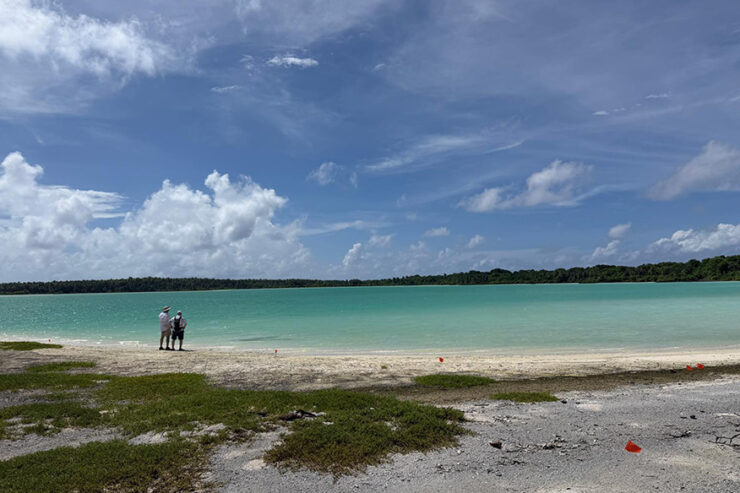
Steve Schultz, general counsel for Purdue University, and Rick Pettigrew, Archaeological Legacy Institute executive director, look out over Nikumaroro’s lagoon. Researchers from ALI and Purdue are investigating a visual anomaly spotted in satellite imagery that may be what remains of Amelia Earhart’s Lockheed Electra 10-E, which disappeared in July 1937. (Photo provided)
NIKUMARORO, Kiribati — Members of the Taraia Object expedition, a joint effort between the Archaeological Legacy Institute, Purdue Research Foundation and Purdue University, made it ashore Nikumaroro on Tuesday (Oct. 13), where they began setting up equipment and operations for their investigation into an anomaly that could be what remains of Amelia Earhart’s Lockheed Electra 10-E.
Through the Amelia Earhart Fund for Aeronautical Research, the Purdue Research Foundation funded Earhart’s Lockheed Electra “Flying Laboratory.” Earhart intended for the plane to be returned to Purdue upon completion of her round-the-world flight.
It was the first day onshore for the 17-person expedition team, who arrived too late Monday (Oct. 12) to visit the island after five days of sea travel. As the sun rose, some crew members took smaller transport boats from the Marin Mainiku into the lagoon. The remaining team members set up staging areas and cleared a path to support fieldwork that will begin Wednesday (Oct. 14).
Onshore Earhart work begins
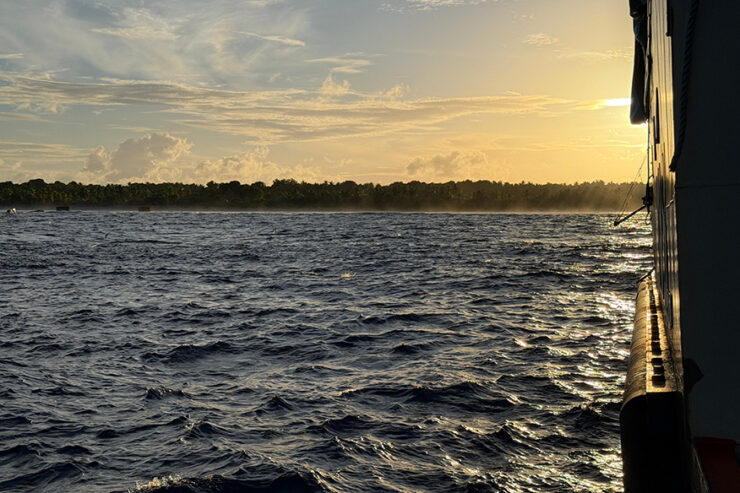
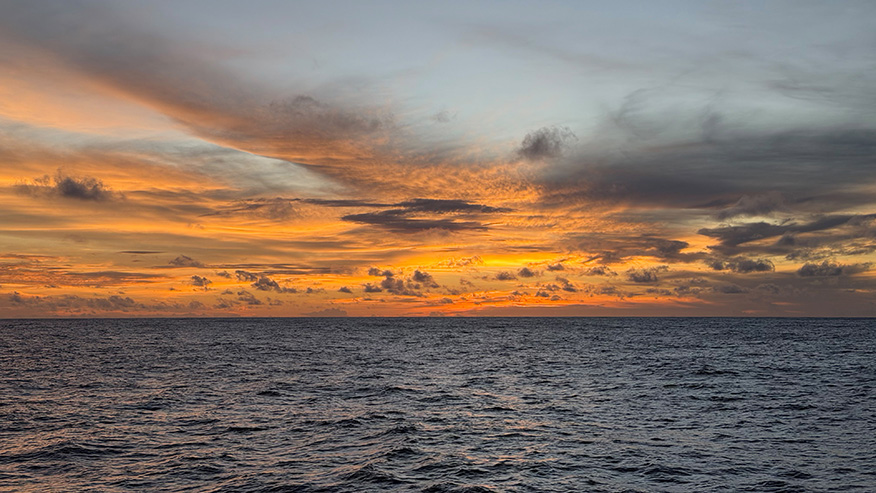
The sun rises over Nikumaroro.
Onshore Earhart work begins
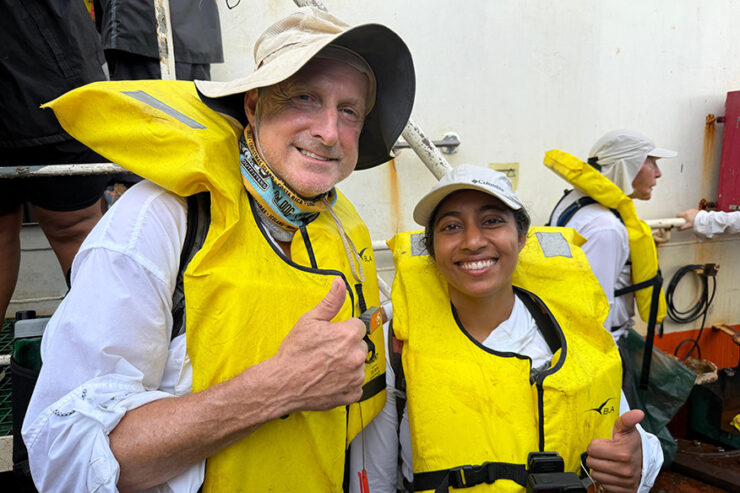
Boilermakers Steve Schultz (left) and Sirisha Bandla gear up for the ride to the island.
Onshore Earhart work begins
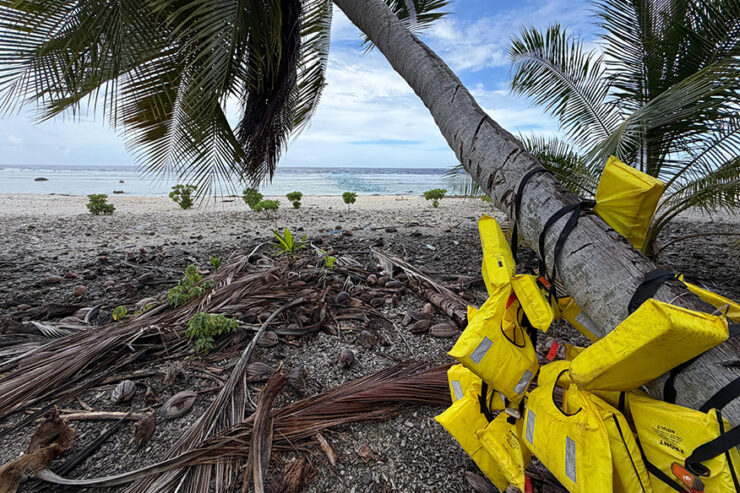
Life vests dry on a palm tree.
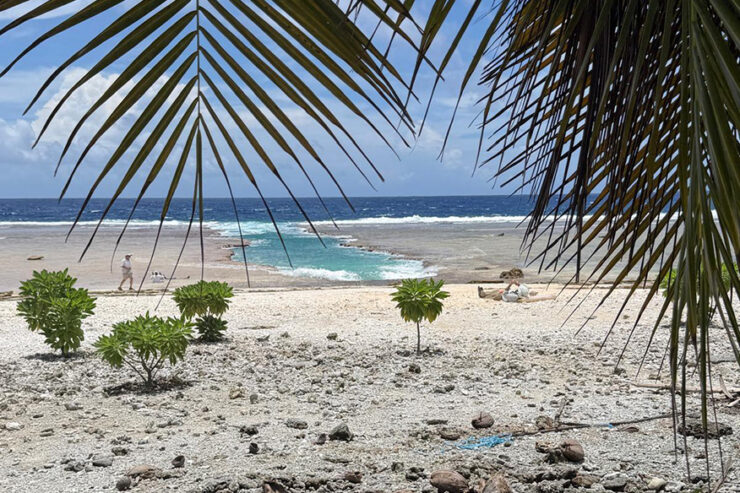
Onshore Earhart work begins
The team uses smaller transport boats to navigate to the island.
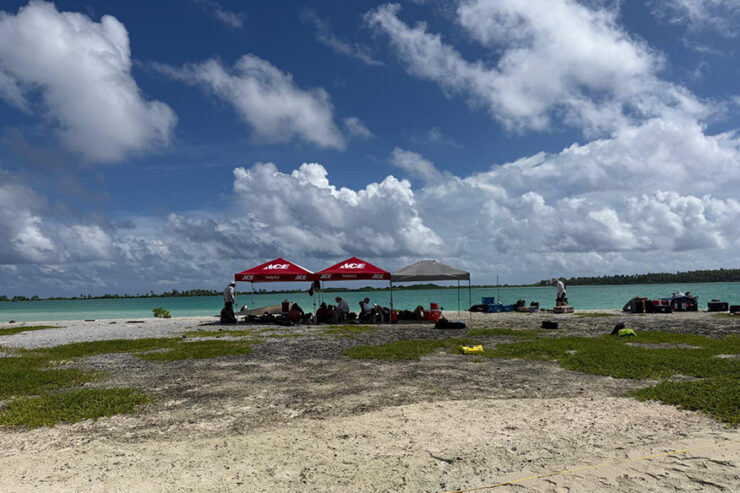
Onshore Earhart work begins
Canopy tents provide staging areas for the team.
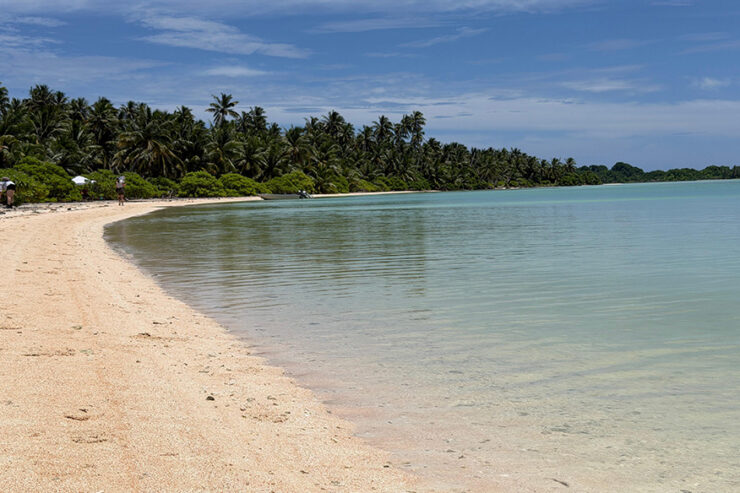
Onshore Earhart work begins
The shore of Nikumaroro’s lagoon.
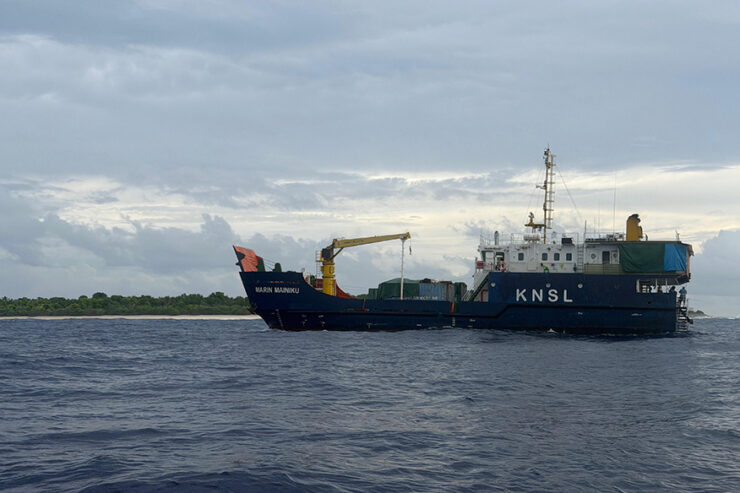
Onshore Earhart work begins
Expedition team members return to the Marin Mainiku each evening after working on the island.
After many years since the last expedition to the island, the traditional path to the lagoon, nicknamed the “Gallagher Highway,” was heavy with undergrowth and coconuts underfoot. Supported by crew members from the Marin Mainiku, the team used a combination of machetes and hand chain saws and finished cutting a trail to the lagoon within two hours. At least four coconut crabs were encountered along the way, but they posed no threat to the operation.
Though the team expected to spend an entire day setting up operations, the work was accomplished by lunchtime. The joint team, composed of expedition members and the vessel crew, was able to access the Taraia Peninsula by 1 p.m. local time. Nikumaroro is 17 hours ahead of Eastern time in the U.S.
At the peninsula, the team walked the sandspit to look for artifacts in the first phase of terrestrial archaeology work. A series of canopy shelters was erected and sandbags were filled. The first components of the tech system were erected, and the maritime archaeology team assessed the conditions of the research site, including the sediment on the lagoon floor.
Operations were wrapped up by 4 p.m., and the expedition team retraced its steps to the south side of the lagoon and back through the Gallagher Highway to the beach at the head of the “blasted channel,” a man-made opening near the southwestern corner of the island’s perimeter reef. There, they were picked up by the vessel’s transport boat and carried through large swells back to the Marin Mainiku, where they retired for the evening.
Related coverage
- Earhart expedition update: Crew arrives at Nikumaroro, launches critical phase of Amelia Earhart plane search
- Earhart expedition update: Crew at sea, expected to arrive on Nikumaroro in 72 hours
- Earhart expedition update: Crew begins 6-day sea voyage to South Pacific atoll Nikumaroro
- Earhart expedition update: Crew arrives at Tarawa, prepares for departure
- Earhart expedition update: Crew departs from Purdue University Airport
- 1 week out: Countdown to the search for Amelia Earhart’s plane begins
- ‘This Is Purdue’ four-part miniseries ‘Finding Amelia’
About Archaeological Legacy Institute
Archaeological Legacy Institute is a 501(c)(3) nonprofit based in Eugene, Oregon, and organized to share the human cultural heritage widely through the use of cutting-edge media technology. ALI’s core project is The Archaeology Channel (http://www.archaeologychannel.org), a free streaming-media website featuring video and audio programs on archaeology, indigenous peoples and cultural heritage. This combines with news site Archaeologica.org, the social media site ArchaeoSeek.com, and subscription video-on-demand platform Heritage Broadcasting Service (heritagetac.org) to form a unique constellation of online services and resources for those keen to learn about and enjoy cultural-heritage information, events, programming and discussions. Through The Archaeology Channel Tours, ALI also organizes in-person group visits to significant cultural heritage sites worldwide, which have included Stonehenge, Machu Picchu, Chichén Itzá, Uxmal, Newgrange, Persepolis, Carnac, the Ness of Brodgar, the Malta prehistoric temples and many others.
About Purdue University and Purdue Research Foundation
Purdue University is a research institution ranked among the top 10 public universities in the United States. The Purdue Research Foundation (PRF) is a private nonprofit operating as a separate entity to advance the university’s mission. Purdue is committed to affordability and accessibility with more than 111,000 students studying at Purdue across multiple campuses. PRF operates Purdue Innovates, including the Office of Technology Commercialization, Incubator and Ventures, as well as managing Purdue Research Park, Discovery Park District at Purdue, Purdue Technology Centers and the Purdue for Life Foundation.
Media contact: Trevor Peters, peter237@purdue.edu
Note to journalists:
Photos, video and sound are available via Google Drive. Additional Amelia Earhart expedition photos and video are available in the media kit.
More Purdue News

Purdue No. 12 among U.S. public universities in 2027 global Times Higher Education rankings
October 13, 2026
Earhart expedition update: Crew arrives at Nikumaroro, launches critical phase of Amelia Earhart plane search
October 12, 2026
Longtime Purdue benefactor Parrish commits $42M to name new Daniels School building
October 9, 2026
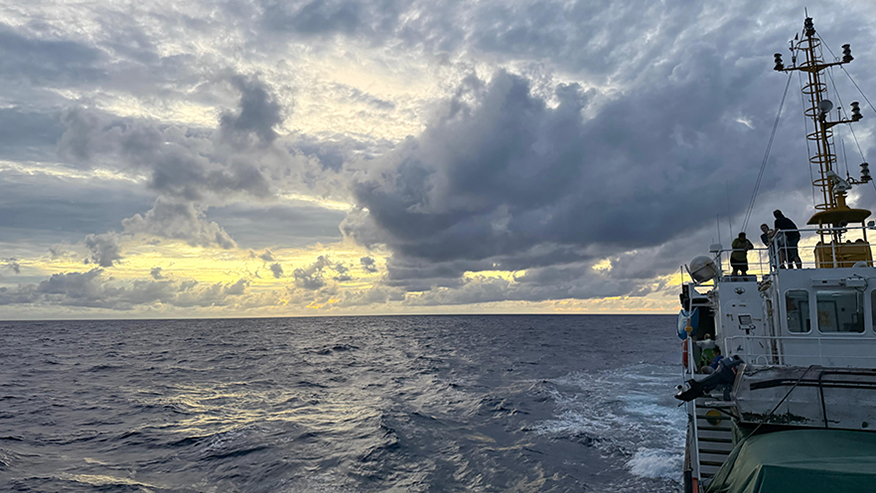
Earhart expedition update: Crew at sea, expected to arrive on Nikumaroro in 72 hours
October 9, 2026