Purdue Institute for Cancer Research secures $9.4M in renewal of its National Cancer Institute Cancer Center Support Grant
Funding extends Purdue’s tenure as a federally designated Basic Laboratory Cancer Center

Andrew Mesecar, the Robert Wallace Miller Director of the Purdue Institute for Cancer Research, the Walther Professor of Cancer Structural Biology and Distinguished Professor of Biochemistry at Purdue, works with Sydney Bogan, PhD candidate in the Department of Biochemistry, to develop basic cancer research innovations. (Purdue University photo/Charles Jischke)
WEST LAFAYETTE, Ind. — The Purdue Institute for Cancer Research (PICR) has received $9.4 million from the National Cancer Institute (NCI), part of the National Institutes of Health (NIH), to renew its Cancer Center Support Grant (CCSG), which funds the administrative, collaborative and operational foundation of NCI-designated cancer centers.
This funding enables the PICR to continue as an NCI Basic Laboratory Cancer Center, allowing it to conduct preclinical research and collaborate with other institutions to foster the application of laboratory findings for potential public benefit. Following its establishment in 1976, the PICR was first designated as a Basic Laboratory Cancer Center in 1978, marking nearly 50 years of NCI designation.
The PICR is one of only eight Basic Laboratory Cancer Centers across the United States and one of only two at a public university.
Funding from the NCI CCSG has allowed more than 115 faculty members from 19 academic departments and seven colleges and schools at Purdue to unite as a centralized cancer research collaborative with expertise ranging from biology, chemistry, engineering, computation, pharmacy, nutrition science, structural biology and veterinary medicine. Combined, PICR faculty receive over $30 million per year in cancer-focused federal research funding.
“Sustained, high-impact, interdisciplinary research is central to Purdue’s growth as a leading research university,” Dan DeLaurentis, Purdue’s executive vice president for research, said. “Through the work of the PICR, we are generating new knowledge, developing transformative technologies and forging a research ecosystem positioned to shape the next era of discovery in combatting cancer.”
Since its inception, the PICR has played an influential role in shaping modern cancer research. One of its distinctive contributions is its ability to translate discoveries through commercialization. During the grant’s previous five-year funding cycle, PICR faculty earned 92 cancer-relevant patents, secured 30 licenses and started 16 new companies.
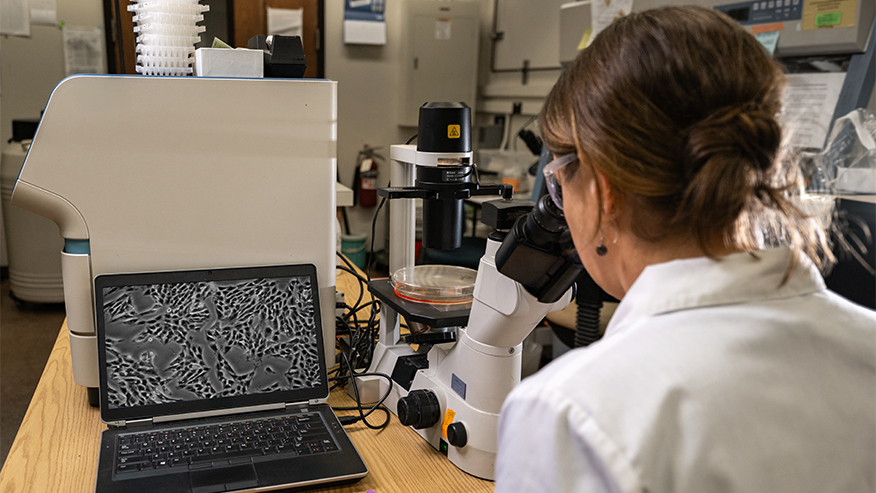
Work by current and former PICR researchers has contributed foundational advances in areas such as the discovery of protein tyrosine phosphatases that can be used to create novel cancer immunotherapies, structural biology methodologies that help design more precise therapeutics and chemical synthesis strategies that underpin many modern cancer drugs.
Over time, those discoveries have progressed from fundamental insight to real-world impact. Over the past five years, Purdue-originated research has contributed to FDA-approved cancer imaging agents and a radioligand therapy that delivers radiation directly to tumor cells throughout the body.
“Every FDA-approved therapy, every diagnostic that catches cancer earlier and every targeted cancer treatment that reduces harm to healthy tissue traces its roots back to fundamental scientific discoveries,” said Andrew Mesecar, the Robert W. Miller Director of the Purdue Institute for Cancer Research and Walther Professor of Cancer Structural Biology. “This renewal reflects national confidence in the kind of rigorous, curiosity-driven research Purdue is known for, as well as our role and impact in translating our discoveries into new cancer treatments and diagnostics.”
Beyond discovery, the PICR plays a critical role in training the next generation of cancer researchers. Through nationally competitive training grant programs, targeted pilot funding, and mentoring and career development initiatives, the PICR supports scientists from every career stage — from undergraduates entering cancer research for the first time to early-career and established faculty.
The CCSG renewal positions the PICR to deepen the science that has defined it for nearly half a century. As the institute enters the new five-year funding cycle, it will continue to expand partnerships, promote technology transition and continue to grow its national profile.
About Purdue University
Purdue University is a public research university leading with excellence at scale. Ranked among top 10 public universities in the United States, Purdue discovers, disseminates and deploys knowledge with a quality and at a scale second to none. More than 106,000 students study at Purdue across multiple campuses, locations and modalities, including more than 57,000 at our main campus locations in West Lafayette and Indianapolis. Committed to affordability and accessibility, Purdue’s main campus has frozen tuition 14 years in a row. See how Purdue never stops in the persistent pursuit of the next giant leap — including its integrated, comprehensive Indianapolis urban expansion; the Mitch Daniels School of Business; Purdue Computes; and the One Health initiative — at https://www.purdue.edu/president/strategic-initiatives.
Media contact: Lindsey Macdonald, macdonl@purdue.edu
One Health News
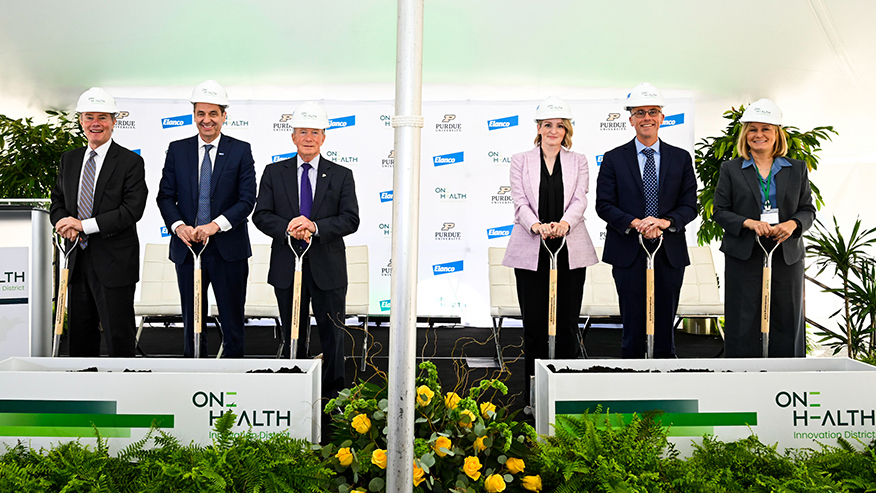
Purdue, Elanco, partners celebrate One Health Research Institute groundbreaking
October 7, 2026
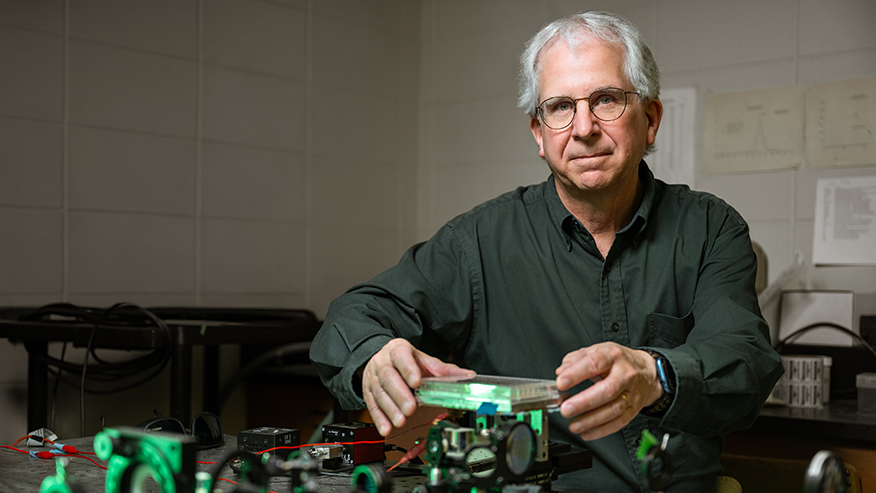
Lasers, Doppler effect personalize chemotherapy drug selection for cancer tumors
September 29, 2026

Provost announces leadership appointments, promotions
September 14, 2026
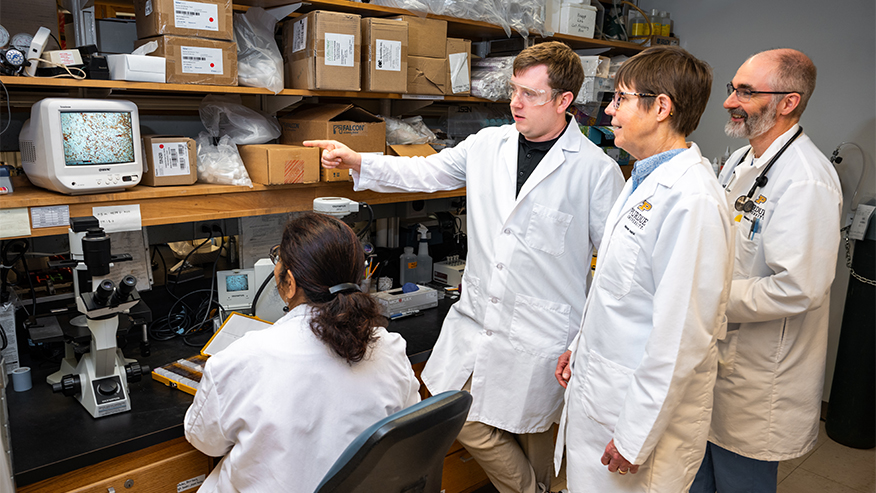
Purdue researchers study cancer in canines to help advance treatments for humans
August 27, 2026