Purdue-backed consortium wins National Science Foundation’s Regional Innovation Engines competition
$160 million grant award will fuel the creation of a major musculoskeletal research hub in the state of Indiana

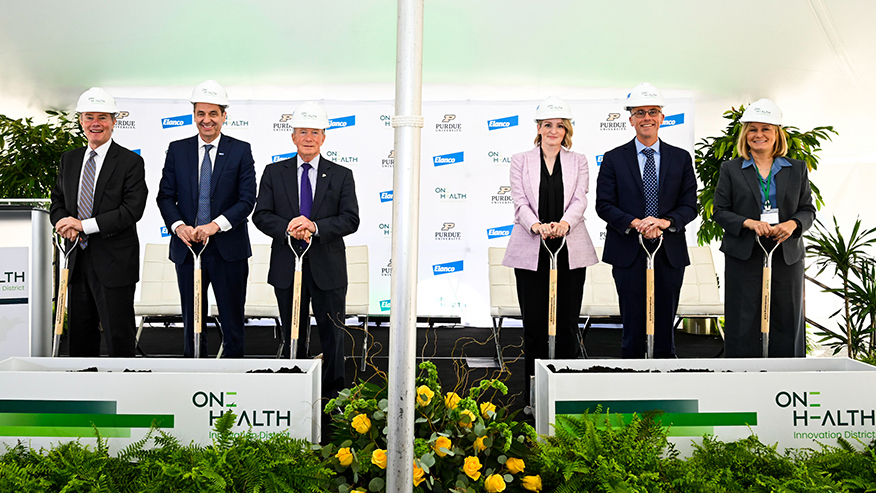
Purdue is partnering in a large consortium looking to meet the state’s growing healthcare needs through the National Science Foundation’s Regional Innovation Engines grant. (Purdue University photo)
INDIANAPOLIS — Purdue University is a leading partner in a large consortium looking to meet the state’s growing healthcare needs that won the National Science Foundation’s Regional Innovation Engines competition.
Announced on Tuesday (July 14), the grant award of up to $160 million over 10 years supports flourishing innovation ecosystems to spur economic growth in critical technologies and positions Indiana as a global research hub for musculoskeletal health.
Over 170 industry, clinical and university partners from the state of Indiana collaborated in the consortium, which was led by Indiana University and included state educational and industrial leaders such as Eli Lilly and Company, BioCrossroads, Zimmer Biomet, the University of Notre Dame, and many more. Purdue and its partners are aiming to help improve treatment for musculoskeletal diseases, such as osteoarthritis or osteoporosis, which place a significant burden on health, quality of life and the healthcare system as a whole.
“Our successful joint proposal — with our partners at the Indiana University School of Medicine leading and multiple other partners across the state participating — will help build a musculoskeletal health innovation ecosystem across Indiana that bridges the gap between unmet medical needs and the technologies that can solve them,” said Joseph Wallace, Purdue’s associate vice president for research development in Indianapolis and professor of biomedical engineering.
The news comes on the heels of the announced launch of a Purdue Center for Musculoskeletal Engineering (PCME) in Indianapolis. Led by the Weldon School of Biomedical Engineering and Wallace, who serves as the center’s inaugural director, the PCME will use engineering approaches to help prevent diseases harmful to the musculoskeletal system and treat them more efficiently when they occur. The center aligns with Purdue’s continued focus on the One Health initiative, which involves research at the intersection of human, animal and plant health and well-being.
The goal of the National Science Foundation’s Engines program is to build and scale regional innovation ecosystems across the United States, resulting in economic growth in the selected regions. With the help of this grant, the consortium plans to deliver $535 million in economic impact to the state of Indiana while improving health outcomes for millions across the region and country.
About Purdue University
Purdue University is a research institution ranked among the top 10 public universities in the United States. More than 106,000 students study at Purdue across multiple campuses, including more than 57,000 at our main campus locations in West Lafayette and Indianapolis. As a land-grant university committed to affordability and accessibility, Purdue’s main campus has frozen tuition 14 years in a row, enabling more students than ever to graduate debt-free.
Media contact: Derek Schultz, dcschultz@purdue.edu
Purdue University In Indianapolis News

Purdue-Google summit advances physical AI, manufacturing and workforce readiness
October 16, 2026
Purdue, Elanco, partners celebrate One Health Research Institute groundbreaking
October 7, 2026

Academic Success Building reaches construction milestone with topping-out ceremony
September 23, 2026

Purdue partners with Pacers Foundation to dedicate basketball courts honoring Indiana Fever legends
September 17, 2026