

Indiana’s emergency food resource network
Fighting Hunger Through Education
Shortcuts:
Our Mission

Indiana’s Emergency Food Resource Network (IEFRN) seeks to provide nutrition and food safety information for emergency food workers and clients through educational resources, including newsletters, education inserts, and food demos.
Current Newsletter
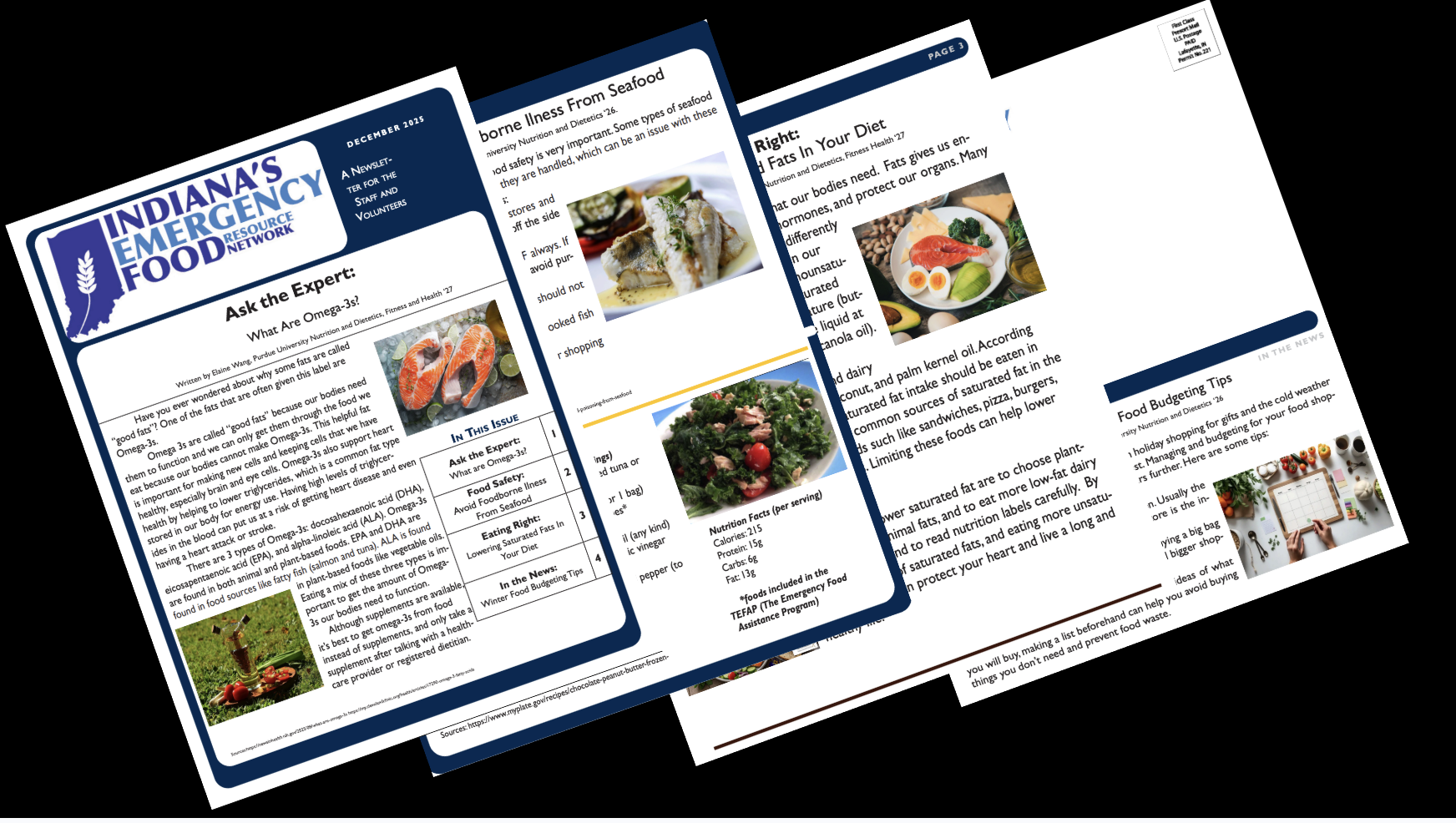
Newsletters provide nutrition and food safety information relevant to emergency food providers, their clientele, and the general public. Newsletters are written by Purdue undergraduate and graduate students and are revised by IEFRN staff.
Every newsletter published contains four parts, including Ask the Expert, Food Safety, Eating Right, and In the News
Newsletters are published every other month
Our staff


20%
Of children in indiana face hunger
$626,317,000
needed for people facing Hunger In indiana to meet food needs
14%
Of People in indiana face hunger
* Feeding America. (n.d.). Hunger in Indiana. Retrieved April 10, 2026, from Hunger in Indiana page