BRK – Birck Nanotechnology Center
Building Emergency Plan (BEP) – West Lafayette
Birck Nanotechnology Center
1205 Mitch Daniels Blvd, West Lafayette, IN 47907
Revision Date: 03/31/2026
Emergency Contacts
For all emergencies, call/text 911
Non-emergency Contacts
Purdue University Police Department (PUPD): 765-494-8221
Purdue University Fire Department (PUFD): 765-494-6919
Office of Emergency Preparedness (OEP): 765-494-0446
Purdue Environmental Health and Safety (EHS): 765-494-6371
Facilities Operations: 765-494-9999
Building Specific Information
Building Emergency Contacts
Building Deputy/ Facility Manager
Name: Dan Hosler
Email Address: dhosler@purdue.edu
Phone Number: 765-496-3883
Office/Room Number: 1214
Building Logistics Coordinator
Name: Michelle Radtke
Email Address: mlradtke@purdue.edu
Phone Number: 765-496-1173
Office/Room Number: 1220
Building Safety Engineer
Name: Christian Bokrand
Email Address: cbokrand@purdue.edu
Phone Number: 765-496-7367
Office/Room Number: 2287
Building Process Gas Engineer
Name: Rich Harlan
Email Address: rharlan@purdue.edu
Phone Number: 765-496-6697
Office/Room Number: 2287C
Life Safety Equipment
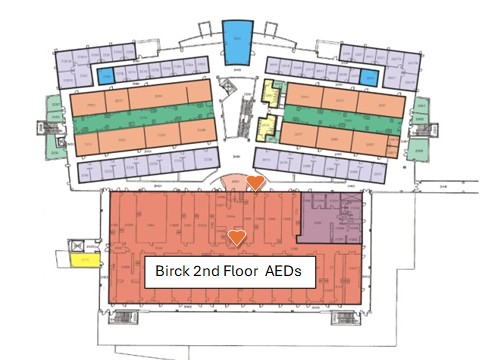
Automated External Defibrillators (AED)
AED Location 1: 1ST FLOOR ATRIUM SOUTH
Contact Person: CHRISTIAN BOKRAND
Contact Person’s Phone Number: 765-496-7367
AED Location 2: 2ND FLOOR ATRIUM SOUTH
Contact Person: CHRISTIAN BOKRAND
Contact Person’s Phone Number: 765-496-7367
AED Location 3: 2ND FLOOR ATRIUM SOUTH
Contact Person: CHRISTIAN BOKRAND
Contact Person’s Phone Number: 765-496-7367

Emergency Evacuation
In an emergency evacuation, building occupants shall leave the building at the nearest emergency exit, which may not be the main entrance.
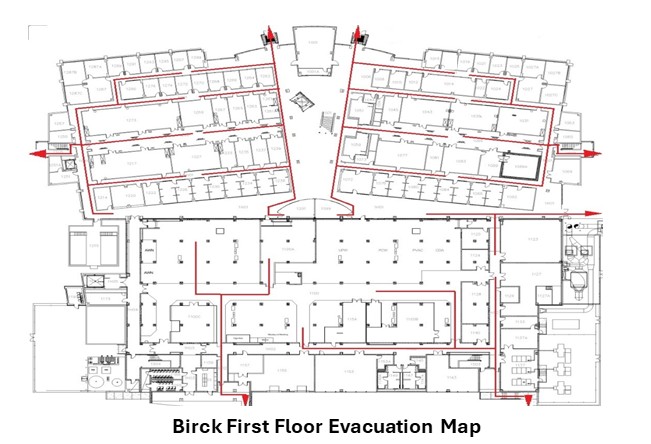


Once out of the building, occupants shall meet at the following Evacuation/Emergency Assembly Area (EAA) locations:
1. Primary EAA Location
Burton Morgan Center for Entrepreneurship Cafe
2. Secondary EAA Location (AFTER HOURS, HOLIDAYS)
Purdue Police Station

Please note: Building occupants may return to the building once they receive an all-clear from on-site emergency personnel.
Shelter in place
During a severe weather incident (such as a tornado warning), occupants can take shelter in a safe location, such as an interior room with no windows, ideally in the lower level of the building.
Severe weather shelter-in-place options in this building include, but are not limited to:
Restrooms and interior hallways away from windows and exterior walls. Room 1001.
Building Information for First Responder
Building Description
The Birck Nanotechnology Center building is a 3-story research facility. The first floor is comprised of laboratories, offices, meeting rooms, chemical storage, large mechanical room with machine shop, and support areas. The second floor is comprised of laboratories, offices, cleanroom, and support areas. The third floor has air handling equipment and some storage.
Building Departments
| Department | Safety Coordinator | Phone | Building | Room |
|---|---|---|---|---|
| BIRCK NANOTECHNOLOGY CENTER | CHRISTIAN BOKRAND | 765-496-7367 | BRK | 2287 |
| BUILDING SERVICES | MIKE LANE | 765-494-1410 | BRK | 1128A |
Building Critical Operations
The Emergency Response Building on the south side of Birck contains a Toxic Gas Monitoring System (TGMS) that is tied to critical operations. The system is configured to automatically shut down, and latch closed, gas flows from the Hydrogen Generator in BRK 1100 and the gas cabinets in the “bunkers” Toxic (BRK 1166), Flammable (BRK 1168), Pyrophoric (BRK 1199), during fire emergencies or detected gas leaks. Liquid and Gaseous chemicals are supplied throughout the laboratories and cleanroom. The system can also be manually triggered by pressing the Toxic Gas Alarm buttons.
Hydrogen cylinders and large tanks for Liquid Nitrogen storage are located in the tank yard behind the southwest corner of the building.
Labs and areas with an assigned person-in-charge (PIC) who serves as the emergency contact for that space are listed below.
| Birck Lab | Emergency Contact | Office Phone |
|---|---|---|
| 1031 | Hadiseh Alaeian | 765-494-7280 |
| 1039 | Zubin Jacob | 765-494-3514 |
| 1043 | Xianfan Xu | 765-494-5639 |
| 1045 | Hakan Salihoglu | 765-494-3106 |
| 1066 | Dan Hosler | 765-496-3883 |
| 1069 | Amy Marconnet | 765-494-3563 |
| 1077 | Dima Zemlyanov | 765-496-2457 |
| 1081 | Guy Telesnicki | 765-494-6954 |
| 1083 | Tiancong Zhu | 795-496-5375 |
| 1089 | Thomas Beecham | 765-494-0462 |
| 1089A | Dima Zemlyanov | 765-496-2457 |
| 1100 | Dan Hosler | 765-496-3883 |
| 1100A | Nick Glassmaker | 765-494-4312 |
| 1153 | Xiaohui Xu | 765-496-3437 |
| 1154 | Nick Glassmaker | 765-494-4312 |
| 1155 | Michelle Radtke | 765-496-1173 |
| 1157 | Neil Dilley | 765-496-6080 |
| 1165 | Christian Bokrand | 765-496-7367 |
| 1166 | Christian Bokrand | 765-496-7367 |
| 1168 | Christian Bokrand | 765-496-7367 |
| 1199 | Christian Bokrand | 765-496-7367 |
| 1217 | Christian Bokrand | 765-496-7367 |
| 1223 | Zhongxia Shang | 765-775-3459 |
| 1227 | Xianfan Xu | 765-494-5639 |
| 1233 | Zhongxia Shang | 765-775-3459 |
| 1235 | Zhongxia Shang | 765-775-3459 |
| 1237 | Zhongxia Shang | 765-775-3459 |
| 1239 | Bill Rowe | 765-469-8389 |
| 1254 | Dan Hosler | 765-496-3883 |
| 1261 | Christian Bokrand | 765-496-7367 |
| 1261A | Christian Bokrand | 765-496-7367 |
| 1263 | Alexei Lagoutchev | 765-496-3539 |
| 1265 | Joon Park | 765-494-4209 |
| 1267 | Zubin Jacob | 765-494-3514 |
| 1269 | Zhongxia Shang | 765-775-3459 |
| 1273 | Alexei Lagoutchev | 765-496-3539 |
| 2031 | Christian Bokrand | 765-496-7367 |
| 2037 | Angshuman Deka | 765-496-9156 |
| 2043 | Angshuman Deka | 765-496-9156 |
| 2066 | Christian Bokrand | 765-496-7367 |
| 2069 | Neil Dilley | 765-496-6080 |
| 2077 | Christian Bokrand | 765-496-7367 |
| 2081 | Christian Bokrand | 765-496-7367 |
| 2087 | Guy Telesnicki | 765-494-6954 |
| 2087A | Guy Telesnicki | 765-494-6954 |
| 2087B | Guy Telesnicki | 765-494-6954 |
| 2092 | Tim Miller | 765-494-3461 |
| 2100 | Christian Bokrand | 765-496-7367 |
| 2120 | Ray Kallaher | 765-202-4118 |
| 2217 | Kinga Lasek | 813-370-8500 |
| 2221 | Dallas Morisette | 765-496-2749 |
| 2233 | Sunil Bhave | 765-494-5639 |
| 2239 | Hakan Salihoglu | 765-494-3106 |
| 2254 | Christian Bokrand | 765-496-7367 |
| 2261 | Alina Alexeenko | 765-496-1864 |
| 2277 | Kinga Lasek | 813-370-8500 |
| 2283 | Alex Webster | 765-532-0989 |
| Bulk Chemical Storage Yard | Rich Harlan | 765-494-6697 |
Building Alarms
In addition to building fire alarm systems, many campus buildings have specialized alarms that building occupants may need to be aware of. These could include freezer temperature alarms, HVAC flow alarms and door/access alarms.
These alarms are listed below:
The Birck Nanotechnology Center has two alarms that trigger a building-wide evacuation. The Fire alarm with siren and a Toxic Gas alarm with beeping tone and orange strobes. Both alarms trigger the white strobes on the fire alarm pendants.
Fume hoods in the labs and cleanroom have beeping alarms when the airflow is out of control.
The freight elevator emits an audible beep when the overhead door is set to close. The dumb-waiter between BRK 1100 & BRK 2100, and the passenger elevators emit a ding when they arrive.
The gas bunker doors are monitored by a security alarm system equipped with siren. When the system is disarmed, a red flashing strobe activates to indicate that the doors are unsecured. When the system is armed, an audible countdown beeping signal sounds until the alarm is fully activated.
Gas cabinet controllers in the gas bunkers emit a beeping tone when gas flows are out of control or a fault is registered.
Building Safety Committee
| Name & Position | Department | Phone | Building | Room | |
|---|---|---|---|---|---|
| Christian Bokrand, Chair | Birck | (765)-496-7367 | Birck | 2287 | cbokrand@purdue.edu |
| Dan Hosler, Member | Birck | (765) 496-3883 | Birck | 1214 | dhosler@purdue.edu |
| Rich Harlan, Member | Birck | (765) 494-6697 | Birck | 2287C | rharlan@purdue.edu |
| Dave Lubelski, Member | Birck | (765) 494-9102 | Birck | 2287B | lubelski@purdue.edu |
| Tim Miller, Member | Birck | (765) 494-3461 | Birck | 2287C | miller@purdue.edu |
| Ron Reger, Member | Birck | (765) 494-6667 | Birck | 2289 | rreger@purdue.edu |
| Guy Telesnicki, Member | Birck | (765) 494-6954 | Birck | 2287A | gtelesnicki@purdue.edu |
| Xavier Radtke, Member | Birck | (765) 494-9104 | Birck | 2251 | xradtke@purdue.edu |
Building Occupants and Responsibilities
Department Head or Designated Representative
- Appoint the building deputy or designated representative to develop, coordinate and distribute the BEP to building residents.
- Approve the plan prior to inclusion in the online BEP list on the Office of Emergency Preparedness BEP webpage.
- Ensure all people in their department are aware of the BEP and its content including exit routes and the location of their Evacuation/Emergency Assembly area (EAA).
Building deputy or BEP developer
- Prepare, coordinate and distribute the BEP to building occupants.
- Ensure the BEP is readily available and used during emergency incidents.
- Review the BEP to ensure information and procedures are current.
- List all Critical Operations in the BEP for first responder reference and use.
- Assist in the development of internal emergency notification procedures ensuring building occupants are notified of the emergency.
- Assist in building evacuation.
- Report to Emergency Assembly Area (EAA) and provide any incident information to Incident Command, Command 14 (PUFD command vehicle) or the nearest public safety official as soon as possible.
- Collect and provide essential information to emergency response personnel (e.g. location of the incident, persons in the building, special hazards, etc.).
- Develop additional building-specific information that makes the BEP more effective (e.g. specific procedures for any assigned individual that requests additional assistance, evacuation maps, emergency assembly area, etc.).
- Include in the BEP any additional information as directed by the department head or the individual responsible for the building.
Building Occupants
It is the responsibility of all members of the Purdue community to ensure a healthy and safe environment. Whereas the BEP is regulated by OSHA and the Indiana Fire Code, all elements within the plan apply to all members of the Purdue community. Building occupants should be familiar with emergency procedures and are expected to take all alarms and alerts seriously.
Emergency Notifications (PurdueALERT)
PurdueALERT is Purdue University’s mass communication tool for alerting campus to immediate dangers such as severe weather, active threats and ongoing threats that could cause harm.
The following communication methods make up the university’s Emergency Communication Plan for Indianapolis:
- ALL-HAZARDS OUTDOOR EMERGENCY WARNING SIRENS: This means to immediately seek shelter (shelter in place) in a safe location within the closest facility/building. This course of action may need to be taken during a tornado, active threat such as a shooting or a major release of hazardous materials in the outside air.
- BUILDING FIRE ALARMS (INDOORS): This means immediately evacuate the building and proceed to your emergency assembly area as defined in the BEP.
- Use all communication means available to find out more details about the emergency. Remain in place until police, fire or other emergency response personnel say it is safe to leave.
- TEXT MESSAGING: Purdue University faculty, staff and students may sign up to receive an emergency notification text message. Members of the campus community may register up to three numbers to receive emergency text messages.
- X (formerly Twitter): Use the X app for push notifications from @purdueALERT to your smartphone. This is a good method for contractors, parents, visitors or community members to receive PurdueALERT emergency messages.
- DIGITAL SIGNS: Digital signs around campus will display the same PurdueALERT message that gets sent via text message to opted-in campus subscribers.
- DESKTOP POPUP ALERT: An alert will be sent to the majority of university computers. Alert language will only display if a user is logged in.
- EMAIL: An email can be sent to all people with a purdue.edu address. When building deputies receive an emergency notification, they will forward an email to others in the building or go to offices or rooms in person, if time permits and their safety is not in jeopardy. They also may post signs on doors or in hallways.
- WEST LAFAYETTE / INDIANAPOLIS EMERGENCY STATUS WEBPAGE: The Campus Emergency Status webpage is the focal point of the most complete information for all campus-related emergencies.
- MEDIA: The university works with the news media including radio, TV and newspapers to help spread the word.
Additional Assistance During an Emergency
Tips for individuals needing assistance
In the event of an emergency that may require the evacuation of a campus building, the following procedures are recommended:
- If able to evacuated, please do so at that time. Remember to use the stairs if able. Never use the elevator during a fire alarm.
- If not, shelter in place in an area with no immediate hazards and call or text 911. Advise the police dispatcher of the location. Even if the caller is unable to speak, the dispatcher will then automatically surmise that the caller may be in trouble and will respond accordingly.
- If unable to call 911, advise others of the location and have them inform emergency personnel of the location.
- If in no immediate danger, remain in the location and wait for emergency personnel to arrive.
- If in immediate danger, move to an area to shelter in place. Recommended areas would be a room with an outside window or a room with a sprinkler system if available.
- Carry a sounding device like a small whistle, flashlight and cell phone to alert emergency personnel of the location.
Tips for people who offer to help those needing assistance
- Always ask someone requiring additional assistance how to help before attempting to provide assistance.
- Only attempt an emergency evacuation after having emergency assistance training or if the person is in immediate danger and cannot wait for emergency personnel.
- If you know of someone who needs assistance, notify emergency personnel or call/text 911 immediately.
Evacuation & Shelter In Place
Evacuation
In the event of an emergency that may require the evacuation of a campus building, the following procedures are recommended:
- Immediately obey evacuation alarms and orders. Tell others to evacuate.
- No one may remain inside a building when an evacuation is in progress.
- Classes in session must cease and immediately evacuate the building.
- If involved with hazardous research or doing a dangerous procedure, immediately shut down operations that could create additional hazards if left unattended. Evacuate as soon as possible.
- Take keys, coat, purse and any other critical personal items to the Evacuation/Emergency Assembly Area (EAA). REMEMBER, IN CASE OF A FIRE, IT IS IMPORTANT TO NOT DELAY EVACUATION.
- Close doors as rooms are vacant.
- Assist those who need help, but do not put yourself at risk attempting to rescue trapped or injured victims.
- Note location of trapped and injured victims and notify emergency responders.
- Walk calmly but quickly to the nearest emergency exit.
- Use stairways only. Do not use elevators.
- Keep to the right side of corridors and stairwells as you exit.
- Remain in EAA until roll is taken and instructions are given.
- Do not reenter the building until authorized fire or police department personnel give the “All Clear” instruction.
Shelter In Place
Shelter in place means seeking immediate shelter inside a building or university residence. This course of action may need to be taken during a tornado, active threat, release of hazardous materials in the outside air or a civil disturbance. When you hear the sirens, immediately go inside a building to a safe location and use all means of communication available to find out more details about the emergency. Remain in place until police, fire or other emergency response personnel provide additional guidance or tell you it is safe to leave. Keep to the right side of corridors and stairwells as you exit.
Severe Weather
- Proceed to the basement of any building that has a basement or sub-walk. Position yourself in the safest portion of the area away from glass. Be prepared to kneel facing a wall and cover your head.
- In high-rise (four stories or more) buildings, vacate the top floor and move to a lower floor or to the basement. Position yourself in an interior corridor away from glass. Be prepared to kneel facing the wall and cover your head.
- If time permits, occupants of wood-frame or brick buildings with wood floors should leave the building and go directly to a more substantial concrete building, preferably with a basement.
- Any occupant who encounters a student or visitor should direct them to take appropriate actions.
- Any occupant that encounters a physically disabled individual should assist them if possible or note the person’s location and communicate it to emergency responders.
- Try and obtain additional clarifying information by all possible means (e.g. Campus Emergency Status page, TV, radio, email, etc.)
Active Threat
If an active threat is outside the building, the best option may be to shelter in place:
- Proceed to a room that can be locked, barricaded or secured in some way. Close and lock all the windows and doors and turn off all the lights.
- Hide under a desk, in a closet or in the corner. If possible, get everyone down on the floor and ensure that no one is visible from outside the room.
- One person in the room should call/text 911, advise the dispatcher of what is taking place and inform them of your location.
- Remain in place until the police, or a campus administrator known to you, gives the all-clear. Unfamiliar voices may be the threat attempting to lure victims from their safe space.
- Do not respond to any voice commands until you can verify with certainty that they are being issued by a police officer.
- After getting to a safe location and without jeopardizing your safety, try and obtain additional clarifying information by all possible means, including text, email, Campus Emergency Status page, TV, radio, etc.
- It would be useful to have a cell phone, hard-wired telephone or computer system in the shelter location to assist in obtaining additional information as well as being able to report any life-threatening conditions.
- Report any suspicious activity if you can do so without jeopardizing your safety. Call/text 911 if possible.
- Normally, police department personnel, PurdueALERT text and all-hazards outdoor warning siren layers will be the primary notification methods.
If an active threat is in the same building:
- Determine if the room can be locked. If so, follow the same procedure described in the previous paragraph.
- If the room cannot be locked, determine if there is a nearby location that can be reached
safely and securely, or if you can safely exit the building. - If you decide to move from your current location, be sure to follow the instructions outlined
below.
If an active threat enters your office or classroom:
- Try to remain calm.
- Call/text 911, if possible, and alert police to the location of the threat. If you can’t speak, leave the line open so the dispatcher can listen to what’s taking place. Normally, the location of a 911 call can be determined without speaking.
- You have options–you can make attempts to run, hide or fight.
- Run and escape the area of threat.
- Hide by seeking cover and/or concealment.
- Fight by overpowering or distracting with force. This should be considered a very last resort.
- If the threat leaves the area, proceed immediately to a safer place and do not touch anything that was in the vicinity of the threat.
Under all circumstances:
- If you decide to flee during an active threat situation, make sure to have an escape route and plan in mind.
- Do not carry anything while fleeing. Move quickly, keep hands visible and follow the instructions of any police officers you may encounter.
- Do not attempt to remove injured people. Instead, leave wounded victims where they are and notify authorities of their location as soon as possible.
Hazardous Materials Release
For spills, releases or incidents requiring special training, procedures or personal protective equipment (PPE) that is beyond the abilities of present personnel, take the following steps:
- Immediately notify affected personnel and evacuate the spill area. Pull the fire alarm if building evacuation is required.
- Call 911 to report the incident.
- Give the operator the following information:
- Your name, telephone number, and location
- Time and type of incident
- Name and quantity of the material, if known
- The extent of injuries or damage, if any
- If possible, seal off the affective area to prevent further contamination of others until the arrival of emergency personnel.
- Anyone who is contaminated by the spill should wash off the contamination, remain in the vicinity and give his/her name to the emergency personnel. If needed, first aid can be started immediately.
- No effort to contain or clean up spills and releases should be made unless you have been trained in the proper methods to do so.
- Take appropriate steps to make sure no one evacuates through the contaminated area.
- If an alarm sounds, follow established building evacuation procedures listed above.
- An incident command post will be set up near the emergency site. Keep clear of the incident command area unless you have official business, including information regarding the chemical or other material that has been spilled.
- Do not re-enter the area until directed by emergency personnel.
If you are directed to shelter in place due to a hazardous material (HAZMAT) accidental release, the air quality may be threatened and sheltering offers more protection. For a HAZMAT shelter in place situation, take the following actions:
- Close all windows and doors.
- Move to the shelter-in-place location.
- Select an interior room above ground with the fewest windows or vents. The room(s) should have adequate space for everyone to sit.
- Do not go outside or attempt to drive unless specifically instructed to evacuate.
- Do not use elevators as they may pump air into or out of the building.
- Share notification with others and assist persons with disabilities, if possible.
- Try and obtain additional clarifying information by all possible means, including text, email, Campus Emergency Status page, TV, radio, etc.
- It would be useful to have a cell phone, hard-wired telephone or computer system in the shelter location to assist in obtaining additional information as well as being able to report any life-threatening conditions.
All-Clear Procedures
- Do not re-enter the building until the all-clear announcement is made by police or fire personnel.
- The All-Hazards Outdoor Warning Sirens will not be used to send an all-clear signal. Seek additional information by all means possible, including through PurdueALERT, Campus Emergency Status page, TV and radio channels.