
Online Master’s Degrees In Computer And Electronics Engineering
Online Master’s Degrees In Computer And Electronics Engineering
Earn your master’s degree and engineer what’s next
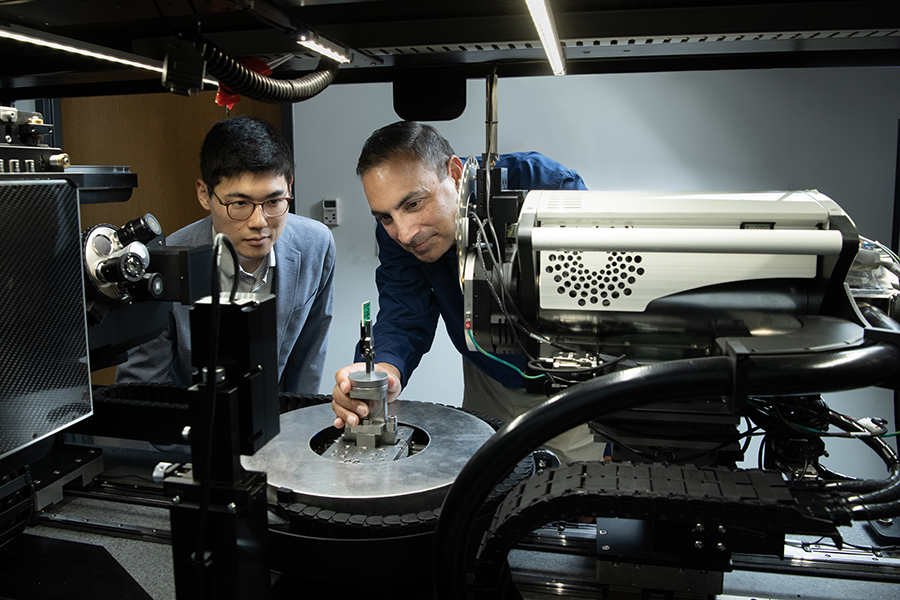
Purdue University’s online master’s programs in computing and electronics engineering give professionals in electrical engineering, computer engineering, software engineering, microelectronics and semiconductors dynamic skills they can use to move their industries forward. These boundary-pushing programs offer the same academic rigor and career-enhancing connections as our on-campus programs, and they are taught by the same expert Purdue faculty.
Master of Science in Electrical and Computer Engineering

Master of Science in Microelectronics and Semiconductors
Master of Science in Software Engineering

Request Information
Complete the form below to learn more about Purdue’s online master’s degrees in electrical and computer engineering, microelectronics and semiconductors, and software engineering. The form below will be shared with a Purdue enrollment specialist.

Master of Science in Electrical and Computer Engineering
Ranked the #1 online master’s in electrical engineering master’s program by U.S. News & World Report (2025), Purdue University’s fully online Master of Science in Electrical and Computer Engineering offers customizable learning paths in high-demand areas like AI, networking, control systems and power, along with options to earn a graduate concentration. With its blend of academic excellence, flexibility and real-world relevance, this program empowers engineers to lead and innovate in a rapidly evolving field.
- Early to mid-level career engineers
- Working professionals with a STEM background looking to deepen their knowledge in hardware, software, control systems and more which can be applied in a wide range of industries
- 30 credit hours
Criteria for Admission
- Minimum GPA of a 3.0
- Preferred undergraduate degree in Electrical Engineering, Computer Engineering, Computer Science, Physics, Applied Physics, Mathematics or Applied Mathematics
- Math background of three semesters of Calculus and one semester each of Differential Equations and Linear Algebra (highly recommended)
- Advanced Systems Design & Analysis: Design, model and optimize complex electrical and computer systems—from integrated circuits and embedded platforms to signal processing and power systems.
- Data-Driven & Intelligent Computing: Apply algorithms, machine learning and high-performance computing to analyze data, automate decisions and build intelligent systems.
- Innovative Problem Solving Across Domains: Tackle real-world challenges in communications, robotics, cybersecurity and more by integrating theoretical knowledge with hands-on engineering practice.
- Electrical/Electronics Engineer
- Computer Hardware Engineer
- Power Systems Engineer
- Design Engineer
- Controls Engineer

Master of Science in Microelectronics and Semiconductors
Purdue University’s online Master of Science in in Microelectronics and Semiconductors, equips professionals with the leadership skills needed in the dynamic microelectronics field, addressing the increasing demand for semiconductor engineers. The curriculum draws from various schools, colleges, and departments across Purdue University, and students can enroll in courses covering supply chain management, materials engineering, circuit design, systems design and more, enabling them to build a comprehensive skillset and meet the rising demands for semiconductor-related expertise.
- Early to mid-level career engineers
- Working professions with a STEM background interested in an interdisciplinary education in with an emphasis on semiconductor manufacturing and design
- 30 credit hours
Criteria for Admission
- Minimum GPA of a 3.0
- Preferred undergraduate degree in Engineering, Science, Mathematics or Technology
- Math background of one semester each of Calculus I, Calculus II and either Linear Algebra or Differential Equations
- Integrated Circuit & Chip Design: Design, simulate and optimize analog, digital and mixed-signal integrated circuits using industry-standard tools and semiconductor design methodologies.
- Semiconductor Device Physics & Fabrication: Apply deep knowledge of semiconductor materials and device physics to engineer next-generation transistors, sensors and nanoscale components.
- System-Level Innovation & Verification: Build and test complex electronic systems, including system-on-chip architectures, through rigorous modeling, layout and verification techniques.
- Semiconductor Engineer
- Process Engineer
- Manufacturing Engineer
- Technical Sales Engineer
- Product Development Engineer

Master of Science in Software Engineering
Purdue University’s online Master of Science in Software Engineering is designed to prepare the next generation of software professionals to meet the growing global demand for skilled engineers and innovators. This program offers a flexible, fully online format that allows working professionals to advance their education while continuing their careers. Graduates of the program will earn a respected degree that signals advanced expertise in software engineering, positioning them for leadership roles in a rapidly growing field.
- Early to mid-level career engineers
- Working professionals with a STEM background and knowledge in programming languages looking to further specialize in software
- 30 credit hours
Criteria for Admission
- Preferred undergraduate degree in Computer Engineering or Computer Science
- Students should have a working knowledge of relevant topics, such as algorithms, data structures, microprocessors, operating systems, programming languages, compilers, calculus, linear algebra, discrete mathematics and probability and statistics
- Robust Software Design & Architecture: Engineer scalable, maintainable and secure software systems by applying best practices in object-oriented design, architectural patterns and system modeling
- Agile Development & Lifecycle Management: Lead full software development lifecycles using agile methodologies, DevOps practices, version control, testing strategies and project management tools.
- Advanced Programming & Problem Solving: Write efficient, high-quality code across multiple languages and platforms while solving real-world challenges in cloud computing, cybersecurity and AI-enabled applications.
- Software Engineer/Developer
- Cloud Engineer
- Software Developer
- Quality Assurance/Software Test Engineer
- Software Architect
