
Online Master’s Degrees in Autonomous Technologies
ONLINE MASTER’S DEGREES IN AUTONOMOUS TECHNOLOGIES
Lead the evolution of intelligent systems
Purdue University’s online master’s degrees in Autonomy, Internet of Things and Robotics provide advanced engineering technical education that are directly aligned with transformative technological advancements, cutting-edge research and long-term industry needs. These boundary-pushing programs, designed for today’s world and beyond, offer the same academic rigor and career-enhancing connections as our on-campus programs, and they are taught by the same expert Purdue faculty in the highly esteemed College of Engineering.
Master of Science in Autonomy
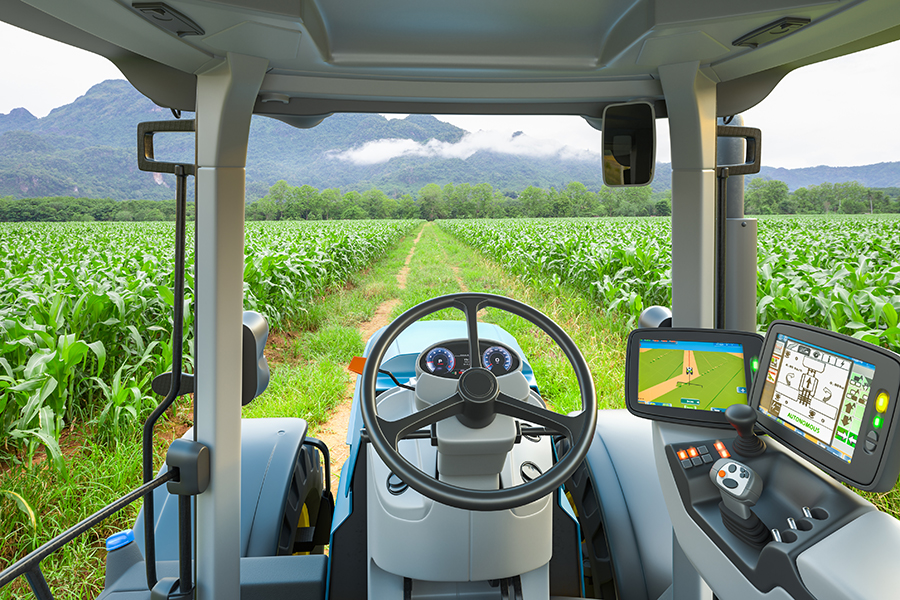
Master of Science in Internet of Things

Master of Science in Robotics

Request Information
Complete the form below to learn more about Purdue’s online master’s degrees in Autonomy, Internet of Things or Robotics. The form below will be shared with a Purdue enrollment specialist.

Master of Science in Autonomy
Purdue University’s online Master of Science in Autonomy focuses on the area of analysis, control and design of autonomous systems spanning a variety of application domains. The courses within this major will establish fundamental theories and tools for modeling, analyzing and developing algorithms to achieve autonomy of both individual systems and a network of interconnected systems. It spans core topics like control theory, machine learning, artificial intelligence, networks and advanced courses in emerging topics.
- Early to mid-level engineering professionals
- Working professionals seeking to further develop their core skills and knowledge in both classical theories in control, optimization and networks and recent advances in machine learning and AI
- 30 total credit hours
Criteria for Admission
- Minimum GPA of a 3.0
- Preferred undergraduate degree in Engineering, Science, Mathematics or Technology.
- One semester each of Calculus I, Calculus II and either Linear Algebra or Differential Equations
- Advanced Control Systems & Autonomous Decision-Making: Learn to design intelligent, autonomous systems capable of making real-time decisions in complex, dynamic environments.
- Optimization & Systems-Level Thinking: Develop the ability to model, analyze and optimize large-scale engineering systems using convex optimization techniques and systems synthesis principles that balance performance, reliability and scalability.
- Machine Learning, Deep Learning & AI Foundations: Gain the theoretical and practical expertise to build data-driven models and intelligent algorithms that power modern autonomous and adaptive technologies.
- Engineering Manager
- Director of Engineering
- Robotics Engineer
- Principal Engineer
- Chief Engineer

Master of Science in Internet of Things
Purdue University’s online Master of Science in Internet of Things (IoT) prepares engineers to lead in the fast-growing field of connected technologies. The program focuses on the analysis and design of systems that integrate computing, sensors, embedded systems, chip design and wireless communication. Taught by world-class faculty, Purdue’s curriculum builds core skills in embedded computing, VLSI, and networked systems—key areas for success in today’s evolving IoT landscape.
- Early to mid-level engineering professionals
- Working professionals seeking to further enhance their core skills and knowledge in analysis and design of IoT, especially in embedded systems, VLSI, and wireless communications
- 30 total credit hours
Criteria for Admission
- Minimum GPA of a 3.0
- Preferred undergraduate degree in Engineering, Science, Mathematics or Technology.
- One semester each of Calculus I, Calculus II and either Linear Algebra or Differential Equations
- IoT System Design & Integration: Develop embedded systems, system-on-chip architectures and smart devices that seamlessly connect hardware, sensors and software for real-time data processing and control.
- Connected Infrastructure & Network Intelligence: Engineer secure and scalable computer communication networks, with specialized knowledge in smart cities, autonomous vehicles and industrial IoT applications.
- Data-Driven Decision Making & Analytics: Apply data mining, computer vision and advanced analytics to extract actionable insights from sensor data in dynamic, interconnected environments.
- Lead Software Engineer
- Software Product Owner
- Cybersecurity Engineer
- Product Strategist
- Industry Principal
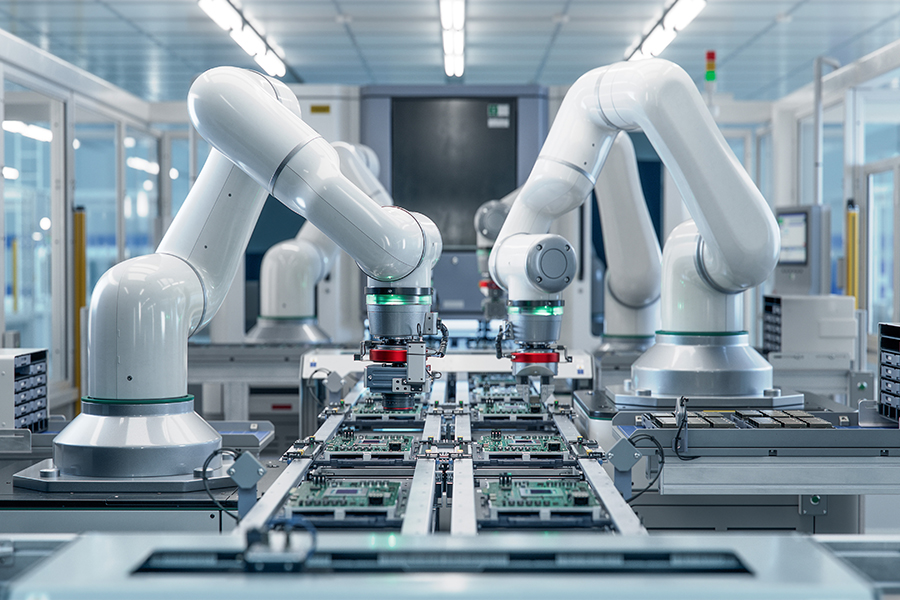
Master of Science in Robotics
Purdue University’s online Master of Science in Robotics equips engineers to lead in the dynamic field of robotics. This program focuses on the analysis, control and design of robotic systems, integrating disciplines such as control theory, machine learning, artificial intelligence and networked systems. The program’s coursework establishes a solid foundation in modeling, analysis and algorithm development for robotic systems. Graduates will be well-prepared to innovate and lead in the evolving landscape of robotics across various industries.
- Early to mid-level engineering professionals
- Working adults seeking to deepen their core skills and knowledge in both classical theories in control, optimization and networks and recent advanced in learning and AI, together with their applications in robotics, multi-robot coordination, and human-robot teaming
- 30 total credit hours
Criteria for Admission
- Minimum GPA of a 3.0
- Preferred undergraduate degree in Engineering, Science, Mathematics or Technology.
- One semester each of Calculus I, Calculus II and either Linear Algebra or Differential Equations
- Dynamic Systems Modeling & Control: Design and analyze both linear and nonlinear control systems for robotic applications, leveraging advanced optimization and estimation techniques.
- Intelligent Autonomous Behavior: Implement reinforcement learning, multi-agent coordination and decision-making algorithms to enable autonomous robotic behavior in real-world environments.
- Robotic Systems Engineering: Integrate mechanical, electrical and software components in robotic platforms, including industrial robotics, digital control and embedded system coordination.
- Engineering Manager
- Directors of Engineers
- Robotics Engineers
- Principal Engineers
- Chief Engineers
