Senior international officer Heidi Arola explains new federal immigration rules
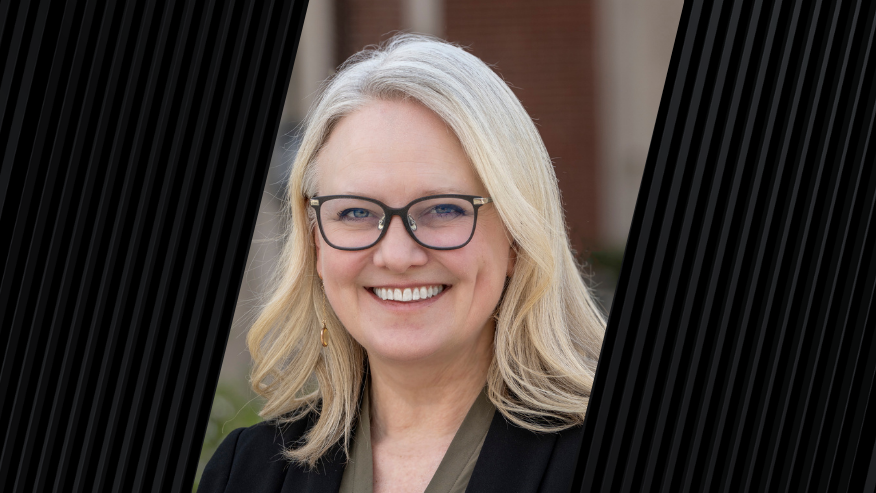
A series of federal regulatory changes in recent months means significant impacts for international students and scholars at Purdue and around the country. With an important new rule scheduled to take effect this week but temporarily paused, Heidi Arola, Purdue’s senior international officer, shares how anticipated changes stand to impact Boilermakers and how the International Student Services and International Scholar Services offices (ISS) have been preparing the university to support them.
What is changing in the federal landscape, and what do our international students, faculty and staff need to know?
The U.S. Department of Homeland Security (DHS) is implementing numerous changes affecting how Purdue’s international students and scholars work, study and pursue their degrees. The major one — which was supposed to take effect Sept. 15 but was temporarily paused by a federal judge through a preliminary injunction on the evening of Sept. 14 — includes a shift away from the “duration of status” indicating how long an international student can study in the U.S., reforms to traditional combined (4+1) degree programs, and new restrictions on students changing educational objectives or making lateral or reverse matriculation moves.
Another major change limits the circumstances under which universities are able to authorize curricular practical training (CPT) for international students, based on new DHS guidance issued last month.
Purdue’s ISS staff and campus partners have demonstrated exceptional teamwork and tireless commitment — logging long hours and coordinating round-the-clock efforts — to develop informational resources and hold campus sessions explaining these changes. This unified and proactive approach is designed to minimize disruptions for our international students and scholars as they pursue their degrees and research in full alignment with new federal compliance mandates.
Can you explain the ‘duration of status’ change and how this is different?
A new DHS rule replaces the long-standing “duration of status” model with “fixed period of admission.” These fixed periods of admission will typically be capped at four years.
Until now, “duration of status” has generally meant that students could remain in the country so long as they were pursuing their degrees. Under the new rule, all students will be given a fixed period of admission to the U.S., which will be a maximum of four years or their program end date, whichever is shorter. The good news is there is a defined process for requesting extensions of stay, and ISS will assist with this when needed. A federal court ruling on Sept. 14 has temporarily paused implementation of the new rule.
What will happen to current students who need more than four years to graduate?
This is common, especially for doctoral students, but also for many undergraduates. In response, our ISS office has been very proactive in the lead-up to the anticipated Sept. 15 rule change. Working with deans, department heads, faculty and the advising community, ISS staff reviewed the records of current international students who have indicated that they will require more time to complete their degrees than the time remaining on their immigration documents. ISS was able to issue many extensions that will ultimately reduce anticipated administrative delays, costs and uncertainty for our international students.
For international postdoctoral scholars — who are also impacted by this rule — ISS, the Office of the Vice Provost for Graduate Students and Postdoctoral Scholars (OGSPS), and teams from Teaching and Learning as well as the university business offices, have hosted multiple Q&A sessions with colleges to help them navigate this rapidly changing landscape. ISS also proactively assisted many scholars in extending their immigration documents to minimize disruptions to their work and to their research labs.
What should people know about the new interpretation of CPT?
Under DHS’ new interpretation, an internship or work experience qualifies for CPT only if this is required for every student in a particular Purdue program of study.
Noncompliance could pose serious consequences for the student, in terms of jeopardizing their immigration status, and for Purdue, by risking our eligibility to host international students. Because of this, Purdue’s ISS team has again taken a proactive approach. Working with others, ISS has hosted informational and Q&A sessions with deans, associate deans and department heads. They also contacted every international student as soon as the new CPT guidance was announced and hosted an online town hall to explain what was happening.
Purdue was one of the first universities in the Big Ten Academic Alliance (BTAA) to adapt our processes in anticipation of the new rule and others soon adopted our approaches. In July, as the chair of the BTAA Senior International Officer group, I had the opportunity to co-organize and moderate a panel for a special “duration of status” virtual summit, attended by BTAA leadership across multiple academic peer groups. So, Purdue’s leadership, both on campus and across the BTAA, has not only helped Purdue students, scholars and academic program managers but also our fellow universities to stay compliant and minimize disruptions at a time of significant regulatory change.
Many international students would like to obtain practical training in their fields in the U.S. after graduating. Are they impacted by the change in rules?
I’m glad you brought this up because post-completion practical training experiences — such as internships, etc. — play an important part in many students’ plans. International students have the opportunity to pursue such experiences for one year upon completion of a degree program, with up to two additional years if they graduate in a STEM field, under a provision called optional practical training (OPT). If and when the new-but-temporarily-paused “fixed period of admission” rule goes into effect, international students will be required to take two steps: in addition to ensuring they have work authorization under OPT, they will also need to apply for extensions of their stay in the U.S.
Degree programs that accelerate undergraduate-to-graduate degrees are popular but take more than four years. How are these affected?
Combined 4+1 programs have become popular for many Purdue students because these shorten the time required to complete a graduate degree. However, as currently structured, these programs usually last five years and have students concurrently enrolled in two levels of study. Together ISS and Purdue’s OGSPS teams have developed a solution that keeps accelerated undergraduate-to-graduate pathways open to everyone while respecting the intent of the rule change.
Undergraduate students who meet the requirements to take graduate-level courses can apply up to 12 credit hours toward a graduate degree. If and when the new rule goes into effect, international students will need to apply for an extension or depart the country and re-enter on a new immigration document after finishing their bachelor’s and beginning their master’s. Students interested in pursuing this option should speak to their academic advisors.
Given the complexity of these changes, along with the importance of compliance, where can people turn for help?
We know people will have questions, and I’d urge them to view ISS’ newly launched Federal Immigration Updates webpage, where they will find answers to most questions. In addition, people at any Purdue location can contact International Student Services or International Scholar Services or their academic advisors to discuss their specific situations and needs.
Any final takeaways you want our international students and scholars to have?
Yes. Purdue is proud to attract the very best students and scholars from all over the world to apply to study and work here. When appropriate and rigorous vetting standards are maintained, visa processes are orderly and transparent, and federal immigration rules are respected, we are proud to welcome the best global talent to Purdue. We greatly value the contributions of our international students and scholars, and we are committed to helping them navigate these changes.
To this point: Navigating complex regulatory changes shouldn’t stand in the way of a student’s or scholar’s success. We are dedicated to helping our international community understand and navigate these new rules so they can focus on academic excellence, research and scholarly achievement, and meaningful contributions to and involvement in the Purdue community.
I also want to thank our ISS student and scholar teams, led by Christine Collins and Amanda Thompson. They have done a fantastic job preparing for these new federal changes and staying motivated and mission-focused over the last few months. Working with OGSPS, legal, HR and finance, and many others, they have prepared guidance documents, FAQs and held numerous informational sessions across Purdue to help prepare. It has been a very intense time and a heavy lift for all, and I am so proud of the amazing teamwork that I have seen. Their work is serving everyone’s interests: students’, scholars’ and Purdue’s.
About Purdue University
Purdue University is a research institution ranked among the top 10 public universities in the United States. More than 111,000 students study at Purdue across multiple campuses, including more than 57,000 at our main campus locations in West Lafayette and Indianapolis. As a land-grant university committed to affordability and accessibility, Purdue’s main campus has frozen tuition 14 years in a row, enabling more students than ever to graduate debt-free.
Media contact: Trevor Peters, peter237@purdue.edu
More Purdue News
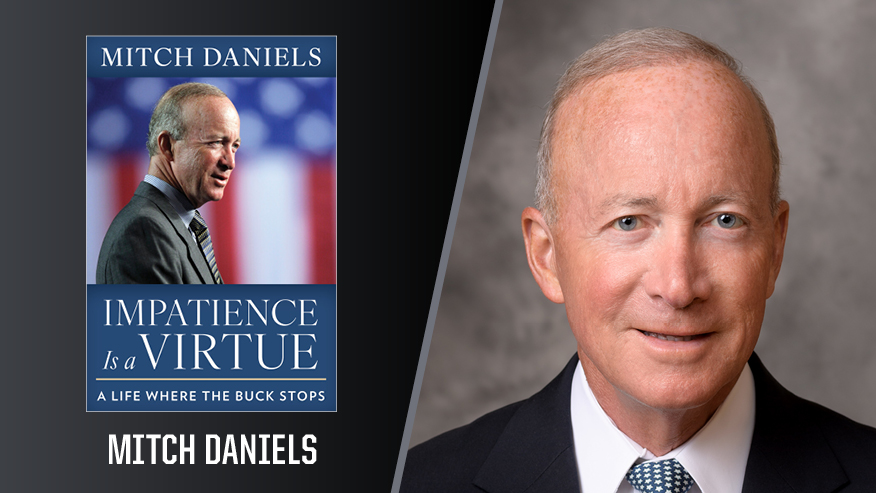
New book out today: ‘Impatience Is a Virtue’ by President Daniels
September 15, 2026

Boilermaker Fashion Showcase to bring exclusive gear, fan culture to Ross-Ade Stadium
September 15, 2026
Purdue value proposition continues to drive strong demand, undergrad enrollment increases
September 14, 2026
Provost announces leadership appointments, promotions
September 14, 2026