Purdue continues to enhance investment and support for doctoral students
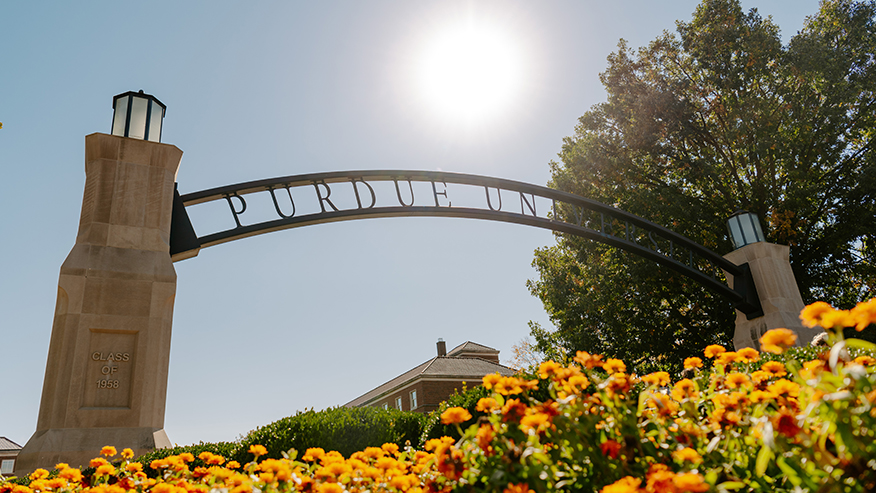
Purdue’s nearly 13,000 graduate students, the most ever, are a priority of the university’s strategic commitment and increased investment in creating a culture of achievement and excellence at scale. These efforts are accelerating an already-strong demand for the next generation of leaders seeking an advanced degree through Purdue and solidified its standing in granting the nation’s third-most PhDs.
“Purdue’s focus on excellence at scale makes it our highest priority to recruit the best and brightest graduate and doctoral students and postdoctoral scholars,” says Haley Oliver, vice provost of graduate students and postdoctoral scholars. “Doing so enhances our scholarly excellence and impact, increases our competitiveness for research funding, and enables us to provide a transformative education to the largest number of undergraduate students in Purdue history.”
Recognizing they are the engines that power its research and teaching missions, Purdue has made major financial and programmatic investments in preparing Boilermaker grad students to be successful. The improvements are maximizing grad students’ potential for scholarship and career achievement across all departments and colleges while equipping them to address challenges through leadership and resilience.
Financial investments include:
- Establishing in 2024 scholarship programs for up to 150 new Presidential Doctoral Excellence Awards to provide $10,000 annually per student over four years. Seventy-five were awarded this year, and 120 are being offered for 2025.
- Committing greater resources for health and well-being services for graduate and undergraduate students. Counseling and Psychological Services (CAPS) saw its annual appropriation increase to $4.7 million, up 30% from the year prior, as part of a plan to bolster resources and counseling services for graduate and undergraduate students.
- Over the past three years, institutional investments have increased the average graduate student salary by 23%. Additionally, the university minimum fiscal year salary for grad students has been increased to $28,000. A majority of grad salaries are above the minimum.
- Encouraging colleges and departments to have their own minima according to each discipline’s needs. For example, some College of Engineering departments have boosted their minimum to $30,000.
“We are enormously excited about the significant investment we are making and will continue to make in learning and research opportunities for our graduate students,” Oliver says. “A deeper commitment to our graduate students and their scholarship activities is absolutely instrumental in reaching the goal we all share of being recognized as a top five U.S. public research university.”
The Office of the Vice Provost for Graduate Students and Postdoctoral Scholars (GSPS) has also made significant programmatic investments for graduate students, including the addition of a two-day intensive training event for students interested in pursuing careers in academia, called Future Faculty Boot Camp. This event is in addition to Preparing Future Faculty, a signature two-year scholarship program that grooms grad students and postdoctoral scholars for faculty careers.
Graduate students are feeling the impact of this investment. Paradyse Blackwood, a postdoctoral scholar who completed her PhD in global change biology and disease ecology last spring, benefited from Preparing Future Faculty workshops.
“Academically, I was given helpful advice on how to finish and write my dissertation. Personally, the staff helped me when I was going through a hard time. They gave me advice and ultimately are a big reason I was able to graduate,” says Blackwood, who is researching the impact of human-generated pollution on ecosystems
Additional programmatic investments from GSPS this academic year include:
- Accelerate to Industry (A2I), a career preparation program bridging gaps between academia and industry, is launching this spring, connecting Boilermakers with industry professionals to cultivate essential skills and contacts.
- Online, asynchronous Brightspace professional development workshops are being developed. The first workshop topic will be Business Meal Etiquette, facilitated by Anthony Cawdron, Purdue’s Westwood event coordinator. This workshop will be available to students beginning May 2025.
- Partnership with Purdue Graduate Student Government will provide Lyft transportation vouchers for off-hours transportation to or from campus in West Lafayette or Indianapolis.
- A partnership with the Institute for Cancer Research and the Office of Research assisted 27 graduate students from six colleges in preparing for the daunting F31 NIH fellowship application. The office rewards graduate students with a $500 grant just for applying for the F31.
Faculty-Staff News

Leading at Purdue workshop focuses on effective onboarding
October 13, 2026
Human Resources shares notices, resources via SuccessFactors
October 13, 2026
In Print: ‘The Right to Knowledge: A Learning-Systems Approach for the Sustainable Development Goals’
October 12, 2026
This week’s ‘Thumbs Up’ recipients
October 12, 2026