Purdue, Sandia National Laboratories launch first-of-its-kind engineering master’s program to strengthen hypersonics workforce
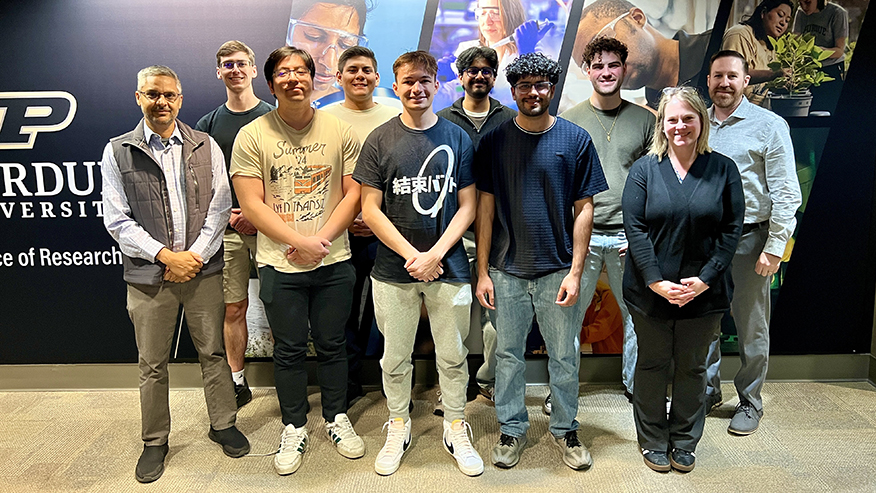
Purdue University aerospace engineering students are getting hands-on experience in the nation’s first master’s program in hypersonic flight, developed jointly by Purdue and Sandia National Laboratories. From left to right: Kamlesh Patel, Aidan Maddox, Julian Hsu, Mateo Subieta Lazarte, Alen Seferovic, Arnav Pandit, Aryan Dawra, Stefan Vin, Sally Bane and Kevin White. (Purdue University photo/Kevin White)
WEST LAFAYETTE, Ind. — A group of Purdue University aerospace engineering students is getting a head start in hypersonic flight by enrolling in a first-of-its-kind program: a specialized master’s degree in hypersonics developed jointly by Purdue and Sandia National Laboratories.
The latest chapter in a long-standing academic partnership, the Sandia-Purdue Applied Research and Training in Aerospace — Hypersonic (SPARTA-H) program is the nation’s first master’s program in hypersonic flight that involves study and work with real-world applications at both an R1 university (Purdue) and a national laboratory (Sandia). The first class of seven graduate students began last month.
“There is demand for people who are skilled and experienced in building hypersonic vehicles,” said Kamlesh Patel, Sandia’s lead manager for the partnership. “However, this requires a breadth of knowledge and experience that no university, national lab or company can provide alone. Through combined learning and hands-on work building real vehicles, students will graduate ready to make a difference for our nation.”
Dan DeLaurentis, Purdue’s executive vice president for research, added, “This kind of collaboration is exactly what’s needed to grow our nation’s hypersonics talent pool, and Purdue is proud to help deliver on that national security mission alongside Sandia.”
Courses and projects are jointly led by Purdue and Sandia researchers during two semesters at Purdue followed by two semesters and two summers at Sandia in New Mexico.
“Students benefit by learning from remarkable engineering faculty members at world-class research facilities,” said William Crossley, the Uhrig and Vournas Head of Aeronautics and Astronautics at Purdue. “From classrooms and hypersonic materials labs to Purdue’s HYPULSE and BAM6QT wind tunnels and Sandia’s Center for Advanced Manufacturing and Innovation (CAMINO), these students will be ready to go in their aerospace or defense careers.”
For more information about SPARTA-H, contact Kevin White in the Office of Research.
About Purdue University
Purdue University is a research institution ranked among the top 10 public universities in the United States. More than 111,000 students study at Purdue across multiple campuses, including more than 57,000 at our main campus locations in West Lafayette and Indianapolis. As a land-grant university committed to affordability and accessibility, Purdue’s main campus has frozen tuition 14 years in a row, enabling more students than ever to graduate debt-free.
Media contact: Brian Huchel, bhuchel@purdue.edu
National Security News
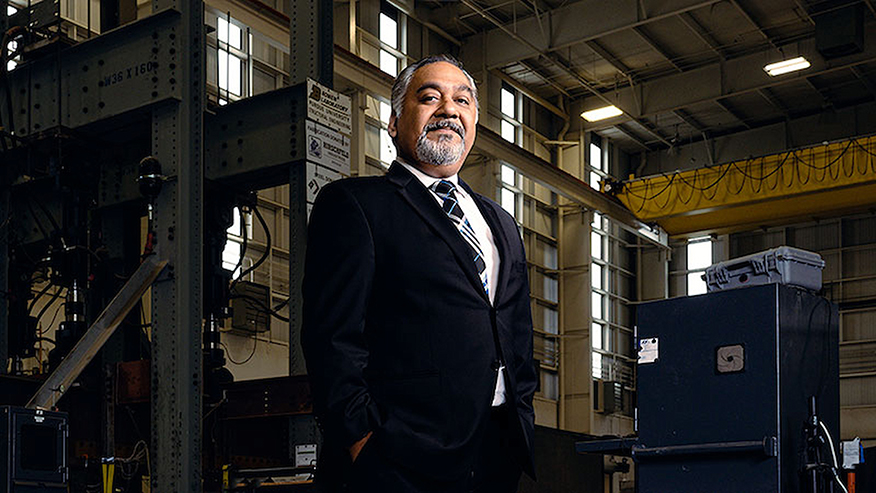
Civil engineering lab is latest Purdue facility to achieve internationally recognized quality management certification
October 2, 2026
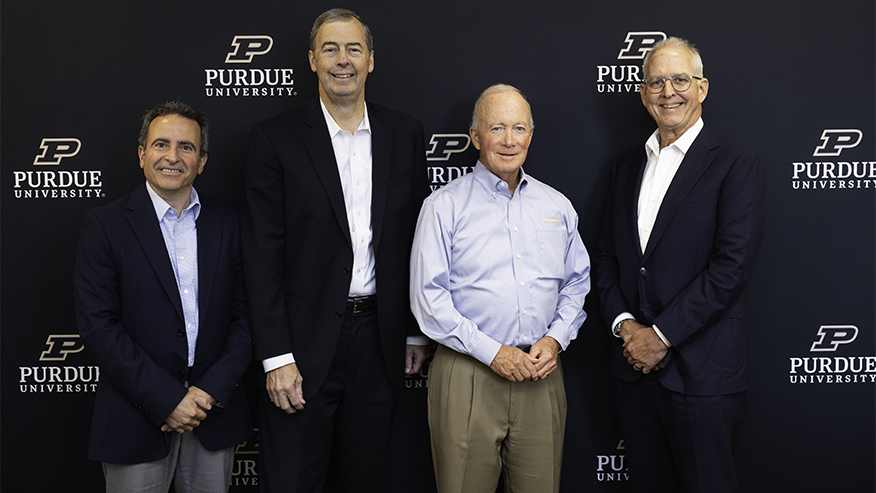
Purdue Applied Research Institute, Lockheed Martin sign agreement to expand defense technology collaboration
September 18, 2026
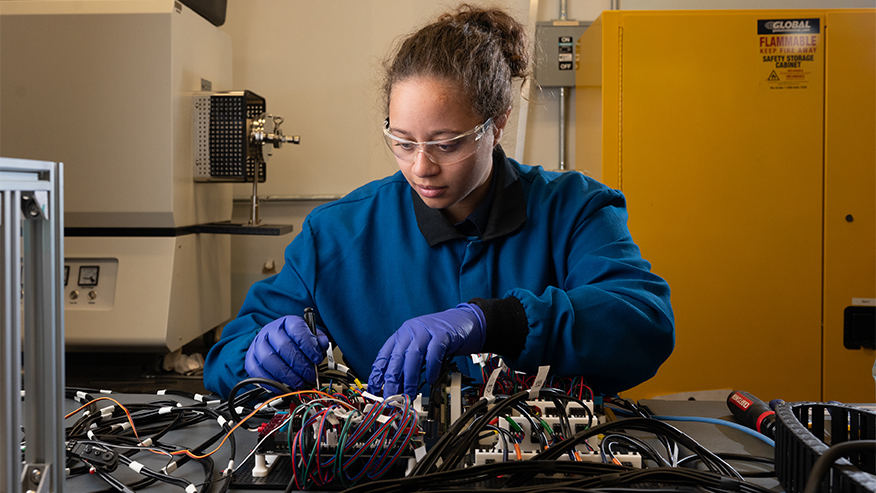
New 3D-printing and manufacturing techniques grant more control over energetic material behavior, improving safety
February 10, 2026

Purdue University launches new online Master of Science in strategy in security and defense technologies
December 16, 2025