Purdue leads the way in building talent pipeline for the state’s economic future
University connects education, research and industry partnerships to address critical workforce needs in Indianapolis and beyond
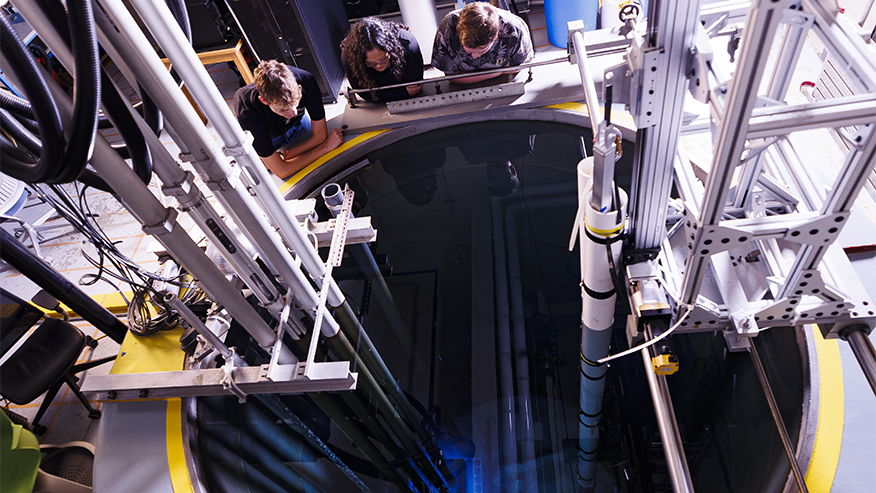
Purdue University Reactor Number One is the only facility in the U.S. where students can interact with a fully digital reactor instrumentation and control system, preparing them for working with the digital features of advanced nuclear technologies. (Purdue University photo/Kevin Crisp)
WEST LAFAYETTE, Ind. — Purdue University is expanding its investments in academic programs, research and industry partnerships to prepare students for careers in the nation’s critical and rapidly evolving industries, strengthening the workforce that will drive Indiana’s economic future.
“Purdue is focused on preparing and training the next generation of talent for the industries that will shape Indiana’s future,” said David Umulis, Purdue’s senior vice provost for Indianapolis. “This commitment is especially visible in Indianapolis, where Purdue is building on the region’s industry strengths while creating opportunities in emerging fields.”
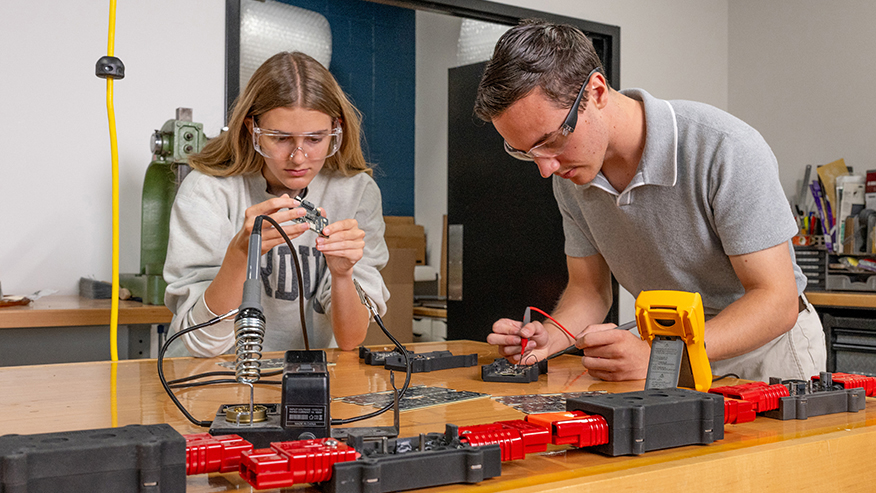
Connecting education and industry to drive Indiana’s growth
Purdue is aligning its academic offerings and research investments with the industries shaping Indianapolis’ economy. Through its Indianapolis campus, the university has expanded degree offerings in manufacturing, radiopharmaceuticals, construction, hospitality, technology and sports to meet regional workforce needs. Students also benefit from early professional connection opportunities in the city, with professional development and internship opportunities that help prepare them for careers in Indiana.
The university is preparing talent for the region’s growing life sciences and health industries. Through its One Health strategic initiative, Purdue is connecting research, education and industry to advance human, animal and plant health. Its transformative relationship with Elanco is helping to anchor the One Health Innovation District in Indianapolis, which will bring together research and industry with the potential to develop talent and strengthen Indiana’s place as a national leader in the life sciences sector.
Building on Indianapolis’ global reputation in motorsports, Purdue’s partnership with Dallara gives students access to industry expertise and professional networks while preparing them for careers in the specialized field. Students in the nation’s only undergraduate, ABET-accredited motorsports engineering program gain hands-on expertise tackling real-world engineering challenges at the manufacturer’s U.S. headquarters near the Indianapolis Motor Speedway.
The Bowen School of Construction recently launched the reimagined construction management program in Indianapolis. The program, developed in partnership with the Indiana Department of Workforce Development, equips Purdue students with expertise in project management, budgeting, operations and site safety, preparing them for leadership roles in a sector vital to the capital city’s $5 billion development pipeline. Purdue tailored the curriculum toward meeting state labor demands in the industry.
As U.S. demand for electricity grows, advanced nuclear technologies, including small modular reactors (SMRs), are creating new opportunities for specialized expertise. Purdue is preparing professionals for this evolving industry through its SMR graduate-level credential program and facilities such as Purdue University Reactor Number One, the nation’s first and only all-digital nuclear reactor. Through facilities revitalized with U.S. Department of Energy (DOE) support and partnerships with other public universities, Purdue is providing research opportunities and developing programs that prepare the next generation of nuclear energy professionals. The university also entered into an agreement with the DOE’s National Reactor Innovation Center to test novel construction materials, methods, processes, and digital tools for designing and building structures that house nuclear reactors.
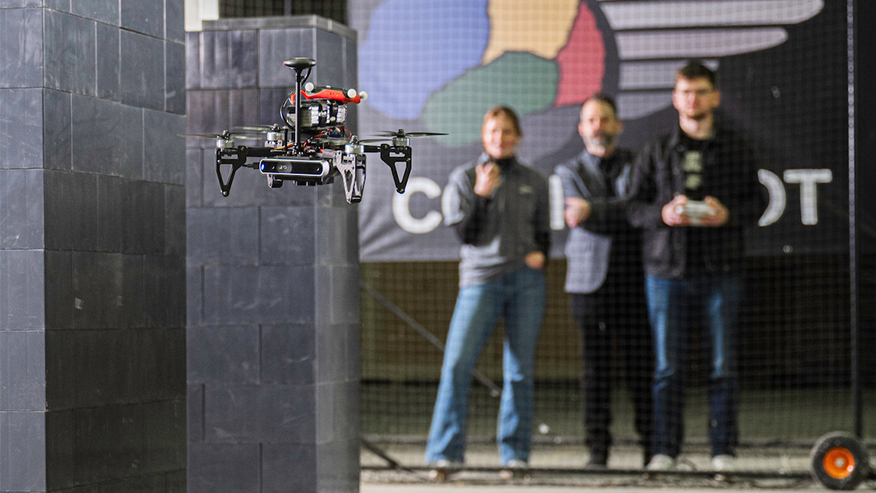
Purdue is expanding professional education in unmanned aerial vehicles, or drones, as their use grows across commercial, civilian and defense industries. The university’s online graduate certificate in advanced unmanned aerial systems prepares professionals in security, law enforcement and other fields to address emerging challenges and maximize the potential of this rapidly evolving technology.
Artificial intelligence is transforming how work gets done across industries, making AI skills increasingly important for today’s workforce. Purdue’s artificial intelligence microcredentials program offers a quick and convenient way to build that knowledge through online courses covering AI fundamentals and practical applications.
Semiconductors power nearly every aspect of modern life, and the U.S. is projected to need more than 50,000 trained semiconductor engineers over the next five years. In Indiana, the new SK hynix advanced packaging facility is expected to support approximately 1,000 employees when production begins. Purdue is helping to close that talent gap through a comprehensive approach that includes education, hands-on learning and industry partnerships. The university’s Semiconductor Academy and Semiconductor Degrees Program are expanding educational pathways, while Chipshub provides access to training and simulation. Strategic partnerships with GeChi Compound Semiconductor Co., the University of Illinois Urbana-Champaign and the SCalable Asymmetric Lifecycle Engagement program, among others, are also extending Purdue’s role in developing the industry’s workforce.
About Purdue University
Purdue University is a research institution ranked among the top 10 public universities in the United States. More than 111,000 students study at Purdue across multiple campuses, including more than 57,000 at our main campus locations in West Lafayette and Indianapolis. As a land-grant university committed to affordability and accessibility, Purdue’s main campus has frozen tuition 14 years in a row, enabling more students than ever to graduate debt-free.
Media contact: Derek Schultz, schul221@purdue.edu
More Purdue News

Sophomore Summer Abroad: Why earlier may be better for studying abroad
November 20, 2026
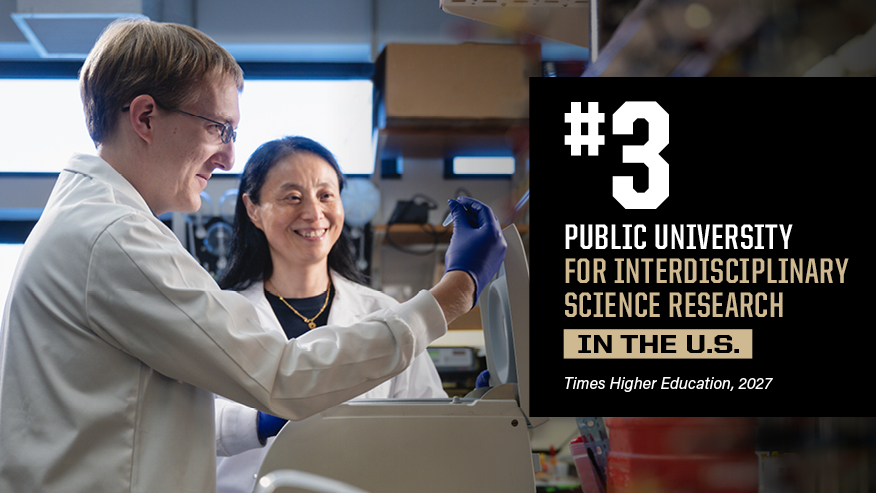
Purdue No. 3 among U.S. public institutions, No. 14 overall in research-focused global interdisciplinary sciences rankings
November 18, 2026
Computer science student awarded prestigious Google PhD Fellowship, first for Purdue since 2018
November 17, 2026

Purdue receives Gold Standard designation for fostering a campus culture of free expression
October 29, 2026