Top 5 stories from Purdue University

‘Purdue News Now’
Purdue researchers work toward a natural check on cancer and new programs in Indianapolis will create talent to fill workforce needs in Indiana. Derek Schultz has all the latest Boilermaker news in this week’s edition of “Purdue News Now.”
Plus, check out five good stories below you may have missed.
Quantum Research Sciences developing AI platform to help Air Force more efficiently connect with industry
Quantum Research Sciences, a leading Indiana-based software company, has been awarded a U.S. Air Force contract to develop an artificial intelligence-driven platform called ACID-R, or Automated Commercial Industry Data-Repository. The platform is designed to help the Air Force efficiently identify and leverage needed technologies from the private sector. It harnesses AI without the risk of hallucination, or AI-fabricated false information, to quickly deliver details on commercial, military-focused products and services.
Media contact: Trevor Peters, peter237@purdue.edu
Explaining a quantum oddity with 5 atoms
Matter gets weird at the quantum scale, and among the oddities is the Efimov effect, a state in which the attractive forces among three or more atoms bind them together, even as they are excited to higher energy levels, while that same force is insufficient to bind two atoms. At Purdue University, researchers have completed the immense quantum calculation required to represent the Efimov effect in five atoms, adding to the fragmented picture of the most fundamental nature of matter. For Christopher Greene, the Albert Overhauser Distinguished Professor of Physics at Purdue, who modeled the problem with four atoms in 2009, the accomplishment has been 15 years in the making. Greene is a member of the Purdue Quantum Science and Engineering Institute. Research on the interactions among five atoms was published in the Proceedings of the National Academy of Sciences.
Media contact: Trevor Peters, peter237@purdue.edu
Researchers leverage advanced bioengineering techniques to develop plastics made from sustainable biomaterials
Plastic products frequently pile up in landfills or spill into natural habitats where they occupy space and endanger wildlife. To combat this problem, a team of university and industry researchers have been awarded funding from the U.S. National Science Foundation (NSF) to develop mechanisms to produce sturdy and reusable bioplastics. In addition to their ecological benefits, these bioplastics — cultivated from domestic raw materials — may help to strengthen U.S. supply chains and manufacturing. Plastic production is a nearly $1 trillion industry with over 400 million metric tons produced in 2022. However, only about 10% of plastics are recycled. Karthik Sankaranarayanan, assistant professor of agricultural and biological engineering at Purdue University, and his collaborators jointly received a $7 million grant from NSF to design novel enzymes — a type of protein that speeds up chemical reactions — that convert various biomaterials into biodegradable plastics.
Media contact: Trevor Peters, peter237@purdue.edu
AP Video – Protecting your pets from deadly mushrooms
Stephen Hooser is professor of veterinary toxicology in the Department of Comparative Pathobiology in the College of Veterinary Medicine and a veterinary toxicologist at the Animal Disease Diagnostic Laboratory at Purdue University. In this video, he explains the deadly impact Amanita mushrooms can have on dogs and other pets. The genus Amanita contains over 600 species of mushrooms, many of which are poisonous. The infamous death cap mushroom, Amanita phalloides, is included in this category. Amanita mushrooms can be found growing throughout the United States, including in Indiana. Hooser says it can be difficult to tell the difference between a harmless mushroom and a toxic one, even for experts.
Media contact: Trevor Peters, peter237@purdue.edu
Blueprints for a molecular machine more powerful than CRISPR
More than a decade ago, scientists harnessed a bacterial molecular machine that identifies and cuts specific sections of DNA, revolutionizing the ability to edit genes and accelerating research into treatments for all manner of diseases with a genetic link. But the technology known as CRISPR-Cas9 works by cutting DNA, not moving it. At Purdue University, researchers are investigating a similar molecular machine that moves so-called “jumping genes” into new locations in bacterial DNA, laying the groundwork for a more powerful gene-editing tool. The team, led by Leifu Chang, a Purdue associate professor of biological sciences, has produced high-resolution structural snapshots of the Tn7-like transpososome, a complex of nucleic acids and proteins that can accurately cut and paste an entire gene from one location to another in the genome of a cell.
Media contact: Trevor Peters, peter237@purdue.edu
MORE: Recent AP video stories
The AP Newsroom (for AP members) and Purdue News YouTube channel (for all reporters) provide comments from Purdue experts on timely topics.
Watch them here
About Purdue University
Purdue University is a public research university leading with excellence at scale. Ranked among top 10 public universities in the United States, Purdue discovers, disseminates and deploys knowledge with a quality and at a scale second to none. More than 107,000 students study at Purdue across multiple campuses, locations and modalities, including more than 58,000 at our main campus locations in West Lafayette and Indianapolis. Committed to affordability and accessibility, Purdue’s main campus has frozen tuition 14 years in a row. See how Purdue never stops in the persistent pursuit of the next giant leap — including its integrated, comprehensive Indianapolis urban expansion; the Mitch Daniels School of Business; Purdue Computes; and the One Health initiative — at https://www.purdue.edu/president/strategic-initiatives.
More Purdue News
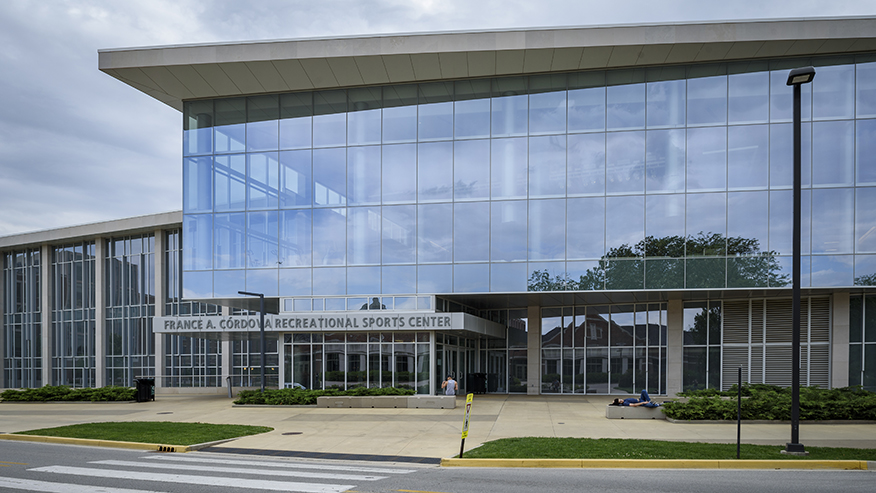
Purdue to host early and Election Day voting
October 19, 2026

Search for Amelia Earhart’s plane continues after Taraia Object expedition on Nikumaroro rules out latest hypothesis
October 18, 2026
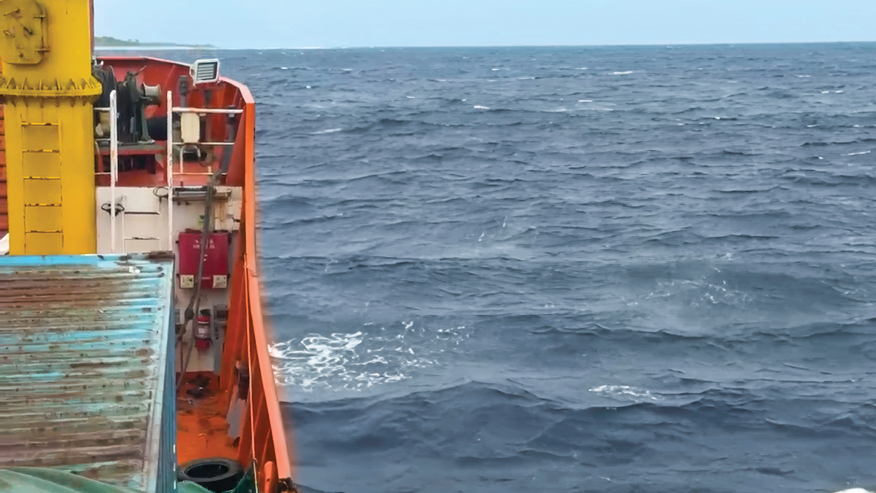
Earhart expedition update: Weather prevents shore work for third straight day; crew to extend trip
October 16, 2026
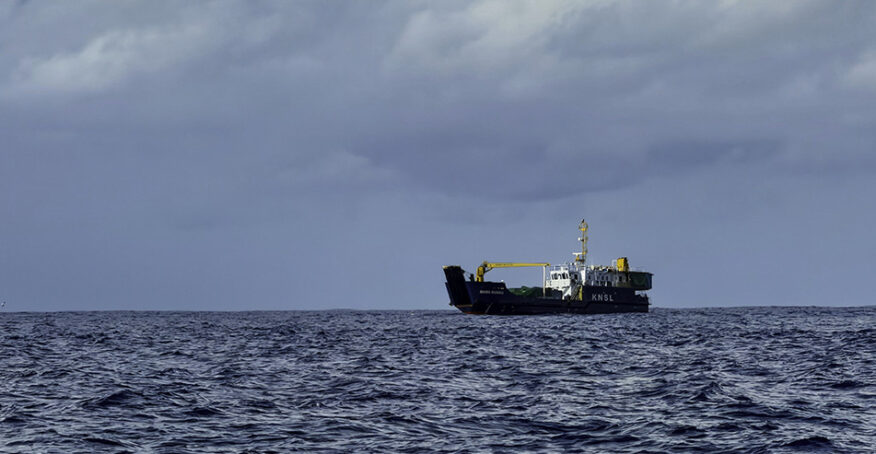
Earhart expedition update: Weather prevents shore work Thursday; ID update expected in next 48 hours
October 15, 2026