First images from JWST expected to spotlight wonders of the universe
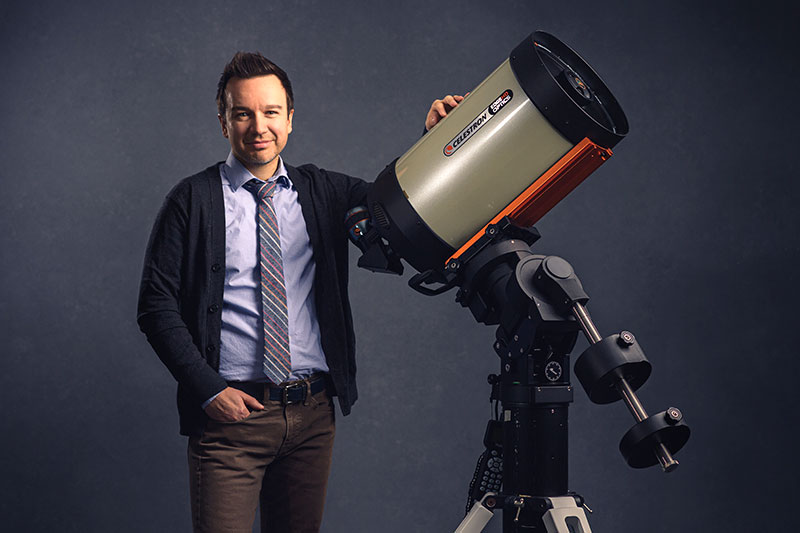
Danny Milisavljevic, assistant professor of physics and astronomy in Purdue University’s College of Science, is leading a research team using the world’s most powerful telescope, launching later this month. (Purdue University photo/Rebecca McElhoe)
WEST LAFAYETTE, Ind. —
A new view of the stars, a deeper look into time and some of the most beautiful, staggering and breathtaking sights ever seen by human eyes: That’s what the James Webb Space Telescope (JWST) promises to deliver when it releases its first handful of images on Tuesday (July 12). As he has been from the beginning, astronomer Danny Milisavljevic will be there to see them, to explain them and to anticipate dazzling new scientific discoveries.
An assistant professor of physics and astronomy in Purdue University’s College of Science, Milisavljevic (pronounced milli-sahv-la-vich) is helping bring details from the world’s newest and most powerful telescope: the JWST, the successor to the Hubble Space Telescope, which allowed humans to see farther into space and deeper into time. After launching in late December and reaching its orbit in January, the JWST has been calibrating its instruments and preparing for its role as humanity’s longest-sighted eyes.
Featured News
Phil Low, Purdue drug discovery scholar and impactful innovator whose discoveries saved lives, dies at 78
March 5, 2026

Fire in the sky: Strong summer storms in the Midwest send wildfire smoke into the previously pristine stratosphere
October 20, 2025

This week’s ‘Thumbs Up’ recipients
March 10, 2025
Appointments, honors and activities
February 24, 2025