Li and Kang Receive Center for Working Well Research Award
Author: Abby Lillpop
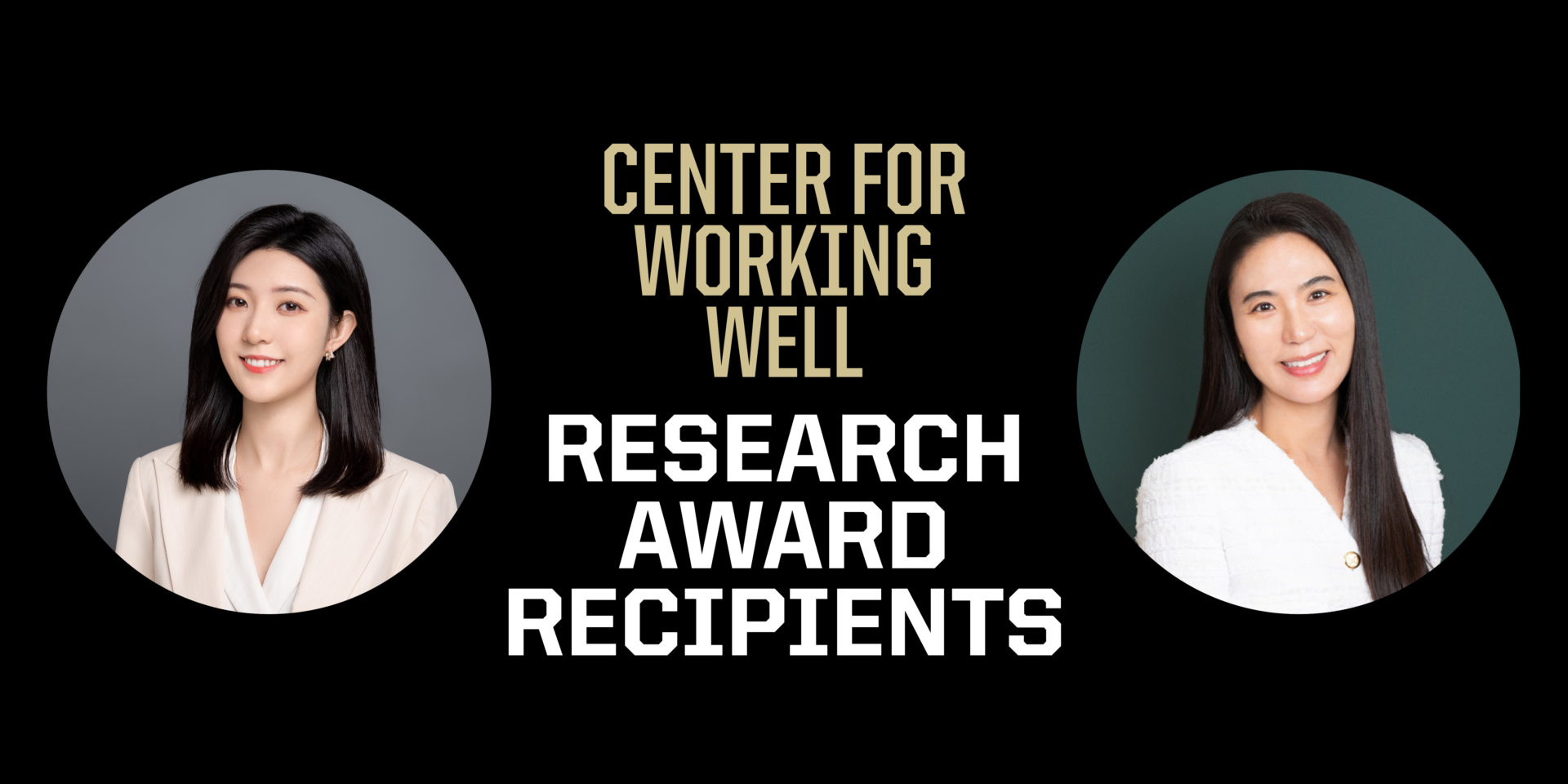
WEST LAFAYETTE, Ind. – Jiarui Li, a Ph.D. candidate in the Division of Consumer Science at Purdue University’s White Lodging-J.W. Marriott, Jr. School of Hospitality and Tourism Management, and Dr. Jiyun Kang, associate professor in the same division, have been awarded a prestigious Center for Working Well Research Award. Their proposal, “Enhancer or Stressor? Exploring the Impact of Collaboration Between Luxury Frontline Employees and Service Robots on Workplace Experience and Well-Being,” was selected to receive funding this year.
The Center for Working Well is dedicated to fostering research that deepens the understanding of what it means to “work well” in contemporary organizations. Its mission encompasses promoting personal well-being, ensuring sustainable performance, addressing modern workplace challenges, and cultivating positive and inclusive relationships at work and home. The Center provides three annual research awards, each with a maximum funding of $5,000, to support projects aligned with these goals.
The research by Li and Kang seeks to address critical issues in luxury retail, where frontline employees (FLEs) play a vital role in shaping customer experiences and driving sales. However, the industry faces a workforce crisis, with over half of luxury FLEs planning to leave their roles due to challenges related to workplace well-being. These employees often encounter physical, mental, and social stressors, including demanding tasks, high-pressure interactions with affluent clients, and social isolation in commission-based environments.
Their study explores whether integrating service robots into luxury retail settings could alleviate these stressors or, conversely, introduce new challenges. By analyzing the potential benefits and drawbacks of human-robot collaboration, the research aims to offer actionable strategies for optimizing work environments and fostering sustainable “working well” practices in the luxury retail sector.
The recognition of this research underscores the importance of innovative approaches to workplace well-being in the evolving landscape of luxury retail. The findings from Li and Kang’s study have the potential to inform both industry practices and academic discussions on the role of technology in shaping the future of work.
For more information about the Center for Working Well and its research awards, visit Center for Working Well Research Awards.