America250: Parks, People, and the Future of Sustainable Tourism
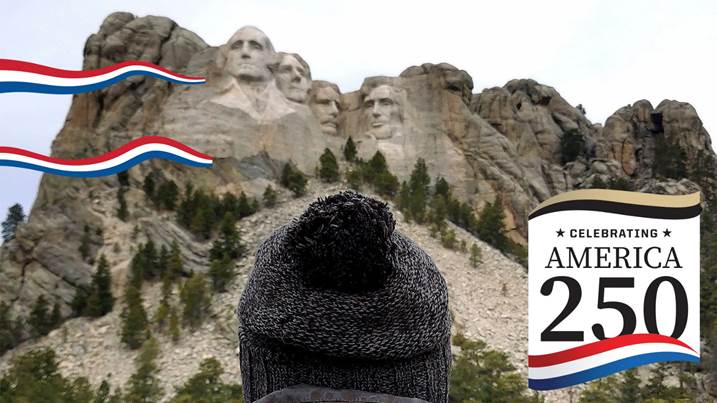
America’s parks reflect a shared heritage and a shared responsibility to preserve them. Photo courtesy of Vineris .D via Pexels.
Written by: Abby Lillpop, alillpop@purdue.edu
West Lafayette, Ind. – As the United States joins together to celebrate America250, the landscapes that define the nation – its national parks, state parks, and heritage sites – stand as both symbols of shared identity and barometers of a pressing challenge. These spaces, long celebrated as “America’s greatest idea,” now face an unintended consequence of their success: they are being loved, quite literally, to the brink.
From the dunes of Indiana to the quiet carless roads of Mackinac Island, the story of American tourism is evolving. It is no longer only about access; it is about balance. And at the center of that balance is a new generation of hospitality and tourism professionals, many shaped by Purdue University’s White Lodging–J.W. Marriott, Jr. School of Hospitality and Tourism Management (HTM), who are redefining what it means to travel well.
Loving Our Parks, Perhaps Too Much
“We’re loving them to death,” says Jonathon Day, associate professor at Purdue HTM and global leader in sustainable tourism research. It’s a phrase that captures a paradox: the very popularity of parks is straining the ecosystems and communities they are meant to preserve.

Dr. Jonathon Day, associate professor at Purdue HTM, advises on mindful tourism habits through his project Travel with Care.
Visitation surged in the years following COVID-19, as travelers sought connection with nature. But increased access has brought measurable strain: trail erosion, pressure on ecosystems, and stress on infrastructure designed for far fewer visitors.
The issue, Day emphasizes, is not intentional harm; it’s awareness. Most travelers simply don’t recognize the cumulative impact of small actions repeated thousands of times.
To address that gap, Day is helping lead Travel with Care, a Purdue-based global initiative designed to encourage responsible travel behaviors. The program serves as a resource hub for tourism organizations, equipping them with research, tools, and messaging strategies to guide visitors toward more sustainable choices.
More than a campaign, Travel with Care reflects a shift in philosophy: sustainable tourism is not just about protecting destinations; it’s about actively shaping traveler behavior.
Designing Better Behavior
For Dr. Day, this is where hospitality professionals step in, not just as service providers, but as what he calls “experience engineers.”
The goal is simple, yet profound: make it easy for visitors to do the right thing.
Rather than relying on rules alone, parks and tourism destinations must be designed so that responsible behavior becomes the default. Whether through trail layouts, signage, visitor flow, or programming, the most effective solutions guide behavior without demanding constant awareness.
This thinking is at the core of Travel with Care, helping destinations move beyond awareness and into action by embedding sustainability into the visitor experience itself.
The implications are significant. Tourism is no longer just service delivery: it is behavior design, community stewardship, and systems thinking all at once.
The Front Line of Stewardship
At Prophetstown State Park in West Lafayette, Indiana, that future is already taking shape. Rising junior Andrew Friel spends his summer at the front gate, greeting visitors as they enter one of the state’s youngest and most intentionally designed parks.
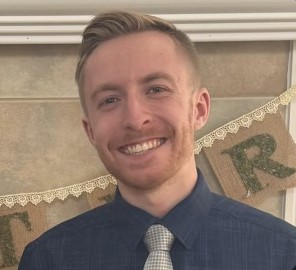
Andrew Friel, rising junior in Purdue’s hospitality and tourisma management program, works at Prophetstown State Park during the summer months.
On the surface, the job is transactional – collecting fees, checking passes – but in practice, it’s something more: the first touchpoint in shaping how guests engage with the environment.
Friel sees the tension firsthand. Parks must remain open and welcoming yet protected. “You want people to enjoy themselves,” he says, “but they also have to remember they’re guests, like being in someone else’s home.”
That philosophy comes through in subtle but effective design choices. At Prophetstown, trash cans are absent from trails, encouraging visitors to pack out what they bring in. Firewood is regulated to prevent the spread of invasive species. Even artifacts discovered near historic areas must be returned to preserve cultural heritage.
These practices reflect a broader industry shift: sustainability is no longer a separate concept; it is embedded in daily operations.
A Living Laboratory
For Friel and his peers, parks are more than workplaces; they are living classrooms.
Coursework in hospitality management translates directly to real-world interactions: greeting guests, building relationships, and creating memorable experiences. “It all comes back to hospitality,” Friel says. “Putting a smile on and making sure guests have a great experience.”
But beyond service lies a deeper awareness. Through sustainability-focused courses, students begin to see tourism as an interconnected system, where environmental health, local economies, and visitor behavior all influence one another.
This holistic perspective is essential as destinations grapple with the dual mandate of accessibility and preservation.
An Island That Stepped Back in Time
Hundreds of miles north, on Michigan’s Mackinac Island, Purdue HTM alumnus Brian Findley (’85) has spent decades living that philosophy daily.
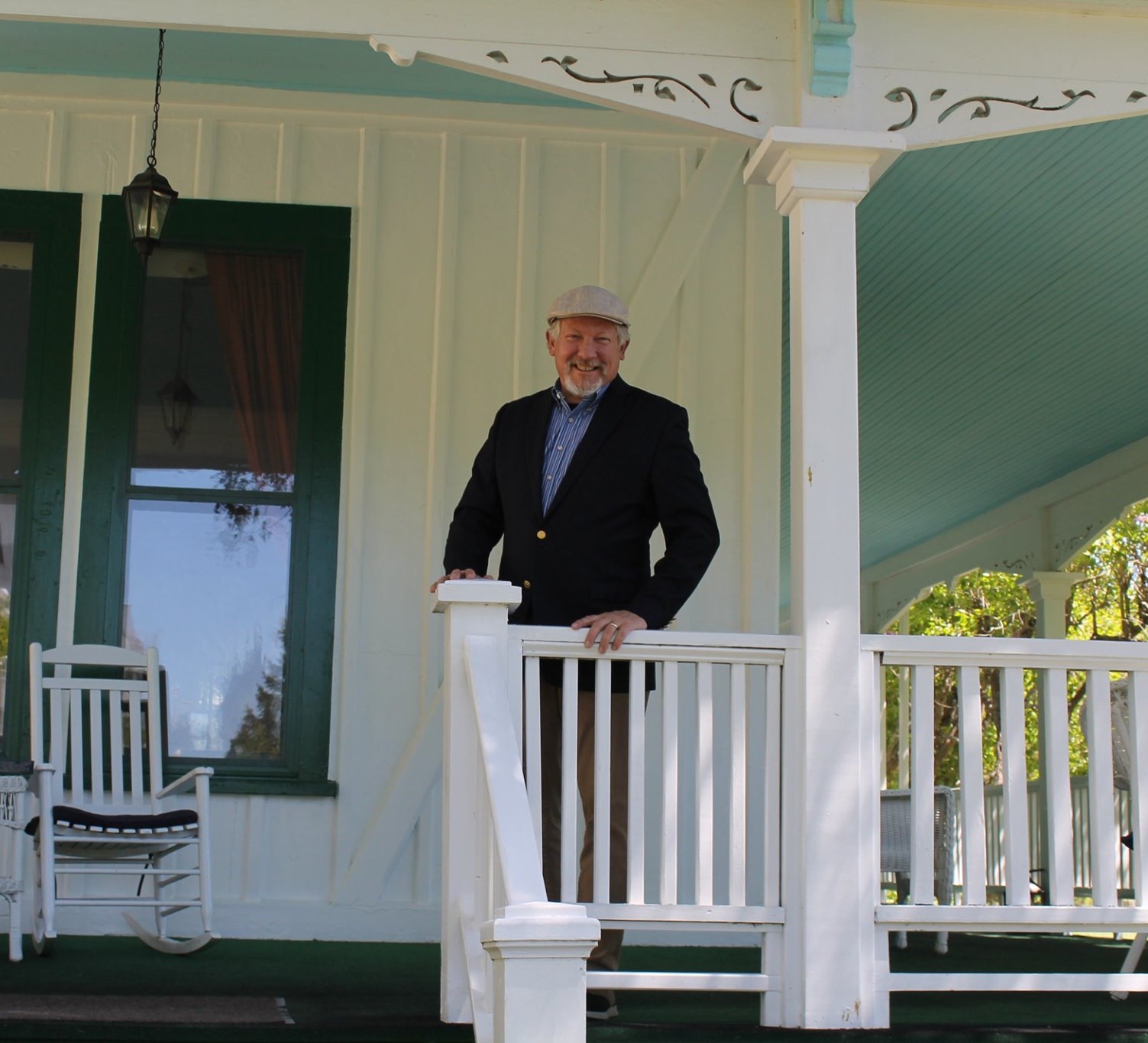
Brian Findley (HTM ’85) stands on the porch of Small Point Bed and Breakfast of which he is owner and innkeeper. Photo provided.
Findley is the owner and innkeeper of Small Point Bed & Breakfast, a historic, family-run property that has welcomed visitors for generations. He and his wife, Christina, took over the inn in 2016, continuing a legacy that dates back decades.
From its wraparound porch overlooking Lake Huron to its intentionally unplugged guest experience -no televisions, no distractions – Small Point embodies the island’s broader commitment to preservation.
Mackinac Island itself is a model of intentional sustainability. Personal automobiles have been banned for over a century. Visitors arrive by ferry, creating a natural limit on daily traffic. Transportation is by bicycle or horse-drawn carriage, and even waste is meticulously sorted and reused.
“Sustainable hospitality,” Findley says, “is protecting that core.”
Where Experience Becomes Connection
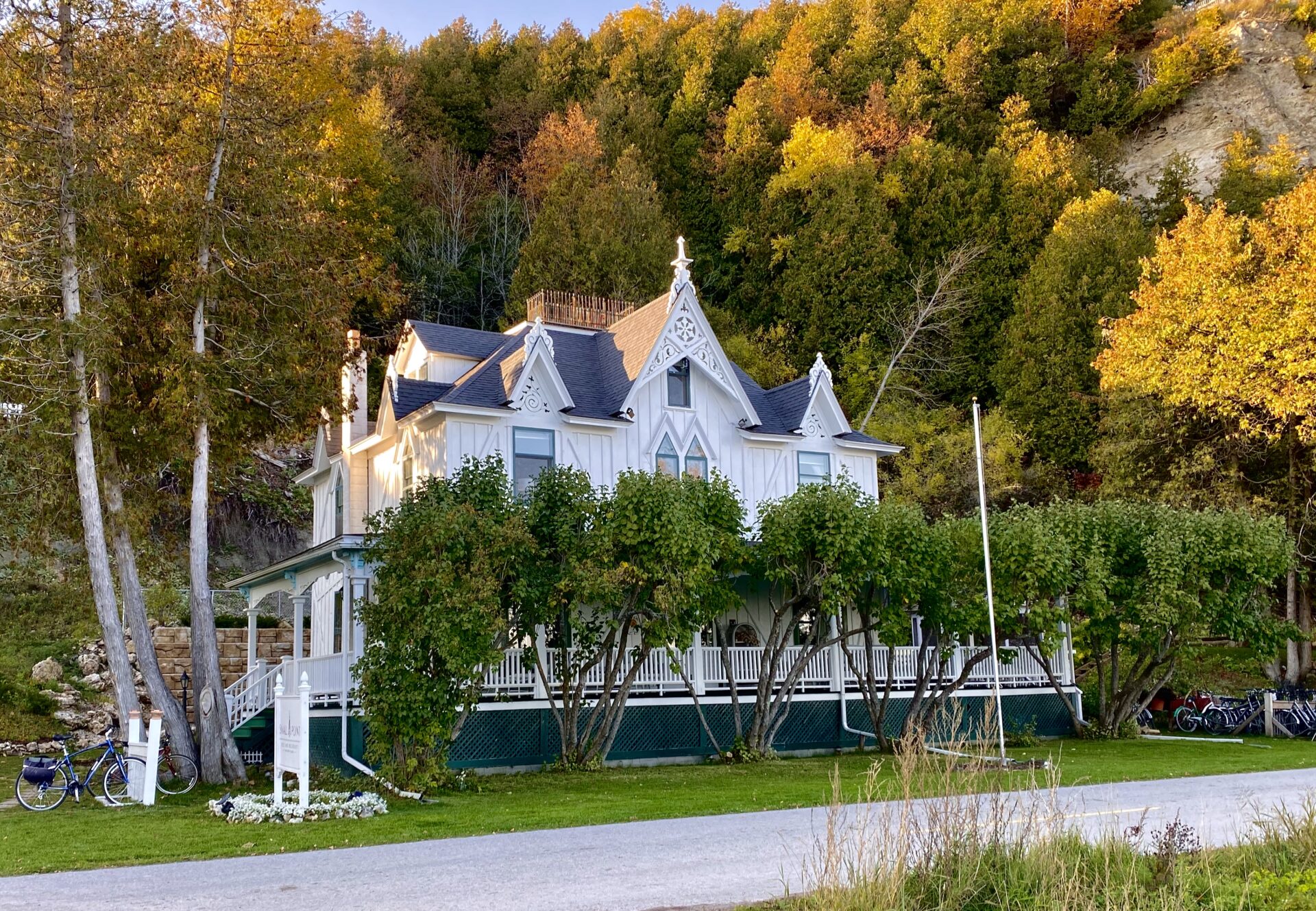
Small Point Bed and Breakfast welcomes guests to join in human connection rather than via technology. Photo provided.
At Small Point, that core is not just environmental – it is human.
Unlike large-scale hotels, where guest interactions are fleeting, Findley’s approach is deeply personal. Guests gather on the porch, share stories, and often return year after year – sometimes across generations.
“When guests leave and the kids are crying because they don’t want to go home,” he says, “you know you’ve done something right.”
It is here that the true impact of sustainable tourism becomes visible: not just preserving places, but creating meaningful connections: to people, to history, and to place itself.
The Fragility of Success
Yet even Mackinac Island is not immune to the pressures facing destinations nationwide.
Rising costs threaten accessibility. Increasing corporate ownership risks eroding local character. Environmental vulnerabilities, from aging infrastructure like the Line 5 pipeline to the unintended consequences of new technologies like e-bikes, present ongoing challenges.
“It’s getting too expensive,” Findley warns. “We’re pricing ourselves out.”
The same forces affecting national parks – overcrowding, resource strain, and economic pressures – play out here on a smaller but equally impactful scale.
Toward Regenerative Travel
If sustainability once meant “leave no trace,” the next evolution is more ambitious.
“Now it’s about leaving a place better than you found it,” says Dr. Day.
This concept of regenerative tourism asks travelers to contribute positively: supporting local businesses, preserving cultural traditions, and investing in the communities they visit.
It also requires professionals who can balance competing priorities: economic growth, environmental stewardship, and cultural integrity.
The Next 250 Years
As America approaches its 250th anniversary, its parks and heritage sites remain central to its identity – places where history, culture, and environment converge.
But their future is not guaranteed.
It depends on millions of individual choices made by visitors and on the professionals who design the systems that guide those choices.
From the gatehouses of Indiana state parks to the porches of Mackinac Island inns, Purdue HTM students, alumni, and faculty are helping to shape that future. They are proving that tourism, done well, can do more than sustain; it can regenerate.
The challenge ahead is clear: to ensure that these places remain not only accessible, but meaningful.
Because 250 years in, America’s story is still being written – in its parks, its people, and the way we choose to experience both.