All posts by CMK

Homework H4.M – Sp26

Problem statement
Solution video

DISCUSSION THREAD

Any questions?? Please ask/answer questions regarding this homework problem through the “Leave a Comment” link above.


HINTS:

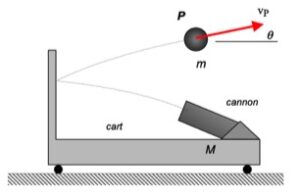
STEP 1 – FBD: Draw a SINGLE free body diagram (FBD) of the system of cart + cannon + cannonball.
STEP 2 – Kinetics:  Write down the impulse/momentum equation in the horizontal direction (x-direction) for the the system of cart + cannon + cannonball. Based on the above FBD, is the momentum conserved in the x-direction for that system?
STEP 3 – Kinematics
STEP 4Solve. Solve for the velocity of the cart + cannon.

QUESTION: The above analysis allows you to find the answer to the first part of the problem. Unfortunately, it is not useful for the find the answer to the second part of the problem where you want to find the force on the cart/cannon. What do you need to change in the analysis to find this force?
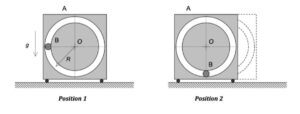
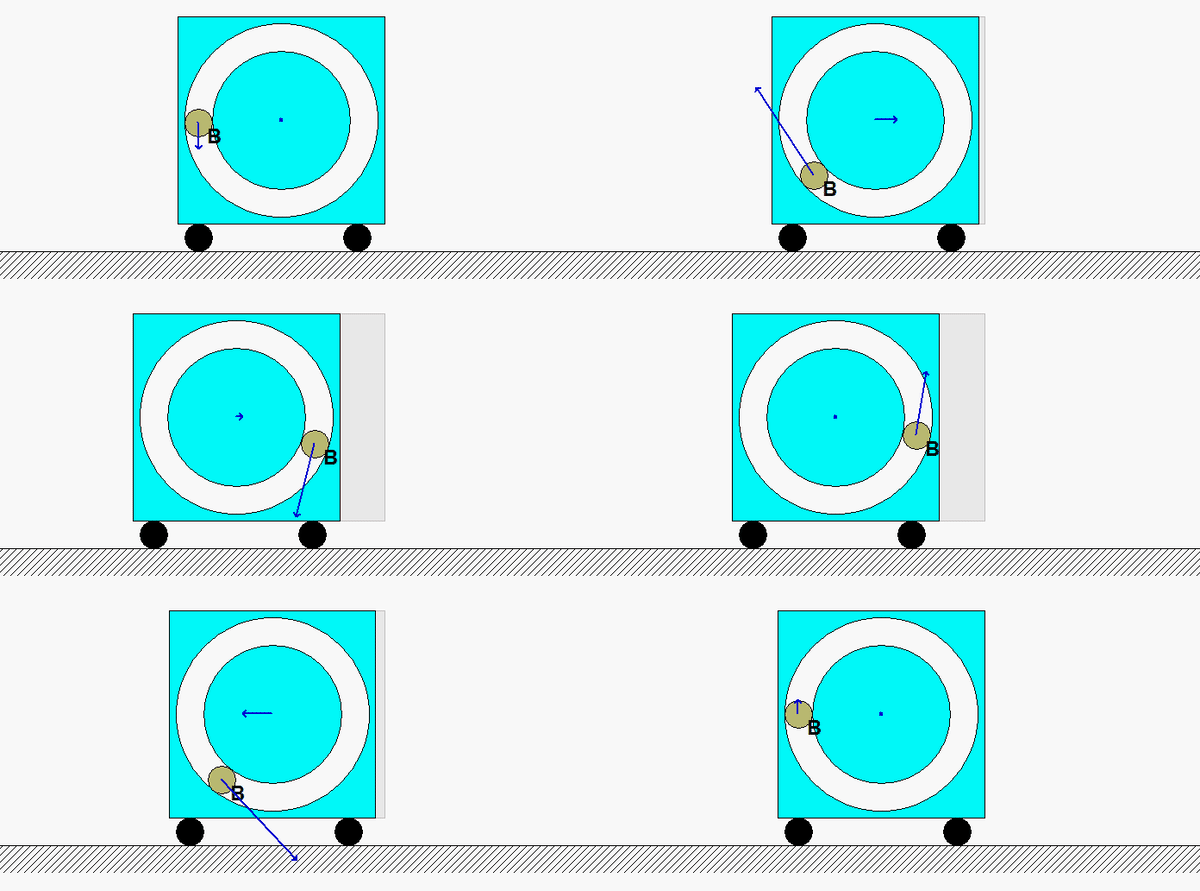
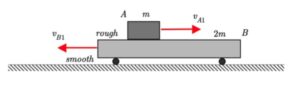
 

Homework H4.N – Sp26


Problem statement
Solution video

DISCUSSION THREAD

Discussion and hints:

Recall the following four-step plan outline in the lecture book and discussed in lecture:

Step 1: FBD
Draw a free body diagram of the system made up of A+B.

Step 2: Kinetics (linear impulse/momentum and work/energy)
From your FBD above, what is the external force acting on the system of A+B in the horizontal direction? What does this say about the linear momentum of this system in that direction? Also, are there any non-conservative forces acting on the system of A+B? What does this say about the mechanical energy of the system?

Step 3: Kinematics
At position 2, B is moving only in the horizontal direction. There is no vertical component of velocity of B at position 2.

Step 4: Solve
Solve for the speeds of A and B from the above equations.


Any questions?

Homework H4.K – Sp26

Problem statement
Solution video

DISCUSSION THREAD

Ask and answer questions here. You learn both ways.


DISCUSSION and HINTS

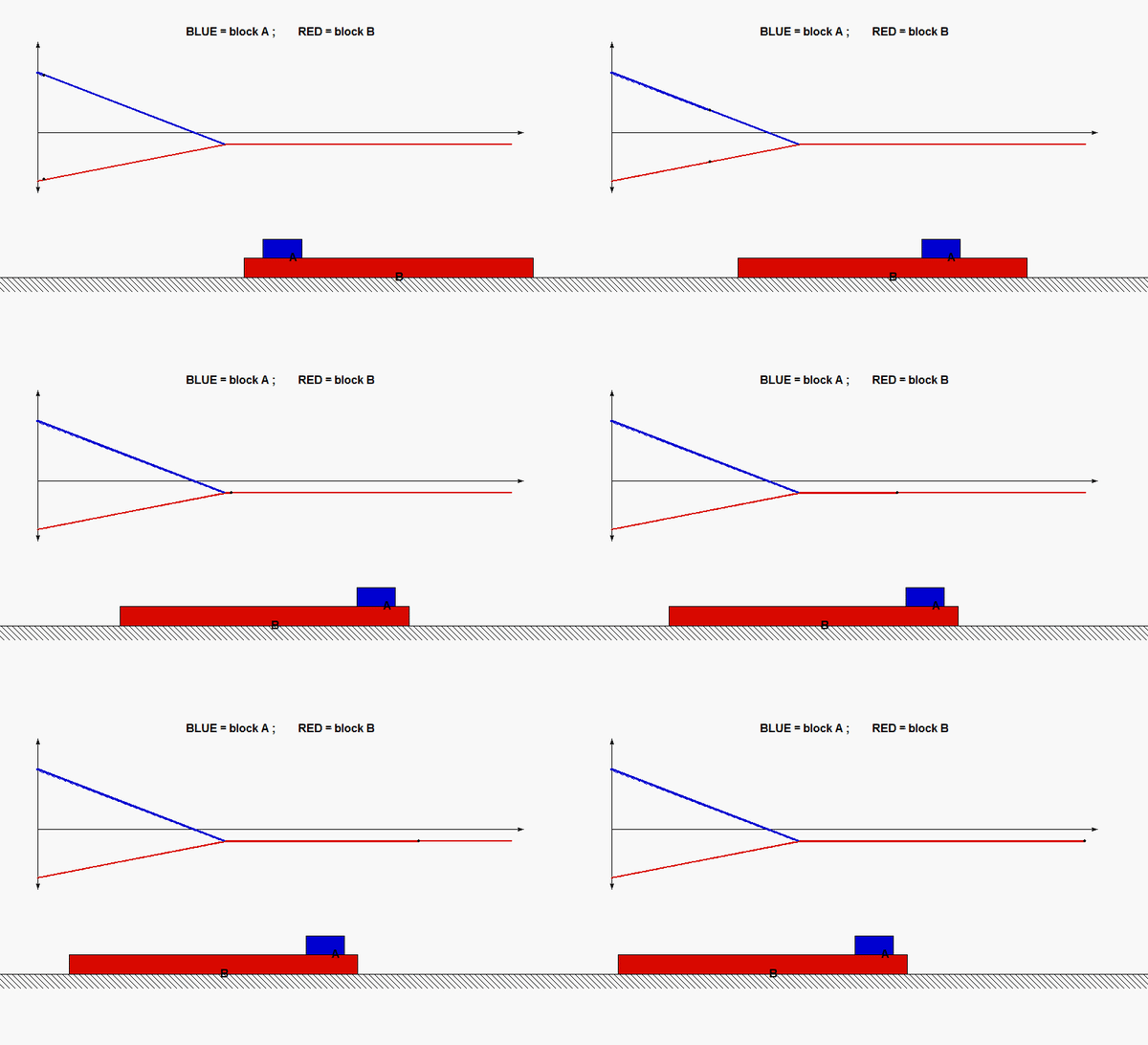
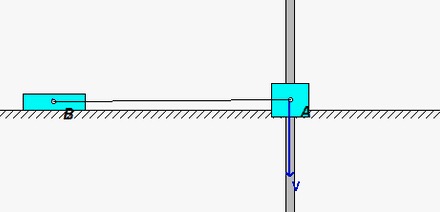
Initially Block A slides to the right along Block B which is traveling to the right. However, with friction acting between A and B, both A and B slow down. At some point, A instantaneously comes to rest, and the starts to move to the left. Once the speed of A to the left matches that of the speed of B to the left, the two stick and move together. You can see this in the animation that follows.

Recall the following four-step plan outline in the lecture book and discussed in lecture:

Step 1: FBDs
Draw single free body diagram (FBD) for the entire system (A+B). Do NOT consider A and B in separate FBDs because you will need to deal with the friction force acting between A and B (which you do not know).

Step 2: Kinetics (linear impulse/momentum)
Consider all of the external forces that you included in your FBD above. If there are no external forces acting in the horizontal direction (x-direction) on your system, the linear momentum in the x-direction is conserved.

Step 3: Kinematics
As described above, A comes to rest with respect to B when vA = vB.

Step 4: Solve
Combine your kinetics equation from Step 2 with your kinematics that you found in Step 3, and solve for the velocity of B.

QUESTION: Are you surprised that your answer for the final speed of B (and A) does not depend on the coefficient of friction acting between A and B? I was the first time that I worked the problem. 🙂

Homework H4.I – Sp2688

Problem statement
Solution video

DISCUSSION THREAD

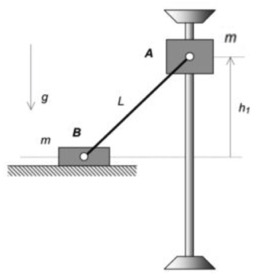
NOTE: Consider all surfaces to be smooth. Leave g as part of your answer.

Discussion and hints:

Let’s first take a look at the motion of the mechanism, as shown in the simulation results below.

Recall the following four-step plan outline in the lecture book and discussed in lecture:

Step 1: FBD
Draw a free body diagram for the entire system of A+B+bar. Which, if any, forces do non-conservative work on this system? Can you justify this from the FBD?

Step 2: Kinetics (work/energy equation)
Write down the work energy equation for the system of A+B+bar. The KE will be the sum of the KEs of A and B. The PE will be the sum of the PEs for A and B.

Step 3: Kinematics
Shown below is a freeze frame of the system at position 2. Where do you see the IC for AB to be located? Use the location of the instant center of AB at Position 2 to simplify your kinematics for that position.

Step 4: Solve
Solve your work/energy equation for the speed of block A.


Any questions??

Homework H4.J – Sp26

Problem statement
Solution video

DISCUSSION THREAD

Any questions?? Please ask/answer questions regarding this homework problem through the “Leave a Comment” link above.


HINTS

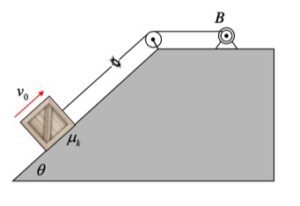
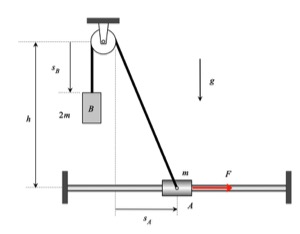
STEP 1 – FBD: Draw a SINGLE free body diagram (FBD) of the system including Block A, Block B and the cable. From this, determine which forces do work on this system.
STEP 2 – Kinetics:  Write down the work/energy equation. Determine the work done by the forces that you identified  above in STEP 1.
STEP 3 – Kinematics: Review the constrained motion kinematics from Section 1.D of the course lecture book. To this end, you will write down an expression for the length of the cable in terms of sA, sB and constants. Differentiate this expression to relate the speeds of A and B.
STEP 4Solve

__________________________


Homework H4.E – Sp24x

Problem statement
Solution video

DISCUSSION THREAD


DISCUSSION

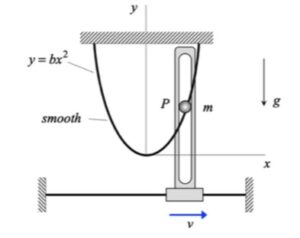
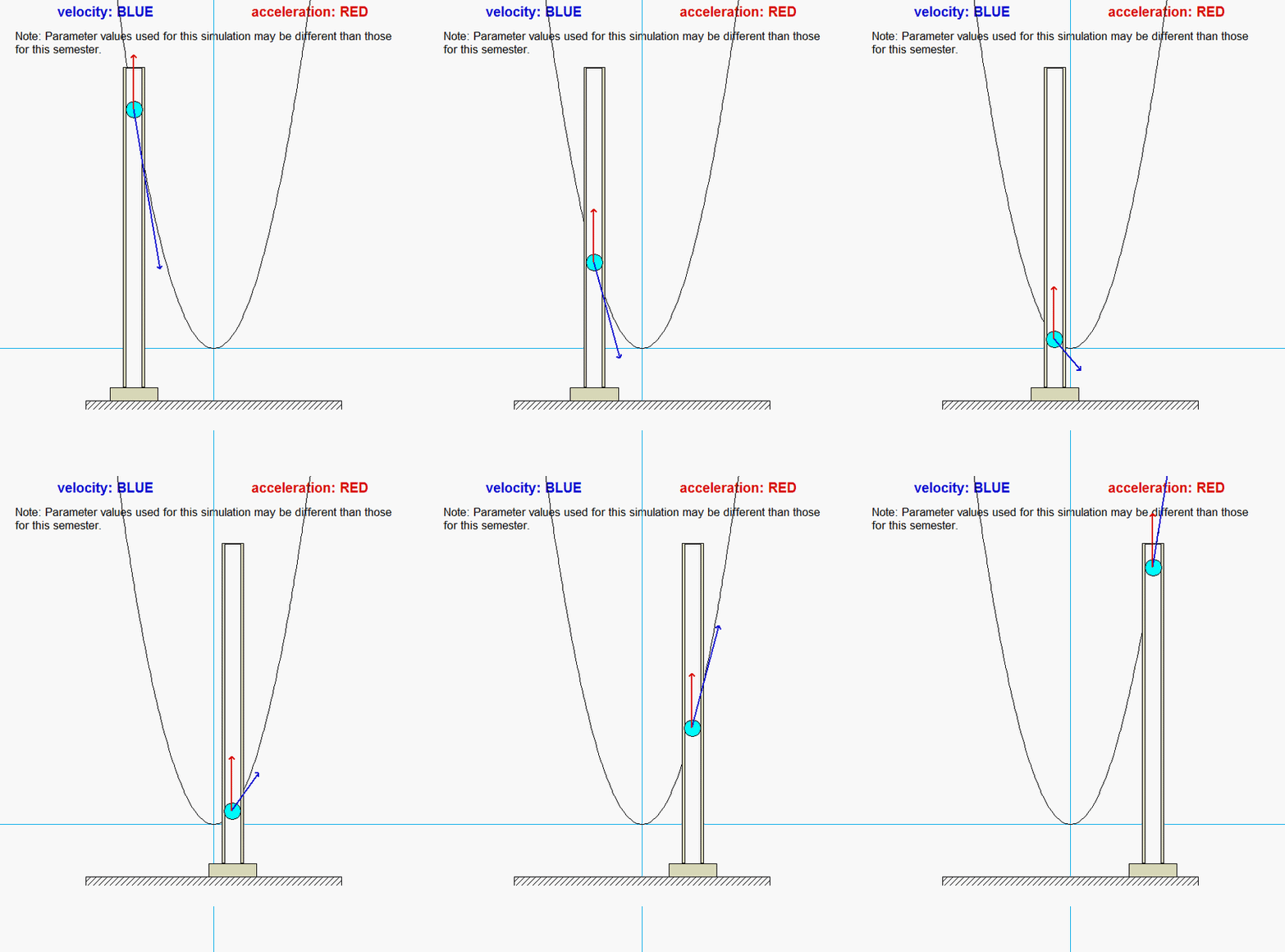
Particle P moves in a way that it is constrained to move along the parabolic-shaped guide, as well as within the vertical slot. Your task here is to determine the reaction forces acting on P by the guide and the slot that are needed to enforce these motion constraints.

As you watch the animation above for the motion of P, why is the acceleration of P always pointing in the y-direction?

Hints:
You should follow the four-step solution plan described in the lecture book, and as discussed in lecture:
Step 1: Free body diagram (FBD) – Draw an FBD of P alone.
Step 2: Kinetics – Write down the Cartesian components of Newton’s 2nd law for P.
Step 3: Kinetics – You need kinematics here to related the known x-components of velocity and acceleration of P to its y-components.
Step 4: Solve – You will have two equations and two unknowns. Solve these for the two reaction forces.


Ask and answer questions below. You will learn from both asking and answering.

Homework H4.F – Sp26

Problem statement
Solution video

DISCUSSION THREAD

Any questions??


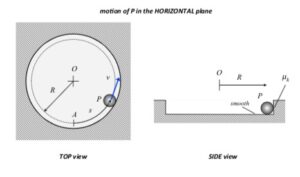
As P moves around on the circular track, two things occur:

  1. The normal force N on P due to the circular guide is proportional to the centripetal acceleration  of P: N = mv2/R.
  2. A friction force opposes its motion, where the sliding friction force is proportional to the normal force between the circular guide and P: f = μkN = mμkv2/R.

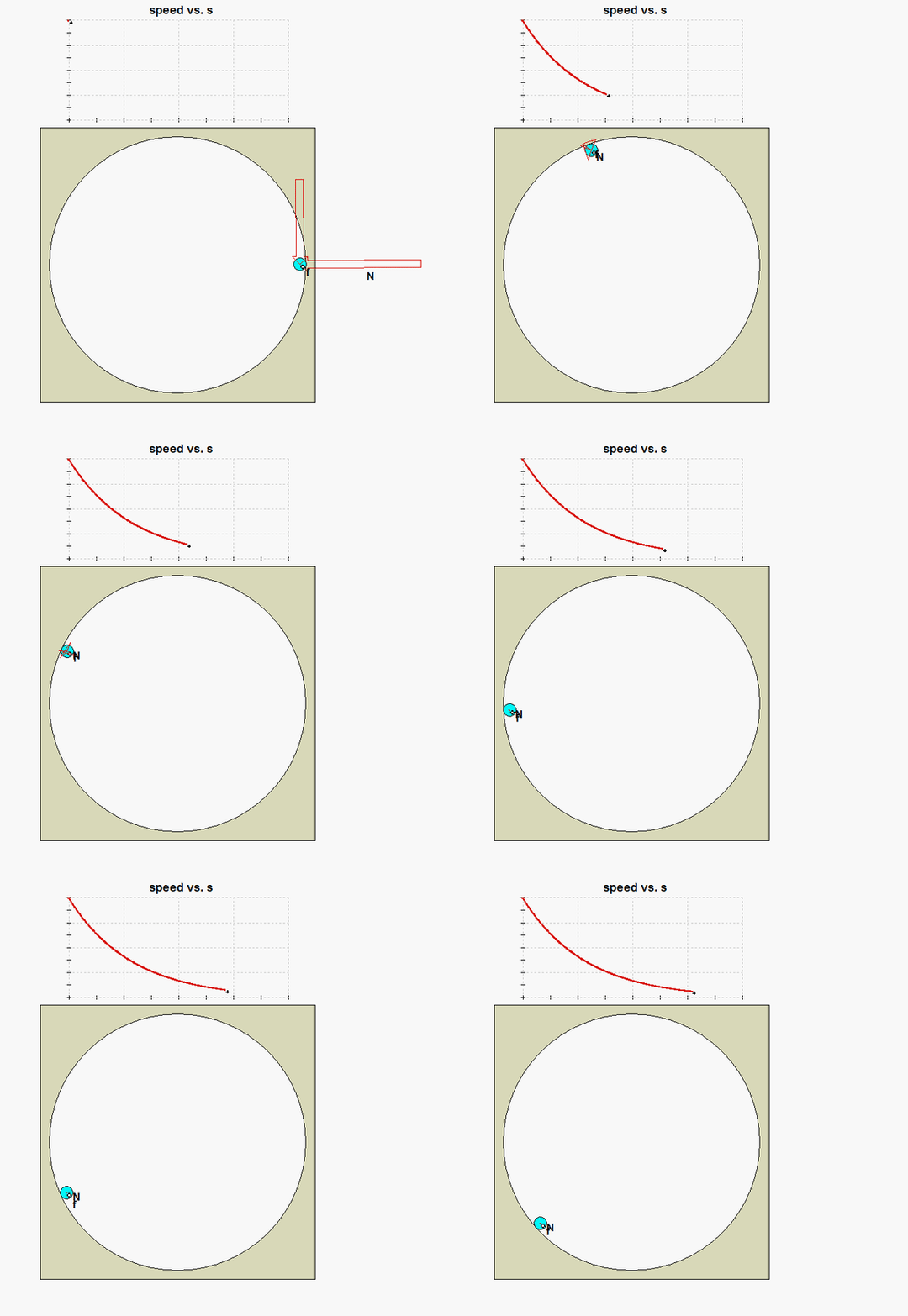
From this, we see that the friction force goes to zero as the speed goes to zero. What does this imply about P coming to rest? Can you see this in the animation of the motion below?

HINTS:
You will need to use the chain rule of differentiation to set up this problem: dv/dt = (dv/ds)(ds/dt) = v (dv/ds).