Brick by Brick
Brick by Brick
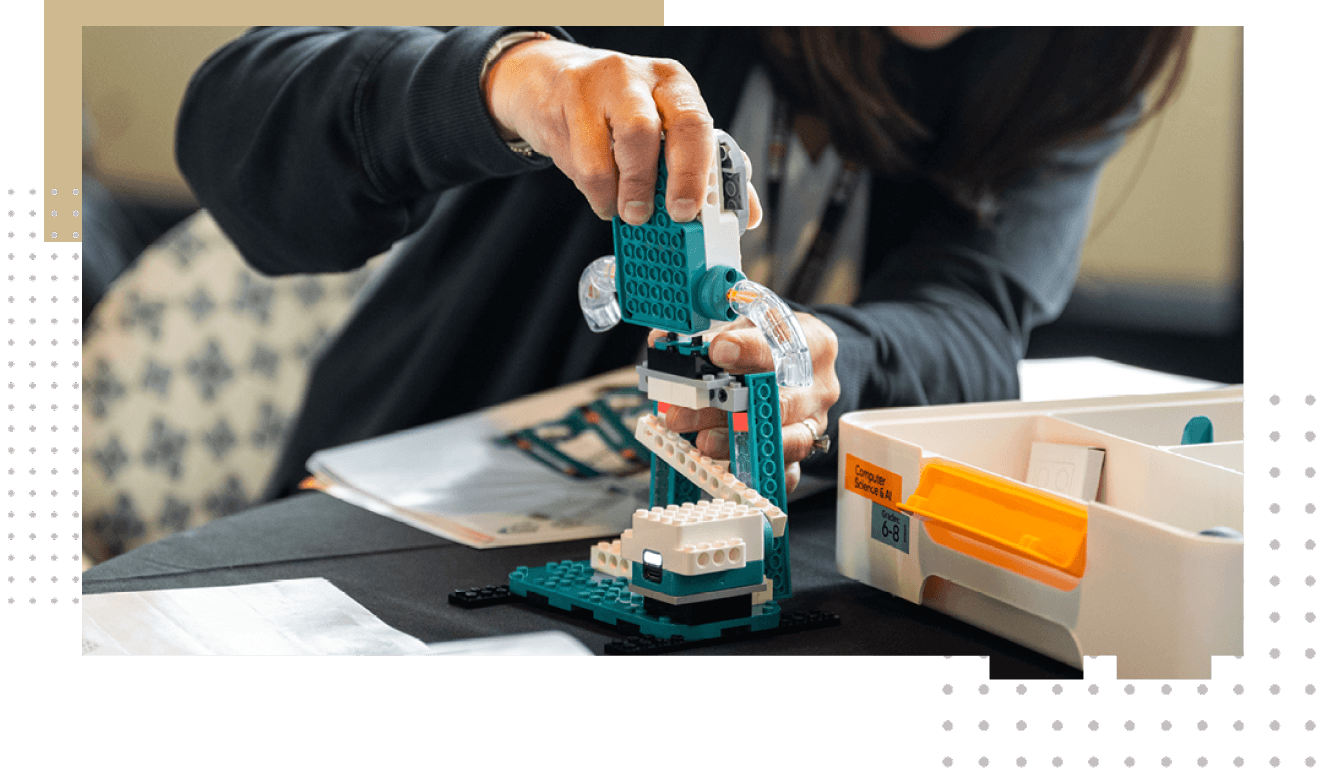
Led by faculty and staff from Purdue’s College of Science and LEGO® Education facilitators, this day of fun and learning for Indiana teachers will explore practical applications of artificial intelligence, coding and robotics through classroom-ready lessons designed to spark curiosity and innovation.
Event information
Event location
Purdue University
Ross-Ade Stadium
Shively Club
850 Steven Beering Drive
West Lafayette, IN 47906
Schedule overview
| Time | Session |
|---|---|
| 8:30-9:00 a.m. | Registration Coffee and light refreshments |
| 9:00-9:30 a.m. | Welcome and opening session
|
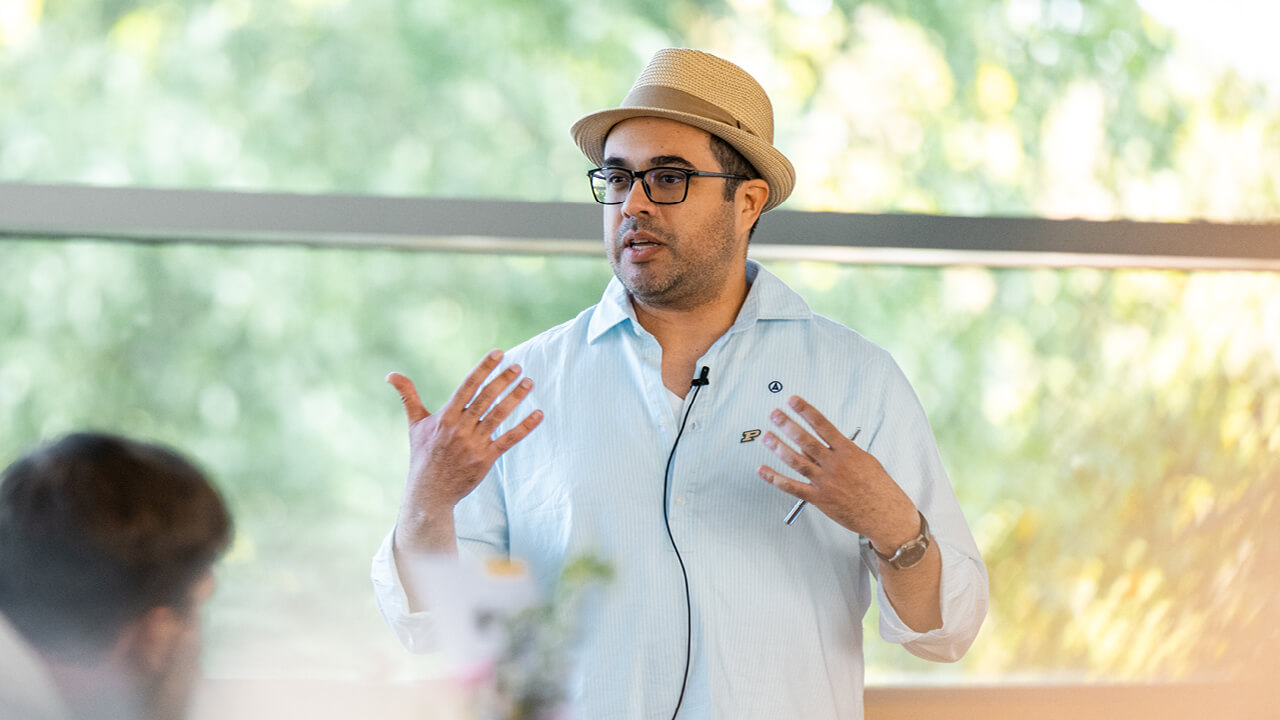
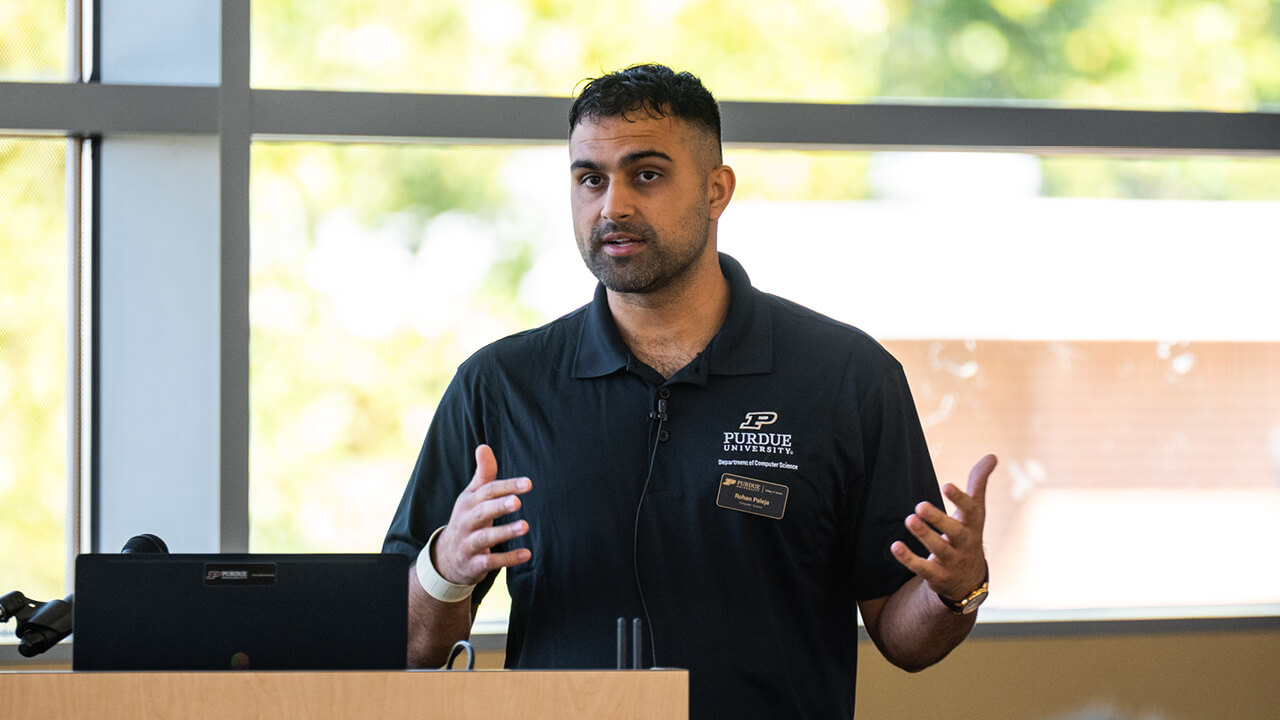
| 9:30-9:50 a.m. | Faculty perspective: AI competency in education Assistant professor Andres Bejarano will discuss the importance of AI competency in the classroom and its relevance for students’ future readiness. |
| 9:50-10:00 a.m. | Break |
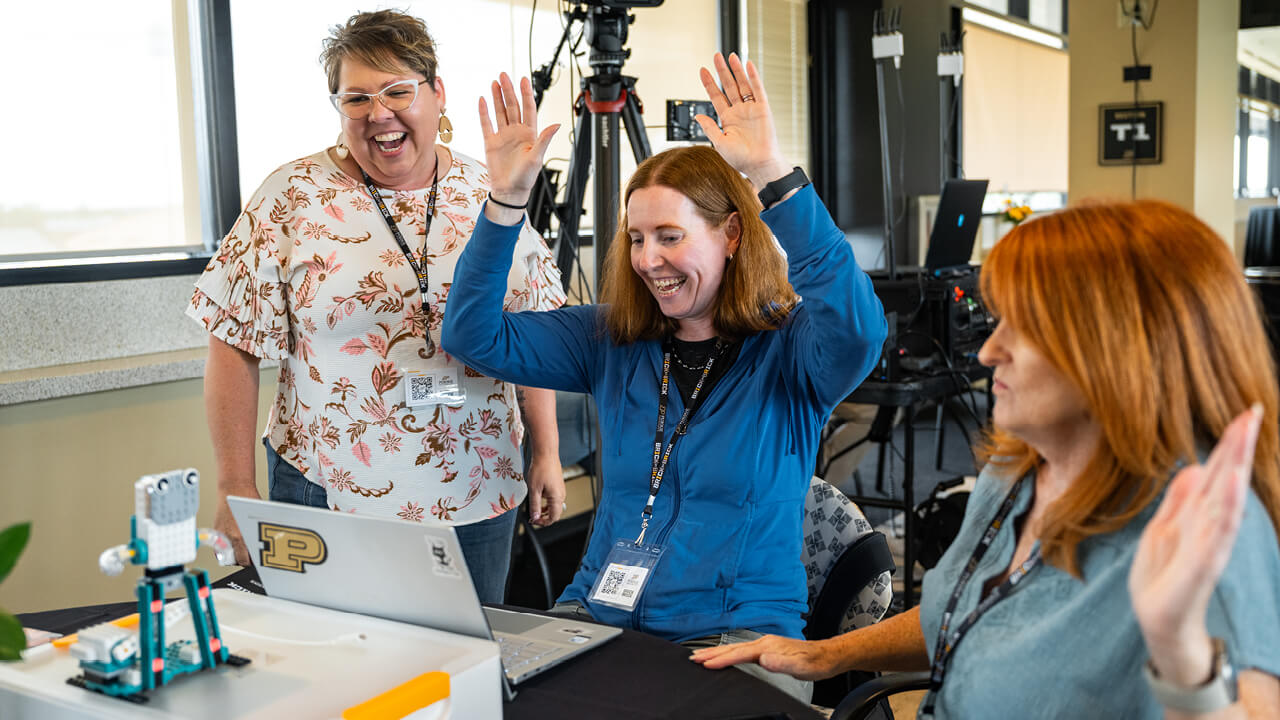
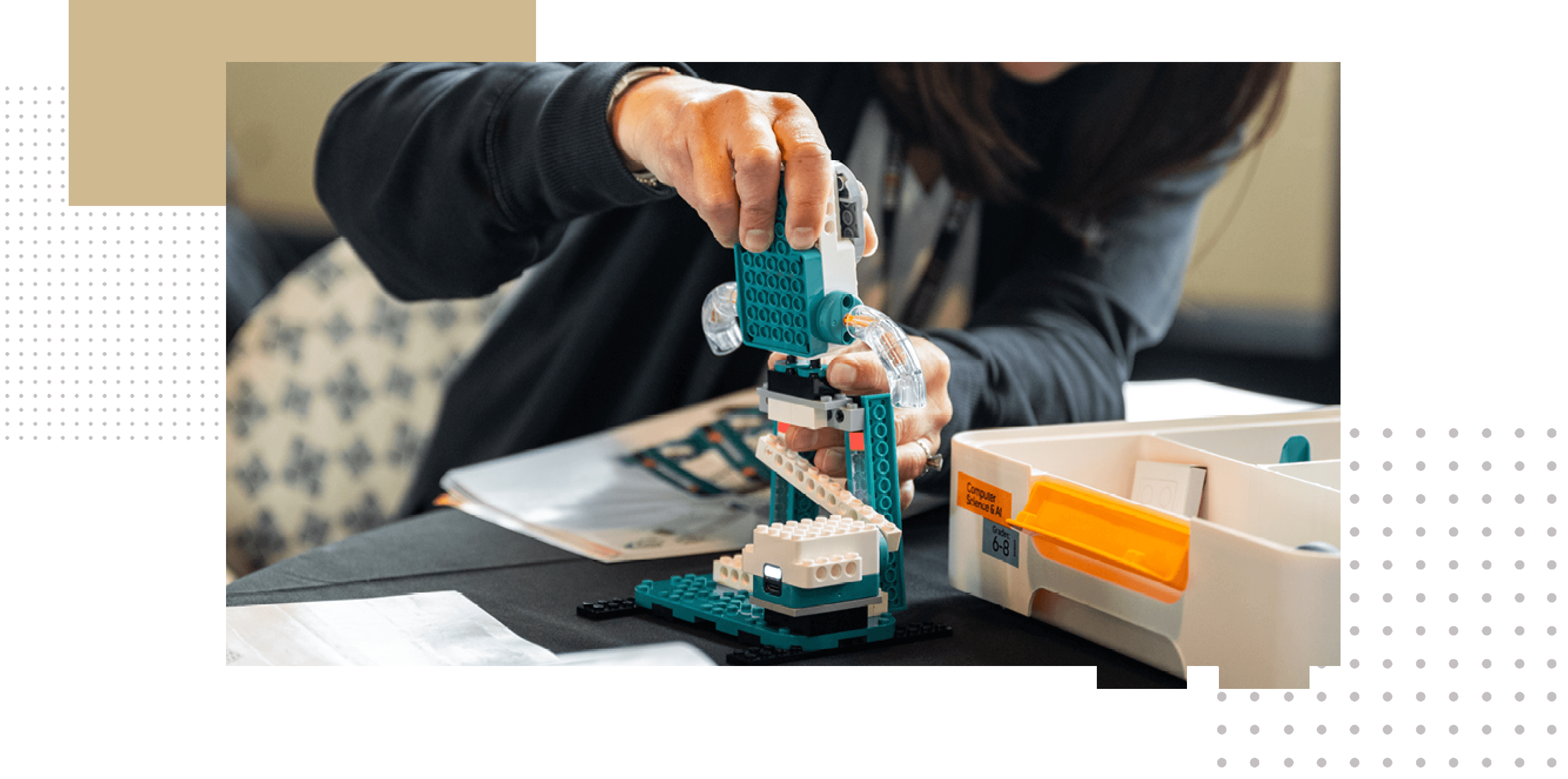
| 10:00-11:10 a.m. | LEGO Education hands-on session Dr. Leanna Prater, Senior Professional Learning Manager at LEGO Education, will continue the discussion of AI policy and literacy with a look at classroom integration through LEGO Education’s AI Toolbox and unbox the new LEGO Education Computer Science and AI sets. Educators will walk through an introductory lesson with a sneak peek at the LEGO Education Coding Canvas. |
| 11:10-11:30 a.m. | Faculty perspective: AI, robotics and research Assistant professor Rohan Paleja will highlight the role of AI and robotics in society, connect these topics to his research, and discuss their relevance for the future of K-12 education and work. |
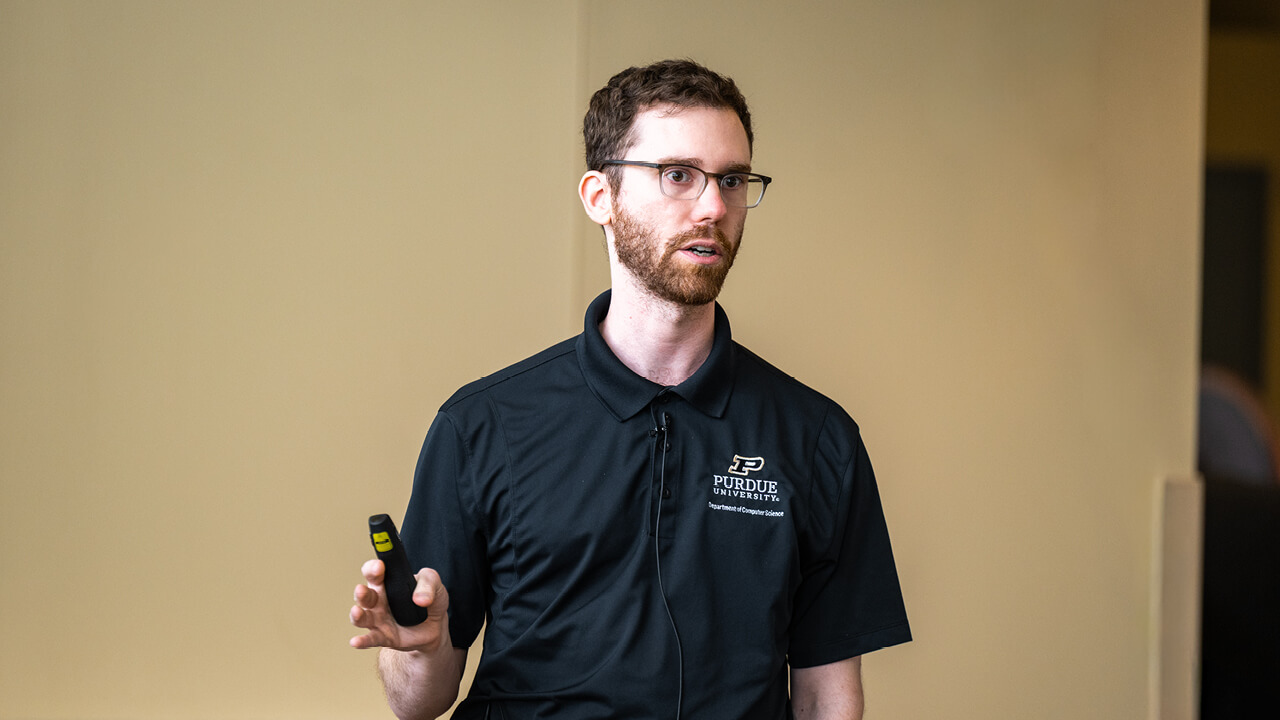
| 11:30 a.m.-1:00 p.m. | Lunch and robotics demonstrations Informal lunch with hands-on robotics demonstrations led by professors Rohan Paleja and Zachary Kingston |
| 1:00-2:15 p.m. | LEGO Education hands-on session How can all middle school students develop a meaningful understanding of machine learning and the relationship between data and artificial intelligence? In this session, Dr. Leanna Prater will guide educators through the AI & Data unit, modeling a lesson in which students build a robot to investigate AI-driven events. |
| 2:15-2:35 p.m. | Faculty perspective: Pathways into robotics Assistant professor Zachary Kingston will reflect on the importance of robotics in K-12 education and share how early exposure shaped his journey into research. |

| 2:35-2:45 p.m. | Break |
| 2:45-3:45 p.m. | LEGO Education hands-on session Building on foundational concepts introduced in the previous session, Leanna Prater will continue leading educators through the AI & Data unit with a lesson that deepens students’ understanding of how artificial intelligence generates and interprets real-world data. Educators will also be exposed to the content and career connections embedded in the Teacher Portal resources, and will leave this session with a clear vision of how this work connects to relevant, real-world applications that help students see themselves as future innovators in an AI-driven world. |
| 3:45-4:00 p.m. | Closing remarks and next steps Jessica Brewer, K-12 outreach administrator, will conclude the program with an overview of additional outreach opportunities and ways educators can engage in future Purdue initiatives. |
Hotel suggestions
For those in need of lodging, we recommend the Union Club Hotel.
Parking and travel information
Free parking will be available in the R lot directly north of Ross-Ade Stadium. The Shively Club’s entrance is between gates J and K.
Capacity
This event is closed to the public. Only those who have received confirmation emails will be able to attend.
Speakers

Andres Bejarano, Assistant Teaching Professor of Computer Science, Purdue University
Dr. Andres Bejarano is an assistant teaching professor at Purdue University whose work focuses on computer science, artificial intelligence and computational geometry. His research explores algorithmic and AI-driven approaches across areas including education technology and scientific computing.

He has contributed to work on generative AI in computer science education, algorithm analysis and AI-assisted tools for programming courses, including applications such as plagiarism detection and interactive systems.
Dr. Bejarano also leads core instruction in computer science, data science and artificial intelligence programs at Purdue. He supports curriculum development, mentors teaching teams and advances research on AI-driven pedagogy and student engagement.

Jessica Brewer, K–12 Outreach Administrator for Computer Science, Purdue University
Jessica Brewer serves as the K–12 Outreach Coordinator for Purdue University’s Department of Computer Science, where she leads statewide efforts to support and expand computer science education. She develops professional learning experiences, classroom resources and outreach programs that connect Indiana educators and students with Purdue faculty, research and emerging technologies.

Jessica collaborates with educators, industry partners and faculty to create engaging learning experiences that help students and teachers explore computer science, artificial intelligence, robotics, cybersecurity and computational thinking. She is passionate about making complex technology concepts accessible, relevant and classroom-ready while helping educators build confidence in integrating computer science across grade levels and subject areas.
Through her work, Jessica strives to create meaningful connections between classroom learning, cutting-edge research and future career pathways, ensuring that Indiana students have opportunities to develop the knowledge and skills needed to thrive in an increasingly technology-driven world.

Dr. Zachary Kingston, Assistant Professor of Computer Science, Purdue University
Dr. Zachary Kingston’s research at Purdue University focuses on robotics, artificial intelligence, and autonomous systems, with an emphasis on how robots plan and make decisions to safely interact with the world around them. His work explores robot motion planning, robotic manipulation and multi-step decision-making. Through both theoretical and applied research, Dr. Kingston develops algorithms, tools and systems that help robots navigate complex environments, solve real-world problems and operate more efficiently. His research also contributes to widely used open-source robotics software platforms that support innovation across the robotics community. One thread of research in Dr. Kingston’s lab is hardware accelerated and low-power autonomy, bringing advanced decision making to less capable computing hardware.

Dr. Rohan Paleja, Assistant Professor of Computer Science, Purdue University
Dr. Rohan Paleja’s research at Purdue University focuses on robotics, artificial intelligence, and human-robot collaboration, with an emphasis on helping autonomous systems learn, adapt and work effectively alongside people in real-world environments. His work explores areas such as robot learning, explainable AI, multi-agent collaboration, and interactive machine learning, with the goal of creating robotic systems that are both intelligent and understandable to humans. Through his research, Dr. Paleja develops machine learning models and collaborative AI systems that support safer, more transparent and more personalized interactions between humans and autonomous technologies. Current research in Dr. Paleja’s group encompasses algorithmic techniques for safe multi-robot collaboration, building explainability for robot foundation models and methods to enable robots to better infer human intent. Today, we are demoing a Boston Dynamics Spot robot playing connect 4 with users. The system leverages a Vision-Language Action Model under the hood, alongside some programmed logic to allow for turn-taking and intelligent connect 4 strategy.

Dr. Leanna Prater, Sr. Professional Learning Services Manager US, LEGO Education
Dr. Leanna Prater helps provide thought leadership and strategic solutioning for professional learning to support educators in bringing hands on playful learning to their classrooms. She has worked in various levels of education including as an elementary teacher, district technology specialist, professional development provider and adjunct professor for both undergraduate and graduate courses. In 2015, she was named Kentucky Outstanding Technology Leader. Dr. Prater holds a Bachelor of Arts in Elementary Education from the University of Charleston in West Virginia, a Master of Arts in Education/Gifted Education from Georgetown College in Kentucky, and a Doctor of Education in Curriculum and Administration with a focus on Instructional Systems Design from the University of Kentucky. As an advocate for hands-on learning, Dr. Prater enjoys helping teachers develop classroom experiences that foster a love of learning and inspire future innovators.
When educators engage students in computer science and AI early, they help students see themselves as problem-solvers and creators.
Lucy Flesch
Frederick L. Hovde Dean of the College of Science