Science and Engineering
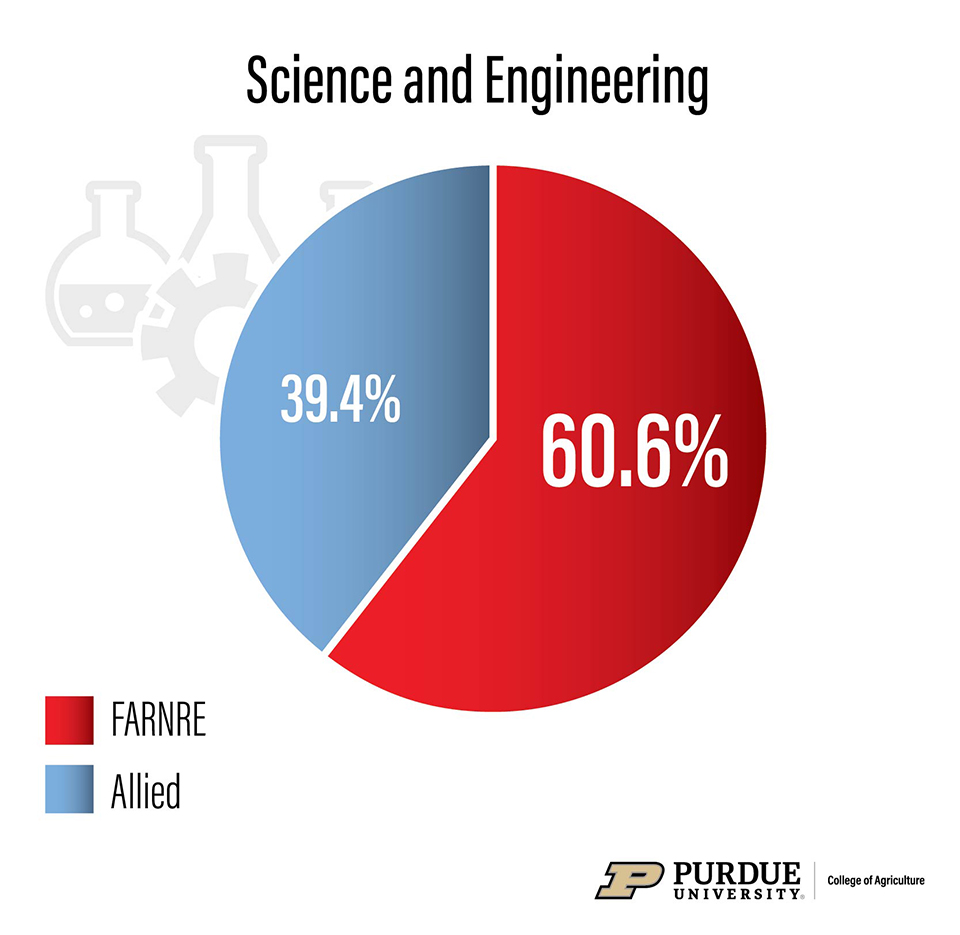
The Science and Engineering cluster includes the life, physical and social sciences and engineering occupations aligned with the production, transportation, processing, and distribution of food and fiber. Occupations focusing on the interface of food science, human nutrition and health are included. In the U.S. between 2025 and 2030, expect an average of 22,298 annual job openings with an emphasis on food, agriculture, renewable natural resources and the environment in Science and Engineering; and expect 13,510 FARNRE graduates with degrees and expertise in science and engineering entering the food, agriculture, renewable natural resources and environment workforce. Approximately 21% of all available FARNRE positions are in Science and Engineering. Graduates with degrees from institutions offering academic majors and degrees in food, agriculture, renewable natural resources and the environment will fill 60.6% (13,510) of the annual openings, with the other 39.4% (8,788) filled by graduates from allied fields of study (Figure 11).
Observations and Trends: Science and Engineering
The Science and Engineering job category will see 22,298 job openings annually from 2025 to 2030, making up about 21 percent of total FARNRE employment opportunities. Growth is projected across agronomy, plant breeding and plant health, where specialists remain essential for crop production innovation and pest/disease management. Approximately 60.6% of openings are expected to be filled by FARNRE graduates and 39.4% by allied fields.
Agricultural, biological and environmental engineers, along with technicians in computer-based systems, sensing and GIS, will continue to be in strong demand as precision agriculture expands. Food science and engineering graduates will find steady opportunities in food safety, processing and packaging, especially at the intersection of nutrition and human health.
Employers are also prioritizing expertise in automation, robotics and artificial intelligence (AI), reflecting the increasing integration of advanced technology into agricultural production systems and supply chain management. Water and soil specialists are expected to remain vital for conservation and compliance roles, particularly in geographic areas that see issues with certain resources (e.g., water). Large-animal veterinarians and rural veterinary practitioners will continue to be undersupplied relative to demand. Strong prospects also exist for biochemists, bioinformaticians and geneticists.
Summary of Science and Engineering
- Agronomy, plant science, breeding/genetics and diagnostics remain high-placement specialties across input suppliers, retailers and independent advisory firms.
- Biological/agricultural/environmental engineers and computer-based systems technicians (sensing, control, embedded/edge computing, GIS/remote sensing) will continue to see robust demand.
- Demand for food science and food process engineers will remain strong. In particular, jobs at the interface between food and human health, quality control, safety and package engineering will continue to grow.
- Hiring for automation, robotics, precision management, AI and geospatial analytics will keep expanding as producers and agricultural companies digitize operations and optimize input intensity.
- Water and soil specialists (e.g., hydrologist, irrigation efficiency, soil health) remain in demand amid changing weather patterns and regulatory compliance requirements.
- Large-animal veterinarians and rural veterinary practice positions will continue to be hard to fill.