Characteristics of Graduates
Perhaps more than any other sector, the food, agriculture, renewable natural resources and the environment sector crosses economic, political, social and geographic lines. The work of this sector undergirds the very existence of all of humankind. Technological innovation and evolution — the product of an impact-driven and curiosity-fueled FARNRE workforce — will need to support a global population projected to reach 9.8 billion by 2050. Given the complex environmental, social and economic issues directly impacting agriculture, food, renewable natural resources and the environment, the U.S. needs a cadre of FARNRE professionals from across the country, drawing on rural, urban and suburban backgrounds, who are technically sound, globally competent and prepared for the work world.
The changing demographics of the FARNRE workforce will reflect the changing demographics of the U.S. population. This section reports trends in select demographics of FARNRE graduates over time. All FARNRE graduates (for each degree and time period) are included in the figures. The race and ethnicity of FARNRE graduates by degree for 2022-2023 are reported in Figure 14.

Demographics of Associate Degree Recipients
Associate degree recipients are about 2/3 female and 1/3 male (Figure 15). They are roughly 75% white and virtually all are U.S. citizens. Degree attainment by students from racial and ethnic minorities has grown steadily, while the percentage of white students earning associate degrees has declined over this same time frame.

Demographics of Baccalaureate Degree Recipients
At the baccalaureate level, female graduates have comprised the majority of graduates over the past two decades, and the proportion of female graduates has grown steadily over the period (Figure 16). Some undergraduate majors — including animal sciences, agricultural education, agricultural communication and veterinary medicine — tend to attract a greater proportion of female students. While other majors tend to be chosen predominantly by male students, such as agricultural engineering, forestry, agronomy and crop science, etc., females are increasingly enrolling in these programs as well. Degree attainment by students from racial and ethnic minorities has steadily increased, while white students have seen a slight proportional decline over this same time frame. Like associate degree recipients, virtually all bachelor’s degrees in FARNRE are awarded to U.S. citizens.

Demographics of Master's Degree Recipients
At the master’s degree level, following the trend in bachelor’s graduates, female graduates have continued to increase relative to male graduates over the past two decades (Figure 17). Degree attainment by students from racial and ethnic minorities has grown steadily, while the percentage of white students earning master’s degrees has slightly declined over this same time frame. While the majority of FARNRE master’s graduates are U.S. citizens, the proportion of international graduates is substantially higher than for associate and bachelor’s degree holders.
Demographics of Doctoral Degree Recipients
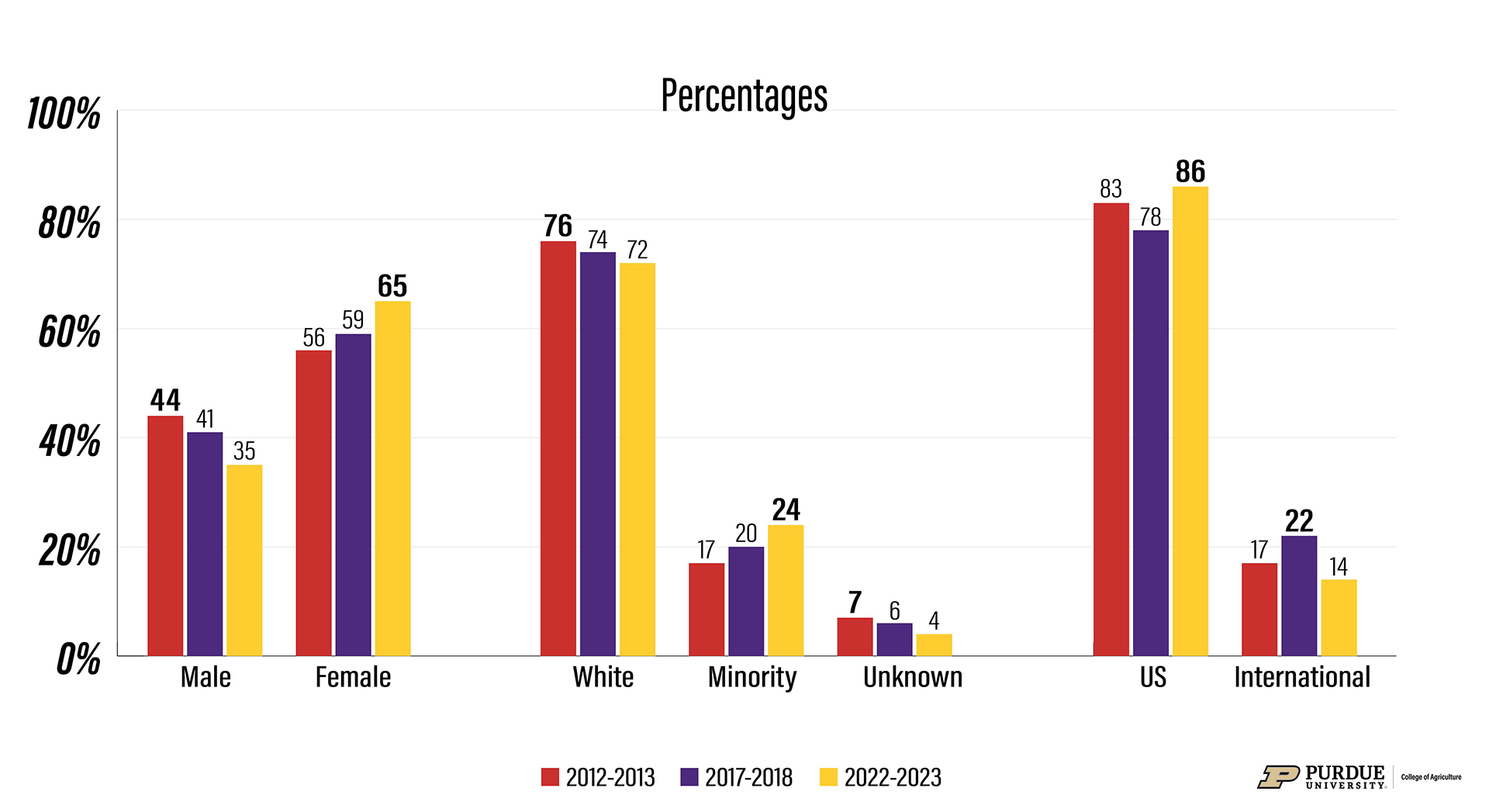
At the doctoral level, female graduates continue to increase relative to male graduates and represented the majority of doctoral graduates for the last year of record (Figure 18). Degree attainment by doctoral students from racial and ethnic minorities has increased over the past 10 years. Minority students now represent about a quarter of the total FARNRE doctoral graduates, while white doctoral graduates have seen a slight but steady decline as a percentage of the total over the same time frame. In contrast to associate, bachelor’s and master’s graduates, international students — who make up 40% of the total — represent a large proportion of FARNRE doctoral degrees awarded.

Demographics of Veterinary Medicine Degree Recipients
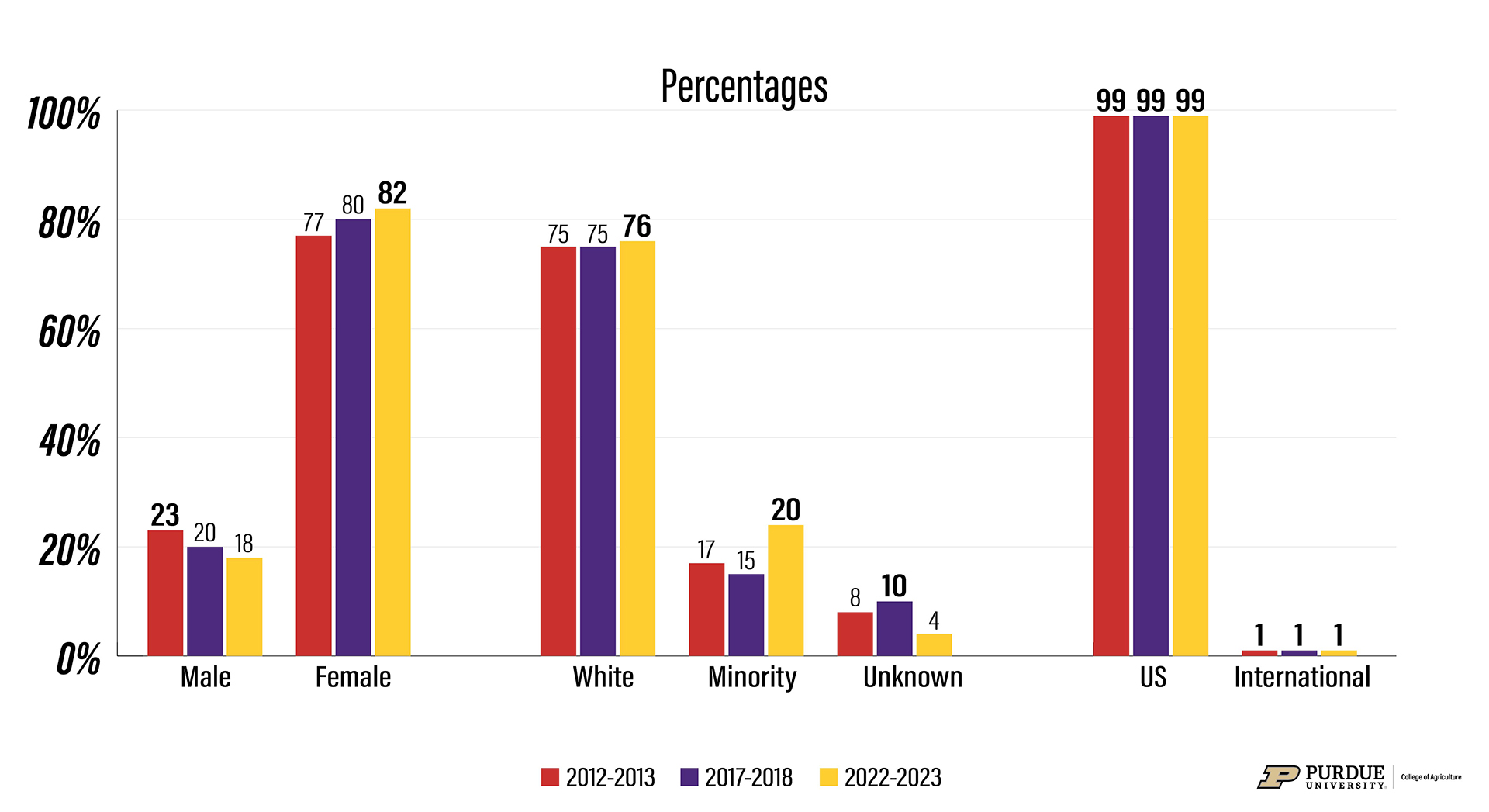
The percentage of female graduates attaining degrees in veterinary medicine has continued to increase, and females now account for 82% of the total DVM degrees awarded (Figure 19). The proportion of white DVM graduates has remained relatively steady at about 75%. Virtually all DVM degrees are earned by U.S. citizens.