Thompson presents ‘A Time Machine to the Early Solar System: Analyzing Samples from Asteroid Bennu Returned by the NASA OSIRIS-REx Mission’ at Westwood Lecture Series
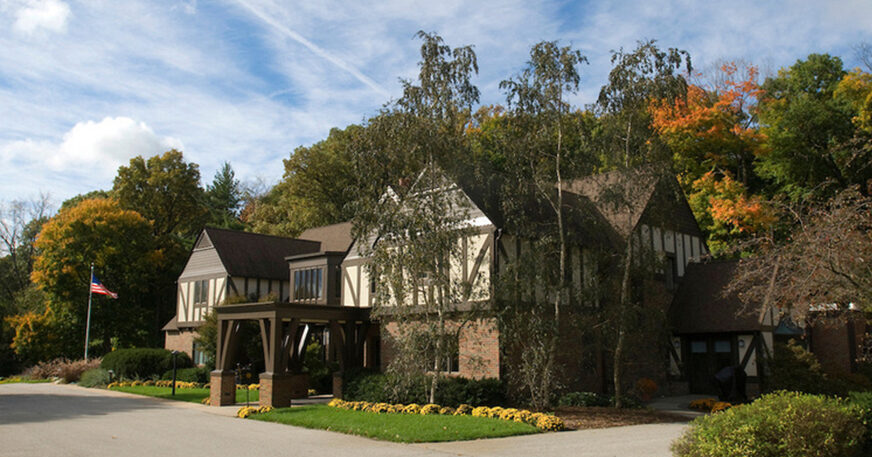
Exterior of Westwood building.
Michelle Thompson, associate professor of earth, atmospheric and planetary sciences in the College of Science, presented “A Time Machine to the Early Solar System: Analyzing Samples from Asteroid Bennu Returned by the NASA OSIRIS-REx Mission” at the Westwood Lecture Series on Nov. 11.
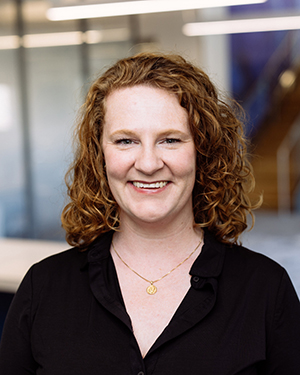
“A Time Machine to the Early Solar System: Analyzing Samples from Asteroid Bennu Returned by the NASA OSIRIS-REx Mission”
Michelle Thompson
Associate professor of earth, atmospheric and planetary sciences
College of Science
Abstract: Asteroids provide us with a tangible a record of the 4.567 billion-year history of the solar system. In this lecture, Thompson highlighted the groundbreaking discoveries of the NASA OSIRIS-REx mission, which returned samples from asteroid Bennu to Earth. She discussed her team’s analysis of these samples to better understand our planetary building blocks and how these materials have evolved over solar system timescales. Thompson put these results into the context of our extraterrestrial sample record and provided an outlook for future sample return missions targeting bodies across the solar system.
Bio: Michelle Thompson is an expert in how asteroids, moons and other planetary bodies are altered by their exposure to space — a process called space weathering. She is the principal investigator of the PRECISE NASA Planetary Science Enabling Facility and deputy lead of the Contact Pad Working Group on NASA’s OSIRIS-REx mission, where she’s been a team member since 2021. She previously served as a science team member of JAXA’s Hayabusa2 mission.
Thompson earned dual Bachelor of Science degrees in geological engineering and biology at Queen’s University in Kingston, Ontario, where internships at NASA’s Johnson Space Center and the Royal Ontario Museum first sparked her interest in planetary science. She went on to complete her MS and PhD in planetary science from the University of Arizona, followed by a NASA postdoctoral fellowship at Johnson Space Center. Thompson joined Purdue as an assistant professor in 2018. She was awarded the Presidential Early Career Award for Scientists and Engineers by the National Science Foundation in 2025.