Wiens presents ‘Spectacular Failures and Brilliant Successes on the Path to Mars’ at Westwood Lecture Series
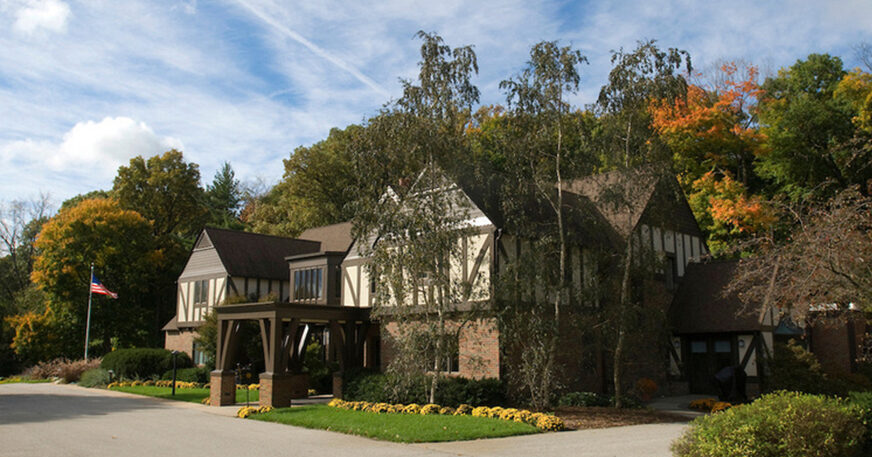
Exterior of Westwood building.

Roger C. Wiens, professor of earth, atmospheric, and planetary sciences in the College of Science, presented his groundbreaking exploration of the Red Planet with instruments that he developed for two generations of NASA rovers at the Westwood Lecture Series on Sept. 12.
This event also celebrated Wiens’ 2024 Herbert Newby McCoy Award, Purdue’s highest honor for contributions to the natural sciences, recognizing his groundbreaking contributions to planetary science and instrumental role in advancing NASA’s Mars exploration efforts.
“Spectacular Failures and Brilliant Successes on the Path to Mars: How We’re Finding Potential Biosignatures There and Paving the Way for Astronauts”
Abstract: The path to Mars is fraught with challenges, not only a myriad of technical hurdles but also political ones. In this lecture, Wiens will share his successes and setbacks in developing instruments for two generations of Mars rovers, Curiosity and Perseverance, and the groundbreaking discoveries his teams have achieved with them. Specifically, he will highlight what scientists call “potential biosignatures” — features used to identify evidence of life in Earth’s early rock records — and their possible parallels on Mars. Finally, he will discuss how we are progressing toward the day when humans take their first steps on Martian soil.
Bio: Wiens is a leading planetary scientist with extensive expertise in Mars exploration and spectroscopy instrument development. He earned a Bachelor of Science in physics from Wheaton College and a PhD in physics from the University of Minnesota, where he wrote the first thesis on the composition of the Mars atmosphere measured in the laboratory, sourced from Martian meteorites. He served as a developer and flight payload lead of NASA’s Genesis cosmochemistry mission, the first robotic mission to return from deep space, and developed and led exploration with the ChemCam laser remote sensing instrument for NASA’s Curiosity rover, which landed 2012. He currently leads the SuperCam instrument team on NASA’s Perseverance rover, which deployed in Jezero Crater in 2021, and is a senior fellow of Los Alamos National Laboratory, where he developed these instruments before joining Purdue’s planetary science faculty in 2022.
Wiens was knighted by the French Ministry of Education for his collaboration with the French national space agency, for forging strong ties between the French and American scientific communities, and for inspiring many young, ambitious earthlings. He holds an honorary doctorate from the University of Toulouse and is the namesake of Asteroid 41795 WIENS.