Excellence recognized: Purdue students secure 16 NSF Graduate Research fellowships, 17 honorable mentions

PhD candidate Ishaan Madan says a major factor in his decision to choose Purdue to advance his research on origin of life on Earth from atmospheric and terrestrial processes was the opportunity to work alongside Ben Pearce, a professor of earth, atmospheric and planetary sciences. Here, Madan, right, updates his research activity with Pearce in a lab at Hampton Hall. (Purdue University photo/John Underwood)
Ishaan Madan was maintaining oncology software in a technical engineering role at Epic Systems, the nation’s largest electronic medical records company, when he pondered a career change that aligned more closely with his goal to research the chemistry of early Earth and potential for life beyond. That sparked a desire to pursue a PhD in the field of astrobiology, with Purdue University rising as his top choice for its research strengths and strong momentum in earth, atmospheric and planetary sciences.
Today, Madan is excited for what the future holds as he continues a new career in academia and research, drawing on his passion for learning and discovery that is being jump-started this year as a Purdue recipient of a competitive fellowship through the National Science Foundation’s Graduate Research Fellowship Program.
“Winning the NSF GRFP is both an immense honor and a personal milestone. This award feels like a moment of recognition of my academic potential and also of the hard work, resilience and community that have shaped my journey,” says Madan, who received an undergraduate degree in biochemistry from Wheaton College in Massachusetts. “The NSF GRFP gives me the freedom to fully focus on my research and academic growth throughout my PhD.”
As the engines that power Purdue’s research and teaching missions, the university’s graduate and undergraduate students have continued an impressive run of success with the NSF Graduate Research Fellowship Program: 16 students captured awards while another 17 students achieved honorable mention notoriety for 2025.
At the same time, eight Purdue alumni now completing graduate studies at other institutions have received program awards, and 16 other alums gained honorable mention status this year.
“Underscoring Purdue’s leadership in research and innovation, 57 of our best and brightest undergraduates, graduate students and alumni received national recognition through the prestigious NSF Graduate Research Fellowship program this year,” says Lauren Trondsen, director of fellowships for Purdue’s Office of the Vice Provost for Graduate Students and Postdoctoral Scholars. “We are proud and excited by the success of these Boilermakers who are already driving advancements in STEM and are poised to be future leaders in their fields.”
See complete Purdue list for 2025
The NSF GRFP ranks among the nation’s most competitive and esteemed fellowships, supporting outstanding graduate students in science, technology, engineering and math fields. More than 1,500 program awards were announced this year — 1,000 in April and another 500 in June. That compares with recent years when a total of 2,000 to 2,500 NSF GRFP awards were announced.
Available to incoming, first-year, or second-year graduate students in STEM fields, the NSF GRFP is a five-year fellowship that provides an annual stipend of $37,000 for three years and $16,000 per year for three years toward tuition and fees, subsidizing what their principal investigator or academic department might have to provide.
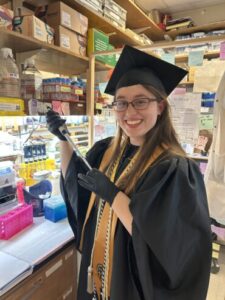
For Lafayette native Shelby Sliger, winning the NSF GRFP was life changing as she wrapped up her undergraduate life sciences studies in biochemistry from Purdue. Moreover, gaining recognition for her research proposal at the national level, she says, is a tremendous accomplishment given the level of competition.
“I did not anticipate being awarded this fellowship and assumed I would have to reapply as a graduate student. I am very honored and grateful to the NSF, Purdue and my undergraduate principal investigator Joe Ogas for recognizing and supporting my application,” says Sliger, who is headed to the University of Michigan for her PhD in biochemistry with an emphasis on cancer research.
Small steps toward excellence, success
Key to Madan’s decision to select Purdue for his doctoral studies was the opportunity to conduct research alongside EAPS assistant professor Ben Pearce on the origin of life on Earth from atmospheric and terrestrial processes. “His research is aligned with the questions I wanted to explore, and I knew that mentorship under him would push my scientific and personal growth,” Madan says.
Madan was born and raised in India before his family moved to Queens, New York, when he was 13. While he’s been fortunate to win other competitive awards — including the Posse Foundation and Goldwater scholarships — the current Frederick N. Andrews Fellow at Purdue says he has spent years learning how to navigate spaces where he often felt like an outsider.
“Each of these (scholarships) has been a stepping stone that brought me here. These are all reminders of the mentors who believed in me, the late nights of studying, the sacrifices my family made and the intentional community I’ve built around me,” he says.
The NSF fellowship, however, gives Madan the freedom to fully focus on his research and academic growth throughout his doctoral studies at Purdue. “Knowing that my funding is secure means I won’t need to take on additional responsibilities like TA-ships unless I choose to. It’s a privilege to have time, space and support aligned like this, and I intend to use it intentionally.”
In his studies, Madan has spearheaded research projects lasting anywhere from four to 24-plus months, focusing on understanding the chemical processes that may support life beyond Earth. His work spans planetary science, quantum chemistry and thermochemical modeling, where he applies advanced simulations to explore life’s potential on worlds like Titan and Venus.
He also remains grounded academically in the thinking that his goal, his priority has never been focused on external successes.
“I’m deeply grateful to the mentors, friends and family who’ve supported me through every stage of this journey,” he says. “As someone who grew up navigating cultural shifts, identity and uncertainty, any recognition means a lot. It has always been about uncovering deeper meaning and purpose within myself. I’ve learned that as long as I focus on inner growth, everything else tends to align.”
Sliger: ‘I have always loved Purdue’
For Sliger, she’s grateful as a Purdue undergraduate to have had the experience of developing her own hypotheses, writing independent aims and telling the story about her science. She plans to draw confidence from successfully presenting her research to a board of prestigious NSF scientists when the time comes for the qualifying exam required to complete her PhD.
“While I was interested in pursuing an academic career prior to winning the NSF GRFP, receiving the award has reinforced my desire to teach and conduct research at the university level,” she says. “The practice of writing an NSF GRFP application is simpler but very similar to applying for an NSF grant as a principal investigator.”
Sliger has strong family connections to Purdue — her brother will be a sophomore this fall and a cousin completed their undergrad and vet degrees here. When she was in high school, she spent a lot of time on campus for activities that included Science Olympiad, Spell Bowl and Academic Super Bowl.
And during her undergrad studies, she received a graduate certificate in biochemistry and molecular biology from Purdue, earned 10 credits of graduate coursework and conducted 20 hours of lab research weekly as a senior. Over the course of her four years at Purdue, she also worked in Ogas’ lab studying H3K27me3 homeostasis in plants.
“I have always loved Purdue, and it was an easy choice for my undergraduate studies,” she says.
What’s Next?
The 2025-26 cycle for the National Science Foundation’s Graduate Research Fellowship Program is expected to open for applications this fall. Students interested in applying can reach out to trainee-funding@purdue.edu for access to resources such as workshops on preparing a strong application, individual coaching and feedback on application materials, and examples of previously successful applications.
Faculty-Staff News
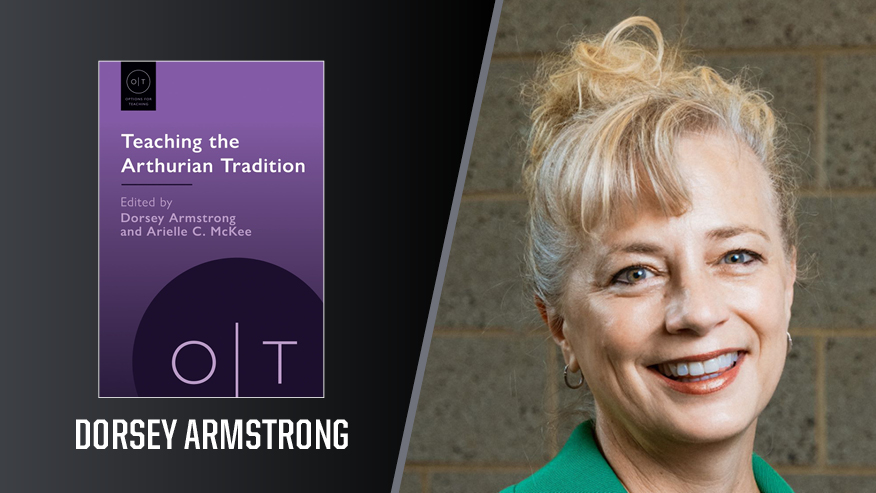
In Print: ‘Teaching the Arthurian Tradition’
September 24, 2026

Undergraduate Research Expo accepting research talk and poster abstract submissions
September 24, 2026

Road to Retirement continues through Friday – there’s still time to participate
September 24, 2026

John Martinson Honors College seeks faculty applicants for 2027-28 teaching opportunities
September 24, 2026