Exploratory Studies celebrates 30 years of impact
Since 1996, the nationally recognized program has empowered thousands of Purdue students to find direction through intentional exploration
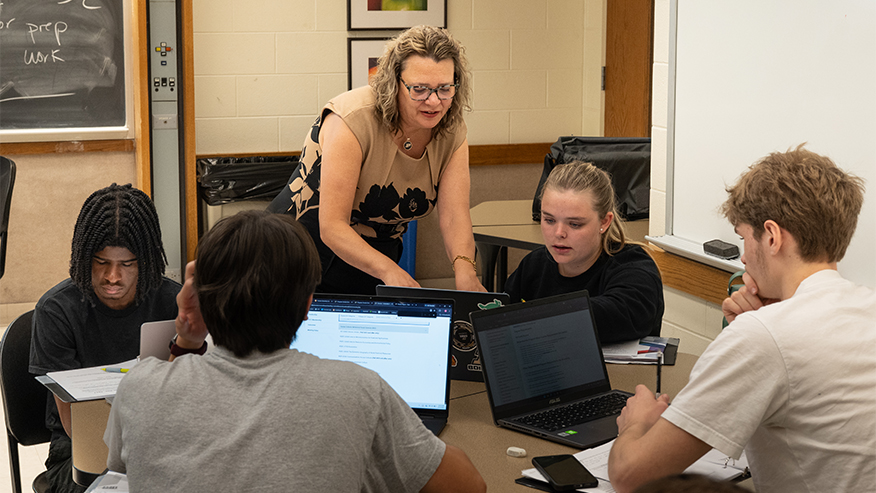
For 30 years, Purdue’s Exploratory Studies program has supported students as they explore majors, clarify their goals and make informed academic decisions. (Purdue University photo/John Underwood)
WEST LAFAYETTE, Ind. — It’s the age-old question for any college-bound student: “What’s your major?”
Thirty years ago, Purdue University challenged the assumption that students must arrive at college with a clear academic and career path in mind. Instead of requiring students to immediately declare a major, Purdue launched a pilot program that gave them the support to explore. During these three decades, thousands of Boilermakers have found direction through Exploratory Studies.
Through the foundational EXPL 10100 (Academic and Career Planning) course, previously known as EDPS 10500, individualized advising and interest-based course schedules, students gain a deeper understanding of their interests and opportunities before selecting a major. During their time in the program, typically no more than four semesters, they have access to the same scholarships, study abroad programs and other opportunities available to students with declared majors, and they can further engage as program ambassadors, fellows or student government senators.
“Exploratory Studies helps Purdue students make informed decisions about their long-term goals, empowering them to move forward with purpose during their time at Purdue and long after graduation,” said Haley Oliver-Jischke, senior vice provost for academic and student success. “Approximately 90% of students remain in the major they choose, demonstrating the lasting impact of the program.”
History and evolution: ‘We’re all explorers’
Approved by Purdue’s Educational Policy Committee in 1995, the Undergraduate Studies Program enrolled its first 212 students in fall 1996 under the direction of Richard Grace. By 1999, the Undergraduate Studies Program had demonstrated its value and earned permanent status with support from a Lilly Endowment Inc. grant.
Over the next two decades, the program expanded to serve students who change majors and students who transfer while adding learning communities, enhanced academic support and career-planning resources. Academic and Career Planning also became a required course for all incoming students and was later redesigned through Purdue’s IMPACT initiative.
The program entered a new era in 2013 when it was renamed Exploratory Studies to reflect its broader focus on student exploration. Under Linda Gregory’s leadership beginning in 2017, the program continued to grow with an expanded curriculum, support services and engagement opportunities.
“Rebranding the program around the idea of exploration was really important. We’re all explorers in some way throughout our careers, so I think embracing that mindset was a great milestone for us,” said Colleen Banter, who became interim director following Gregory’s retirement in 2026.
What’s next and the impact: ‘A future that fits’
Today, Exploratory Studies enrolls between 1,000 and 1,500 students annually and has guided nearly 15,000 Purdue graduates toward majors that best fit them. More than 96% of students report confidence in connecting their interests and strengths to academic and career decisions after completing the foundational course.
Behind those numbers are individual stories of transformation, students who arrive at Purdue unsure of their next steps and leave with a clearer path forward.
“Exploratory Studies gave me the opportunity to truly reflect on where I could see myself in both university and early career placement,” said senior Julian Vuong. “The individual nature of the program allowed me to think about what I wanted to get out of my education, and the collaborative nature of small group and class discussions allowed me to consider how others proceed through their own process of finding a future that fits.”
Students like Vuong demonstrate why the program has remained a vital part of the Purdue experience for three decades.
“The value of exploration has never been greater than it is today. We aren’t just helping students choose a major; we’re helping them develop the skills to navigate an ever-changing future,” Banter said. “I want more people to understand the value of exploring in an intentional and proactive way. That’s how students get the most out of what Purdue has to offer and prepare themselves for opportunities we can’t even imagine yet.”
About Purdue University
Purdue University is a research institution ranked among the top 10 public universities in the United States. More than 111,000 students study at Purdue across multiple campuses, including more than 57,000 at our main campus locations in West Lafayette and Indianapolis. As a land-grant university committed to affordability and accessibility, Purdue’s main campus has frozen tuition 14 years in a row, enabling more students than ever to graduate debt-free.
Faculty-Staff News
Beyond medical coverage: Learn how supplemental benefits can help with unexpected costs
October 8, 2026
Board of Trustees meeting set for Friday; special issue of Purdue Today to follow
October 8, 2026

Researchers in various studies looking for participants
October 7, 2026

Virtual presentation on Medicare, Purdue medical, HSA plans available
October 7, 2026