by Sophia Chiparus
It’s been another beautiful week, and we’re back. Well, not all of us. Chris, our manager, has left for a short vacation, leaving us interns unsupervised and up to no good.
I jest, of course, we’re all very responsible and invested in the farm’s success. But since he’s out, please direct any questions or requests for late/early pickup towards me for the next week!
Production wise, we’re slowing down. Our Sungold tomatoes were removed last week, and final harvests have occurred for some crops, like the eggplant that will be available at pickup this week. Luckily, with the cherry tomato production coming to an close, we’ve had a boom in fruits last and this week.
A true boom though, has been our slicer tomatoes. Tens of bins of their round red bodies are stacked in our coolers, waiting to make their final homes in your stomachs. As always, you are welcome to take as many as you’d like at pickup, so bring those extra bags!
Semester wise, it’s week nine already! I suppose I shouldn’t have blinked. I’ve been working reduced hours at the farm for the last few weeks in an attempt to get some time back. Despite the extra time, I haven’t felt any happier or less stressed. With Chris’ absence, I spent more time at the farm than I usually do, and I feel less wired, soothed by the rhythm.
It’s interesting, as when I talk about being stressed, many of the people in my life suggest cutting down on the time I spend at work. While that would probably work if I didn’t enjoy my job, I think there’s something grounding and almost hypnotic about laboring on the land. Without that, there’s really nothing else in my life that asks me to be slow and deliberate, it’s always rush rush rush!!
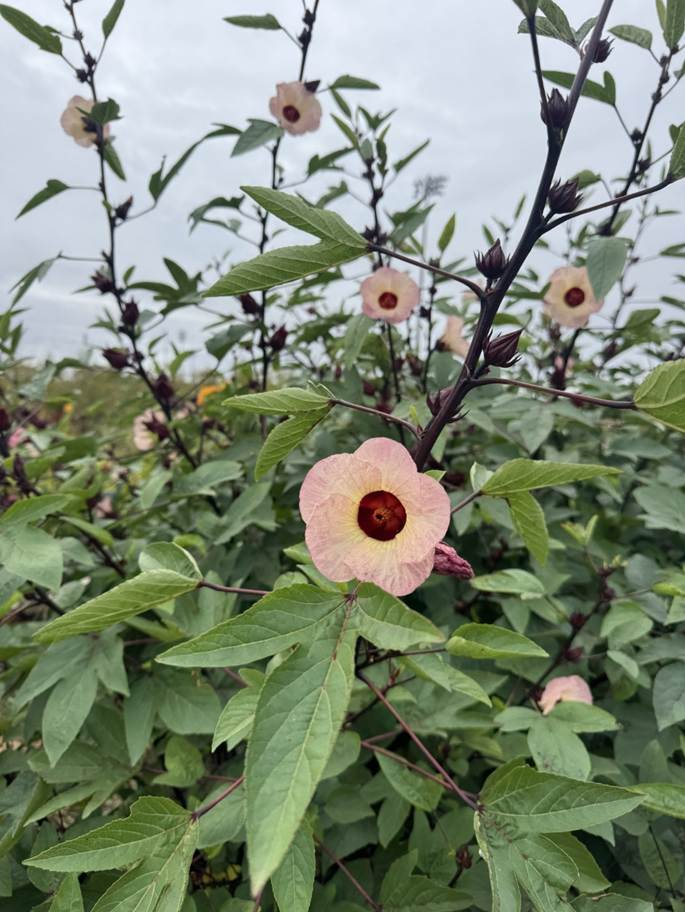
Something I’ve been loving on the farm lately is the aftermath of these hibiscus blooms. If you’ve ever had hibiscus tea, the residual of these flowers is the kind of bud used for that tea. It’s super sour and tart, and utterly refreshing. I’ll bring a couple of buds out to pick up, so mention it specifically if you want to try it!
This week, I interviewed someone else who loves what they do. Sydney Territo is a recent graduate from Purdue’s entomology program.
Who are you and what is your relationship to the student farm?
Sydney: I am a laboratory technician in Laura Ingwell’s IPM (Integrated Pest management) lab. I started working there in 2024. She has been working with farmers across Indiana, and part of one of her projects is monitoring tomato pinworms, a novel pest in Indiana in high tunnels. She gifted the project to me, part of which includes taking trap catch data. One of these locations where we collected data from was the student farm, and over time I started to focus specifically on the farm.
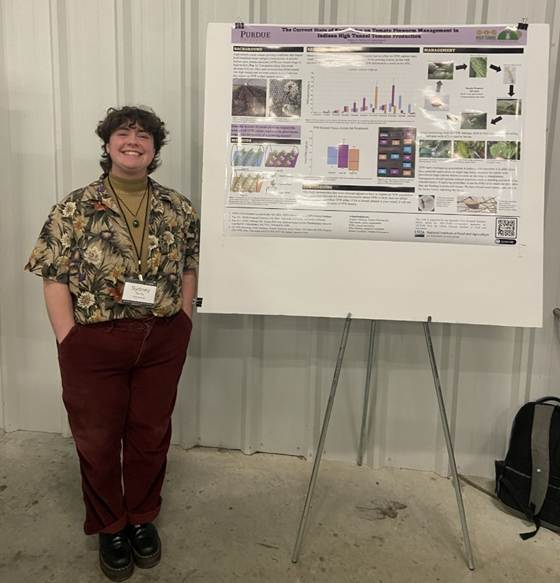
Sydney presenting pinworm research at the Indiana Small Farms & Horticulture Conference
I’ve also been helping with Laura’s cut flower project which started this summer, and the flowers from which were a part of the CSA. For that project, we took a look at different varieties of cut flowers growers may be interested in, and we assessed disease, pest, and production.
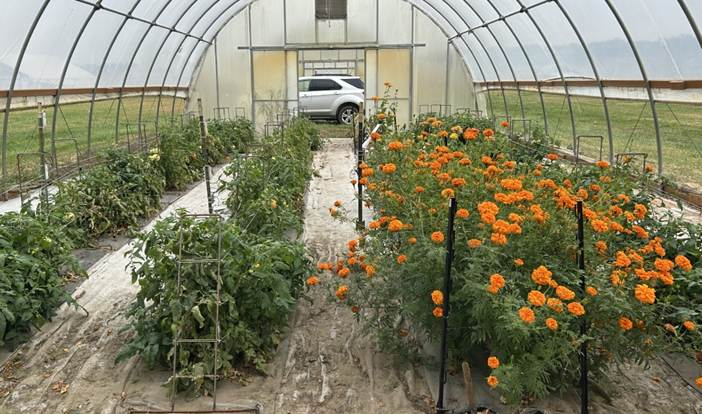
One of the lab’s research tunnels, housing both tomatoes and marigolds.
How did the cut flower project come to be?
Sydney: It was a project that Laura won a grant for, and multiple professors were a part of it. As entomologists, we were most interested in the insect communities that were present and showing up. Every week we collected scouting data, counting both pests and beneficial insects.
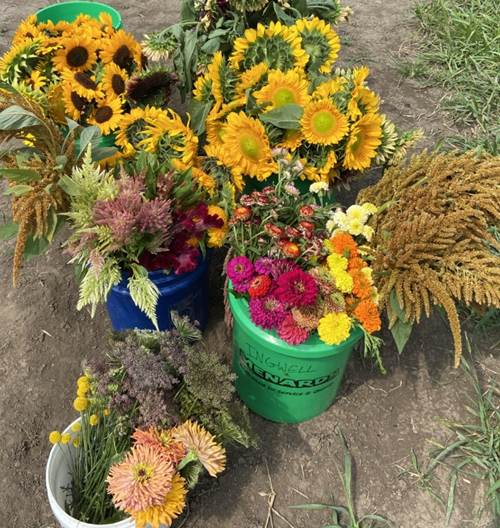
A cut flower harvest from earlier this summer.
What does working with these insects look like?
Sydney: We do both passive and active sampling to get a representative idea of what might be coming in our agroecosystem. Active sampling typically entails scouting, which gives us a good idea of what is there in the present. Since we cannot collect all our data actively, we put out things like traps to help collect passive samples. Depending on what the data collection is, it can also involve a lot of taxonomic identification to figure out exactly what we are seeing.
For tomato pinworms, we use traps with pheromone lures. So, we are often very hands-on with the insects, but sometimes we do rely on setting out traps and coming back later.
So, what is the most destructive pest at the farm?
Sydney: It depends on what crop you are looking at. With the cut flowers we saw a lot of Japanese beetles, who are very attracted to any sweet-smelling plant. This summer, we found them all over the marigolds and they were horrifically destructive to them. For tomatoes, honestly did see some tomato hornworms, but the yellow striped army worms were more brutal. While hornworms eat leaf material, the army worms are not so discerning, and they eat everything. Specially they eat the fruits really heavily, which has a very detrimental effect on the crop.
What did you learn about tomato pinworms through your project?
Sydney: I learned a lot about their population dynamics. My project initially looked at their growth rate over the growing season. We were trying to see if they exhibited a synchronized emergence, which is when generations of the population align in birth and maturity cycles. If they are synchronized, you can spray before the larva even hatch and knock back a lot of the population. We did not know what that emergence looked like for pinworms, so we did weekly trapping to figure out if synchronization was present.
Unfortunately, it was not, which makes it a lot harder to spray as there are multiple generations producing at the same time. It is also difficult because early in their development they eat inside of the leaf, meaning foliar spray cannot touch them at that time, and at later stages they make the leaves curl over, which is not ideal for the same reason.
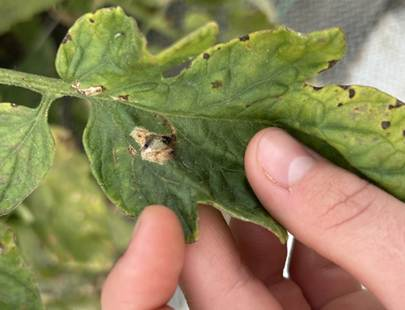
A tomato pinworm.
Were you always interested in bugs?
Sydney: Kind of, but not really. As a child I really enjoyed bugs. In grade school a teacher told me if I was going to work with bugs, I would have to kill a lot of them, which was devastating for a ten-year-old to hear. When I met a bunch of bug lovers in college and realized there was an entomology degree, I changed my major and became really involved in the department. Ever since I got involved in this discipline, I fell in love with it and really appreciate working with other people who have a passion for bugs.
What is your favorite part of your work?
Sydney: Getting produce from the farm is a pretty awesome perk. In terms of research, getting the chance to talk to people actively growing stuff is valuable. When we visited all the farms across Indiana and got to talk directly to growers, it was a great experience.
Any parting words?
Sydney: If you have any plants at home, stay curious about them and look out for any bugs. If you have an entomologist in your life in any capacity, reach out to them about any bug you see, as I’m sure they would be overjoyed to help identify that bug for you.