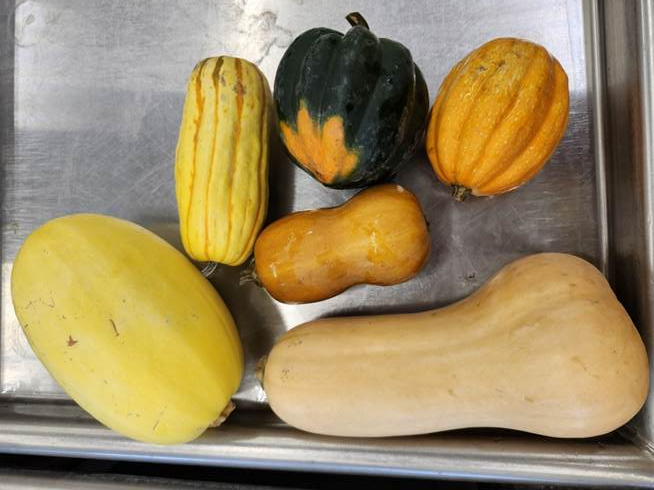
Spaghetti Squash, Delicata (just a few, rain was unkind to them), butternuts, and couple varieties of acorn
by Sophia Chiparus
Hello Hello Hello!
We’ve been busy bees on the farm leading up to fall break, but we have a few fun updates for y’all!
Our kale has almost fully recovered from its earlier run in with the cross striped cabbage moth. This means it will be back this week, and available for pickup!
In other exciting news, slicer tomato production has been way up. We have been harvesting an honestly absurd quantity each week, and this week we will have these red beauties available at pickup. It turns out this variety, Red Deuce, is very productive. Bring an extra bag and stock up on your maters! Sauce recipe in the inspiration station.
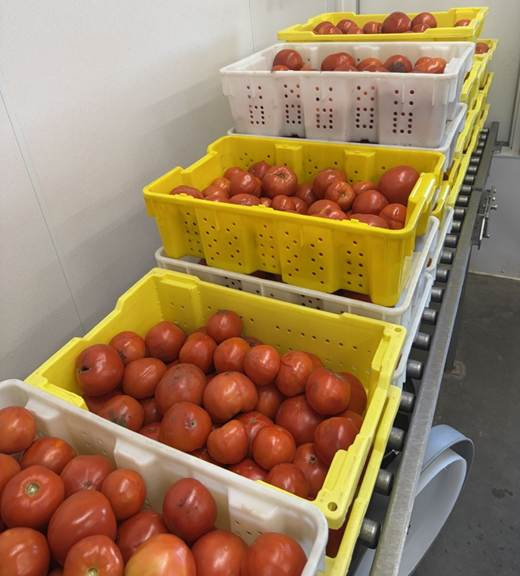
A small fraction of the tomatoes we have.
But that’s not all for abundance. We have a smattering of squash that will be available at pickup this week- all winter varieties. These are a happy consequence of Petrus Langenhoven’s variety trials out at Meigs- if you remember his interview from a prior email.
Perhaps most thrilling-we have a new product this week: Honey!!! Each CSA member will be offered a bottle, and we will be checking names again at pickup to confirm this. If it’s not your week, don’t fret! We will have it for you next time.
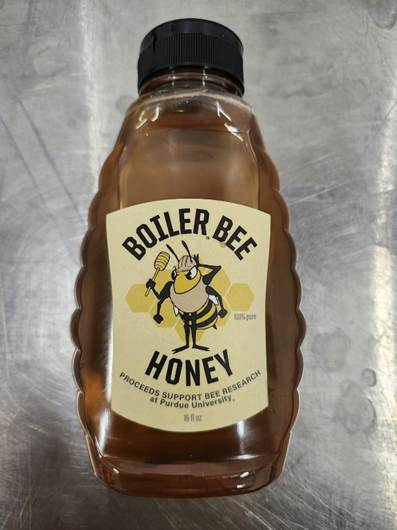
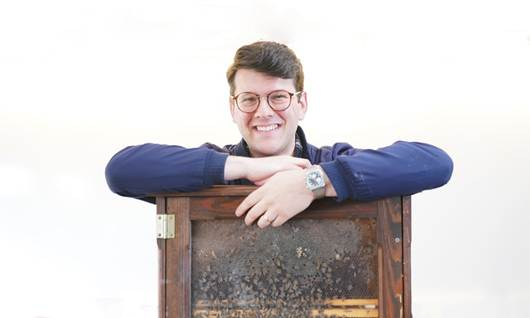
This week, I bring you an interview with the generous Brock Harpur, aka the reason we can offer honey at all.
Who are you, and what is your relation to the Purdue student farm?
Brock: I’m an Associate Professor in Entomology. I run Purdue’s Honeybee lab, and I run some programs out at the student farm occasionally. I’m also a member of the CSA program.
We’re really excited to be giving out honey in this program! So where did this honey come from?
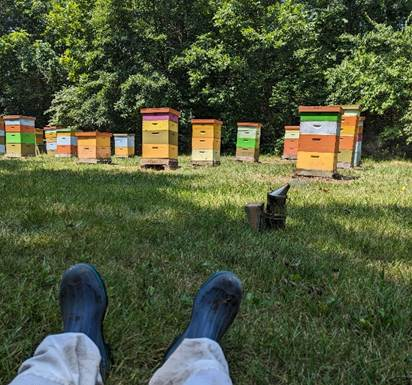
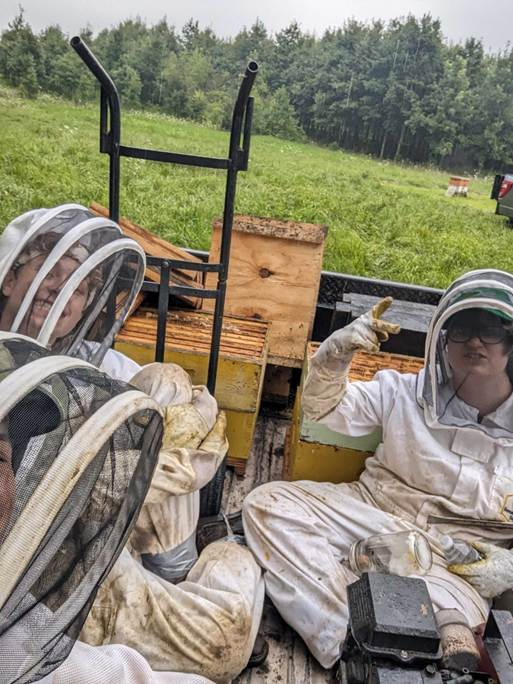
Brock: We have 200 colonies in total, most of which are within 5 miles of the Student Farm. These colonies are used for research and learning. With the help of local commercial beekeepers, we harvest the honey from the hives, and with the help of the Food Science department, we bottle and sell it.
How did the honeybee program get started?
Brock: There has been a honeybee program here since the campus opened. The state funds some of this and so do local beekeepers. I took over in 2019.
Was the goal to harvest and sell honey?
Brock: The selling of honey was only recently developed. Honey is a byproduct of honeybees, so in a research sense we were not particularly interested in it but had to deal with it. In 2019, we realized there may be a better use for it, so we decided to partner with Food Science and Agricultural Communications to bottle and sell it. We end up with extra every year that we give to undergrad initiatives, and this year we decided to give some to this program as well.
So what kind of research are you doing with hives?
Brock: I’m an evolutionary biologist, so I’m interested in what differs honeybee pops from each other, i.e. why does one hive produce more honey, or why is one hive more aggressive. Student projects often look at differences in behavior and nutrition, and the extension program is then more focused on beekeeping.
Are there a lot of beekeepers in Indiana?
Brock: Yes, so on beekeepers of Indiana there’s at least 3500 registered beekeepers. That number may be out of date, and there are likely even more.
What would you say is your favorite part of your job?
Brock: I enjoy mentoring the graduate students and seeing them figure out solutions in their research
What’s the biggest challenge you face in your work?
Brock: The impermanence of funding is a huge struggle. Funding for science in general is not guaranteed for anyone, and so that is always a challenge for anyone in academia.
Have you ever been attacked by bees?
Brick: Oh yeah, many times.
Any parting words?
Brock: I hope people enjoy the honey. This year, we put a QR code on the back. If you scan that, it will show you your nearest local honey source.