By Sophia Chiparus
Welcome to week 15!
I had to check 3 times before I wrote that out. 15 weeks- and it feels like a blink.
It’s been another busy week, with time continuing to accelerate. I’ve started to realize how much energy being constantly worried about the semester is siphoning from my reserves.
In the summer, everything felt poetic, and my capacity to appreciate my surroundings was high. Random occurrences became moments of beauty, excuses to pause, observe, and bask in astonishment.
When I feel bogged down by the classics: lack of sleep, assignments, stress, I find that I cannot bring myself to engage in the same pauses and grounding. It’s like every cell in my body is wired to respond to the next task, and any second used for a deep breath feels like a moment wasted. Things that would inspire me annoy me, and things that made me laugh make me bitter. It can make me feel crazy, like a literal rewiring of my brain has taken place.
It’s not a happy feeling, but if my friends are to be believed, it is a universal one. I try to remember it when I’m upset with someone else, reminding myself that I have no idea how diminished their capacity for joy or kindness is at this moment.
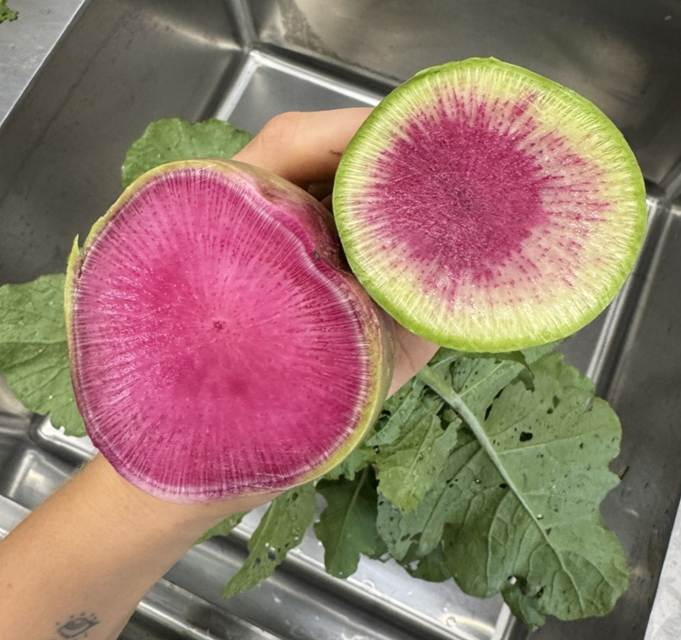
A moment I did manage to dredge up some whimsy for was when we sliced open these watermelon radishes- which will be in your bags this week!
I’m sure you can wager a guess as to the origin of their name. I spent a few solid minutes studying the detail in their cross sections, appreciating the beauty. Learn more about them here.
For some weeks now, every member of this program has been receiving both onions and potatoes. Getting these tasty staples in your bags each week was no accident and required significant production and processing. This week I interviewed Stephen Meyers, who’s research and assistance has been instrumental in our production.
Q: Who are you and what is your relation to the farm?
Steve: I am an associate professor of Horticulture & Crop Weed Science in the department of Horticulture and Landscape Architecture. I’ve been conducting weed related research at the student farm for the past 5 growing seasons, and I’ve served on the advising committee for the farm for that same amount of time.
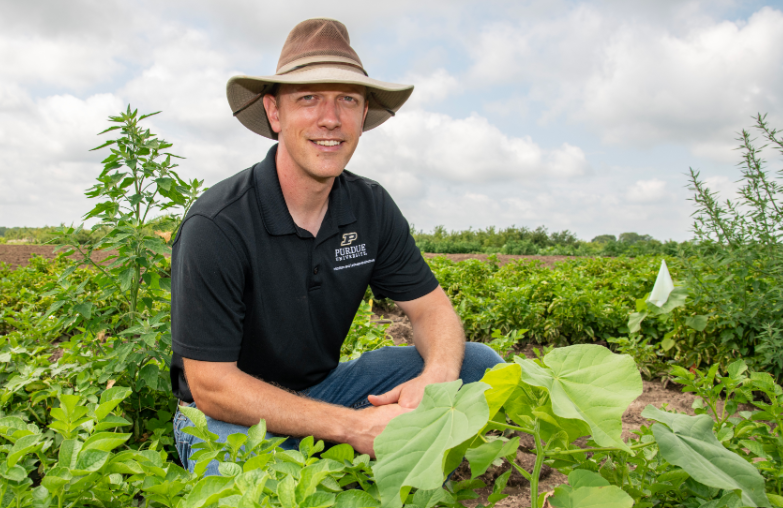
Steve Meyers
Q: What is the weed related research you conduct?
Steve: We’ve worked with Chris mostly on onions and potatoes. Our initial work was looking at chemical control in onions to reduce hand weeding requirements, and then we moved to using silage tarps (black and white tarps) to reduce weeds. We used them prior to planting onions in order to plant clean, and we use them after we plant potatoes to keep the field weed free for about three weeks.
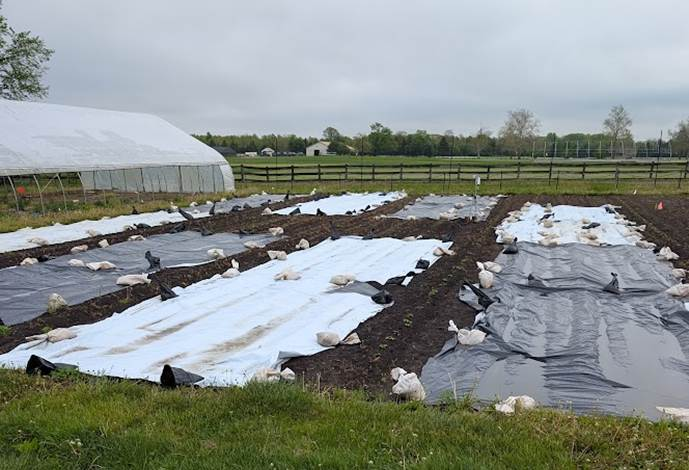
Silage tarp trial in potatoes comparing their orientation (white or black side up).
Q: How do these tarps work?
Steve: They work by blocking sunlight. They are opaque and impermeable. Any green vegetation beneath them will not be able to get sunlight and will starve.
Q: Why are you interested in weeds, and how did that come to be?
Steve: The reason we started research on onions is because they are not very competitive with weeds. They have thin leaves and don’t form a canopy, so it required massive labor inputs to keep them weed free. In our first studies, we cut hand weeding for onions by 66%. And this growing season we were able to bring that number of hand weeding sessions down to only 3.
Q: Why transition to potatoes?
Steve: The small farm community is somewhat ahead of the research on silage tarps. They have been using silage tarps over carrot beds for a while. We were trying to replicate that with potatoes, which is another crop that after planted requires about 3 weeks before you see any germination above soil. During that time, weeds can proliferate and as a young plant the crop is not yet able to compete.
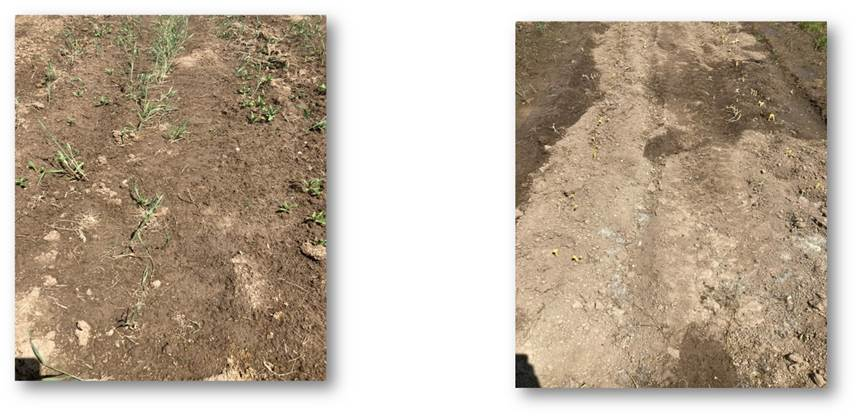
Non tarped (left) vs. Tarped (right) potato fields
Q: What do you like the most about your job?
Steve: Working with people, be it grad students, visiting scholars, or farmers to try to collectively solve the problems that we have.
Q: What are some future goals or projects you have in mind?
One of the things we want to do is gain a better sense of the effect of tarping duration on soil microbiology. Theres an idea among small farmers that if you leave a tarp in place for more than 2-4 weeks, you will destroy your soil. I don’t think that’s true, but it would be nice to have a researched backed recommendation for these people who want to use tarps without having an adverse effect on the soil.
Q: Can you leave us with a life motto?
Steve: Don’t take things too seriously