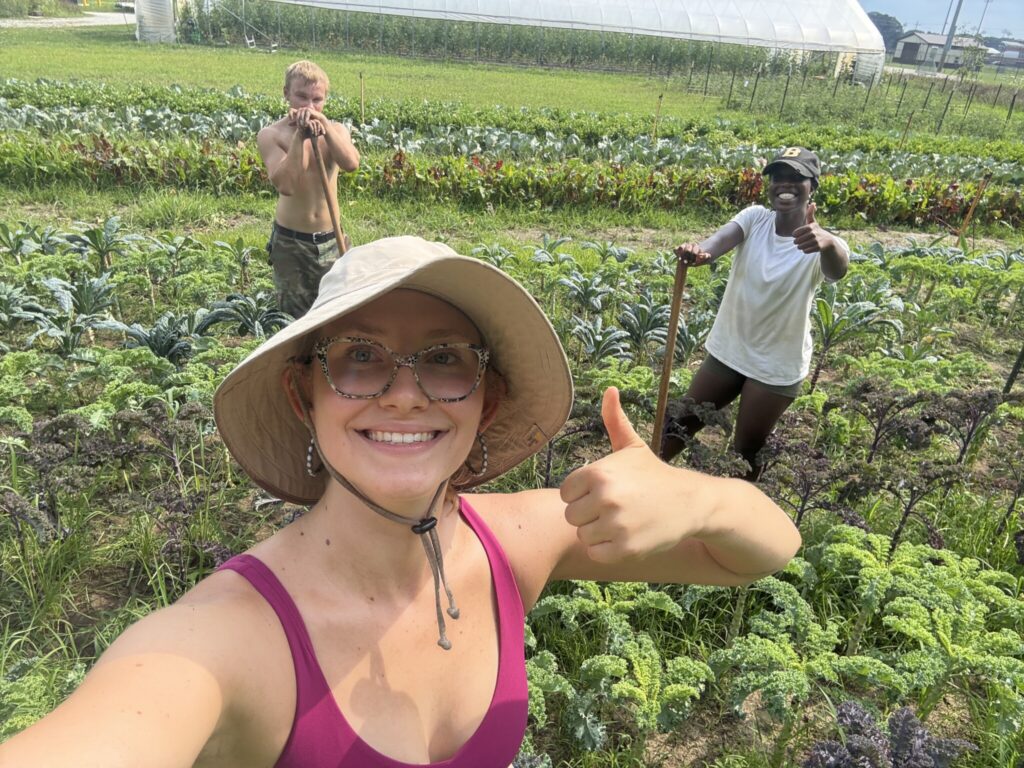
Its been a tough week on the student farm. We’re down to 3 full time student employees, so we’ve been working extra hard to make sure we are staying on top of all of our tasks. It’s in crunch times like this that we are extra grateful that we all get along so well. Yesterday we weeded the kale, which is by no means a coveted task. This was not helped by the fact that the kale hasn’t been fully weeded in the past month, and a miniature forest took root. With only three of us under the blazing sun, and tools that seemed so small against the ample square footage, we spent 2 hours desperately trying to make a sizeable dent in this weedy area. As we approached the final minutes before 5pm, we had reached a state of exhaustion that left us all almost in a delirious joy. We made the same joke about there being some errant kale plants in our grass block, and laughed harder each time. It wasn’t perfect, but it was a good time.
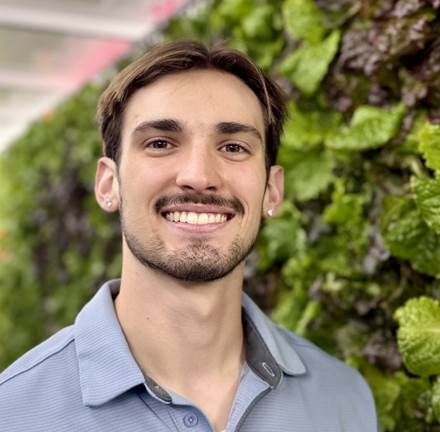
For this week’s email, I want to do somewhat of an extended spotlight/Q&A on Isaac Damer, a 2026 Purdue graduate in Horticulture, and now the head manager of the Overbeck Controlled Environment Facility(the growing containers), located on the student farm.
All lettuce, many of the herbs, and the mustard greens in the CSA bag come from these indoor containers.
Q: How long have you been working here?
Isaac: I’ve worked in the containers for 2 years now. Most of that time was spent as a student employee during my undergrad, and I’ve been in the role of container manager for about 2 months.
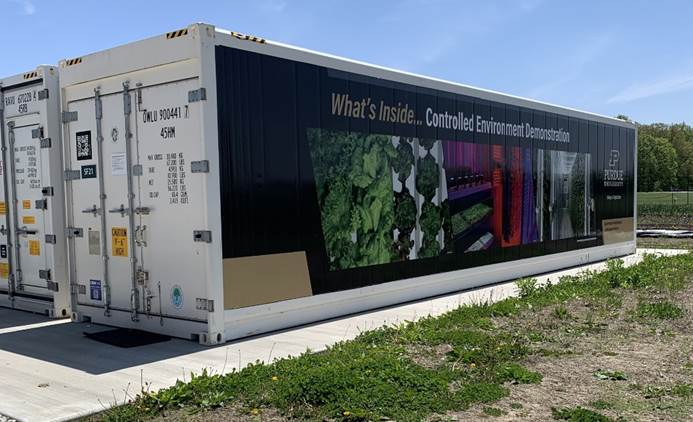
A photo of one of the containers. To read more about their origin, check this out.
Q: If someone knew nothing about the containers, how would you describe them?
Isaac: They are a completely controlled environment within standard shipping containers that can grow leafy greens vertically year round.
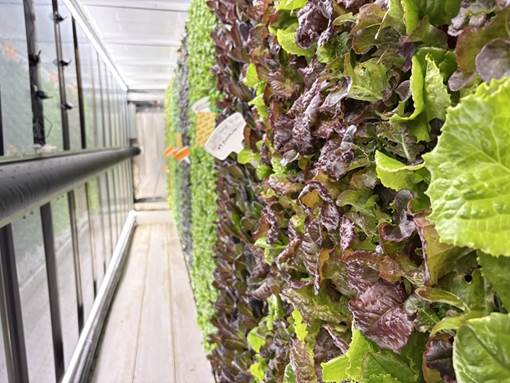
The inside of the containers
Q: How long does it take to grow something from seed inside of these containers?
Isaac: It depends on the crop. We’re averaging about 7 weeks from planting the seed to harvesting the crop at this point. However, something like radishes can be quicker, and only take 4 weeks, whereas something like carrots will take a longer time, and go beyond that 7 week average.
Q: So what would you say are your favorite things to grow?
Isaac: I really enjoy growing the mustard green variety Miz America. It grows well, has very few issues, and is easy to harvest. It also sports a beautiful deep purple color that is a nice contrast to the other greens. Herbs are also fun, and provide a good bit of variety, though they don’t always grow perfectly. In the past, when I was still a student, we also grew edible flowers. Those were very fun to watch grow, but don’t make sense to grow regularly production wise unless they are needed for a specific event.
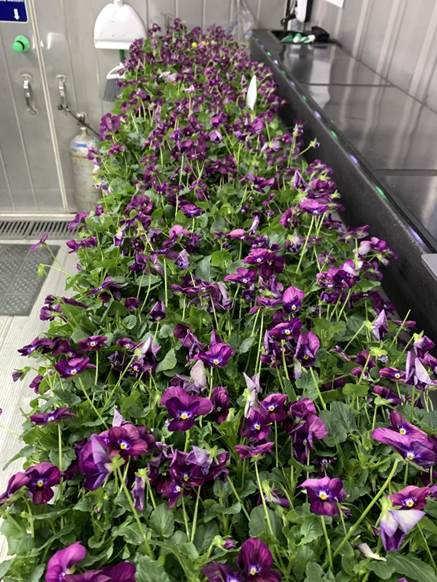
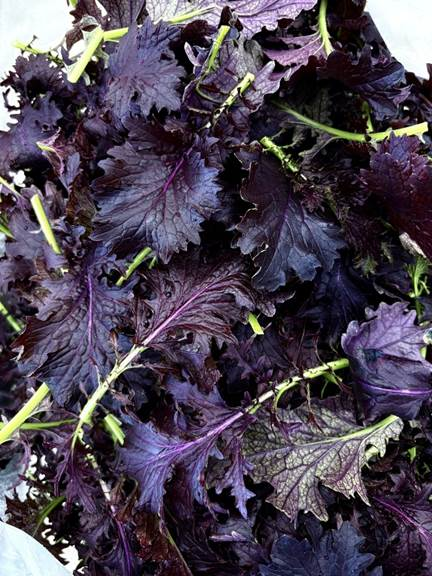
The edible flowers, and Miz America Mustard greens
Q: What are the biggest challenges in the containers?
Isaac: Because we are working in such a compact space, there often isn’t enough airflow. This is part of what makes it difficult for us to grow tighter heads of lettuce or cabbage. A lack of airflow causes the plants to leaf out in weird and wide ways, and also leads to tip burn on the leaves, which is currently one of the bigger issues we’re working on.
Q:What is your favorite part about this job?
Isaac: The ability to experiment in the containers. Lately I’ve been trying some new crops, different grow cycles, and messing with environmental parameters. These were things I saw when I was a student but didn’t have a chance to change myself. It’s crazy how little things like airflow or a small switch in fertilizer can have big impacts on the produce that comes out. I’m also excited about the possibilities in terms of growing new things, and solving difficult issues, like the aforementioned airflow ones.
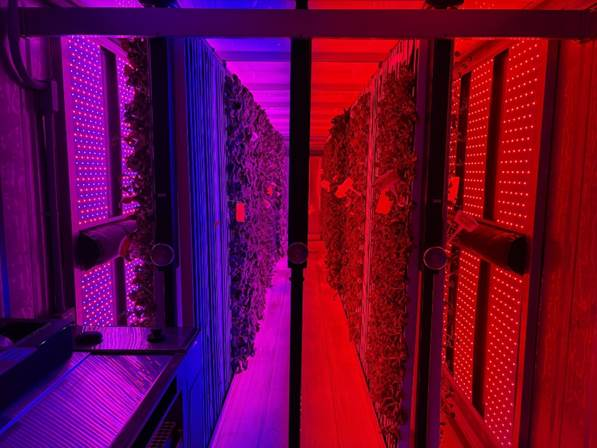
The containers when the grow lights are on
Q: Outside of this job, what do you do for fun?
Isaac: I love being outside. Biking, backpacking, lately running, and drawing when I have the time.
Q: Can you leave us with any wisdom, a life motto perhaps?
Isaac: Not in a depressing way, but the key to survival is just taking things one day at a time.