Welcome to Week 11! Can you believe we’ve made it halfway through this program already? I feel like I’ve spent the last two weeks running around like a chicken with its head cut off, and voila- 1/8 of the semester has gone by. I have a love hate relationship with describing time fractionally. It really helps me understand how much time has passed, but it also forces an acute awareness of that process which can be anxiety inducing.
While it is still an adjustment to see how busy the farm has suddenly become, it continues to be a place of peace and beauty. With the conclusion of the cut flower research, we have no harvest restrictions on the flowers. I’ve been reveling in the joy of bouquet making this week (and you can too! They’ll be at pickup).
In my creative writing class, which I’m taking as a fun senior year elective, we’ve been instructed to pay more attention to moments that inspire us. Small bits of magic or “glimmers” that jump out at us. After work on Monday, I harvested this beautiful bouquet, and little did I know something would literally jump out at me.
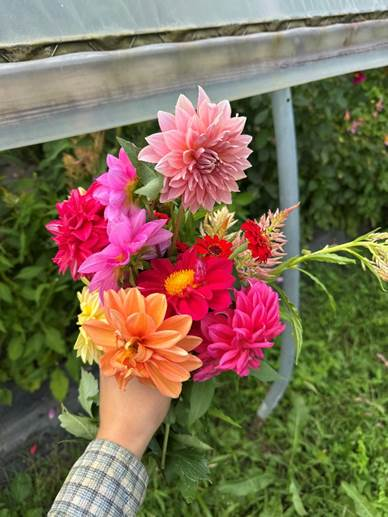
The bouquet.
I brought this mini rainbow into my car, only for a stowaway to reveal himself.
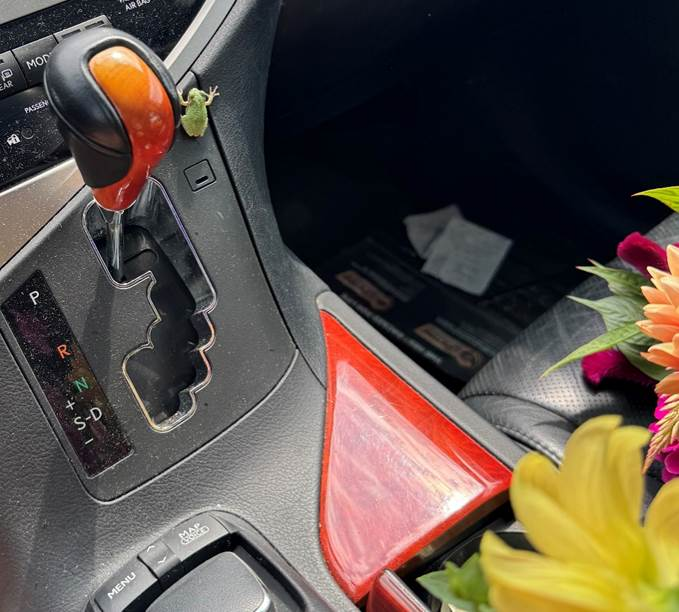
A little frog had been hiding among the petals! I brought him back outside.
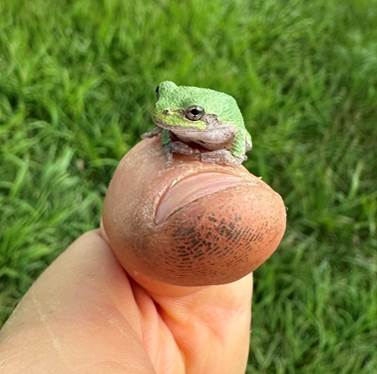
We see a lot of frogs on the student farm, so another encounter really isn’t spectacular in of itself. But for me, this moment felt so sweet and so representative of why I love working here. Beauty, color, surprises, it can all feel so magical if you’re paying attention.
Now, you may have seen several references to a place called “Meigs” within these emails. Meigs Horticulture Research Farm is another magical place that excites me every time I get to go. The land is extremely beautiful, and the managers are wonderful.
To give you more information, I interviewed said managers. Brian Schilling, the horticulture crops research manager, and Wil Brown Grimm, the horticulture crops research technician.
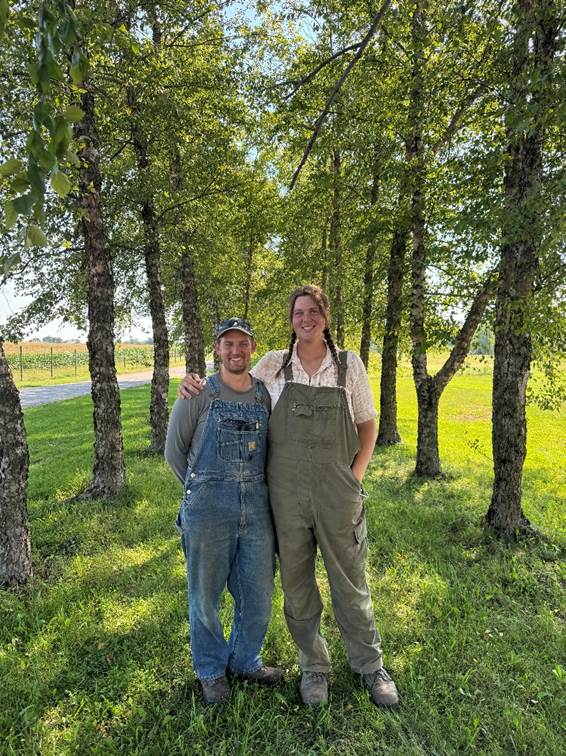
Brian (left) and Wil (right) on Meigs
Q: So, what exactly is Meigs?
Brian: Meigs is the designated research facility for horticultural research done anywhere in Purdue, mostly in the College of Agriculture. We host research done on annual and perennial fruit and vegetables. We currently host over 30 active projects from the dept. of horticulture, entomology, botany, plant pathology, forestry and natural resources, agronomy and more.
Q: How big is Meigs?
Wil: 240(ish) acres total. 130 of those are in tillable. The rest includes the forests and wetland.
Q: Wow! So how is Meigs connected to the student farm?
Brian: We host some production for them, which means sharing our land. We also occasionally share labor. We also contribute some of the produce that is left over from research projects to their CSA.
Q: What are some examples of the produce items you have contributed?
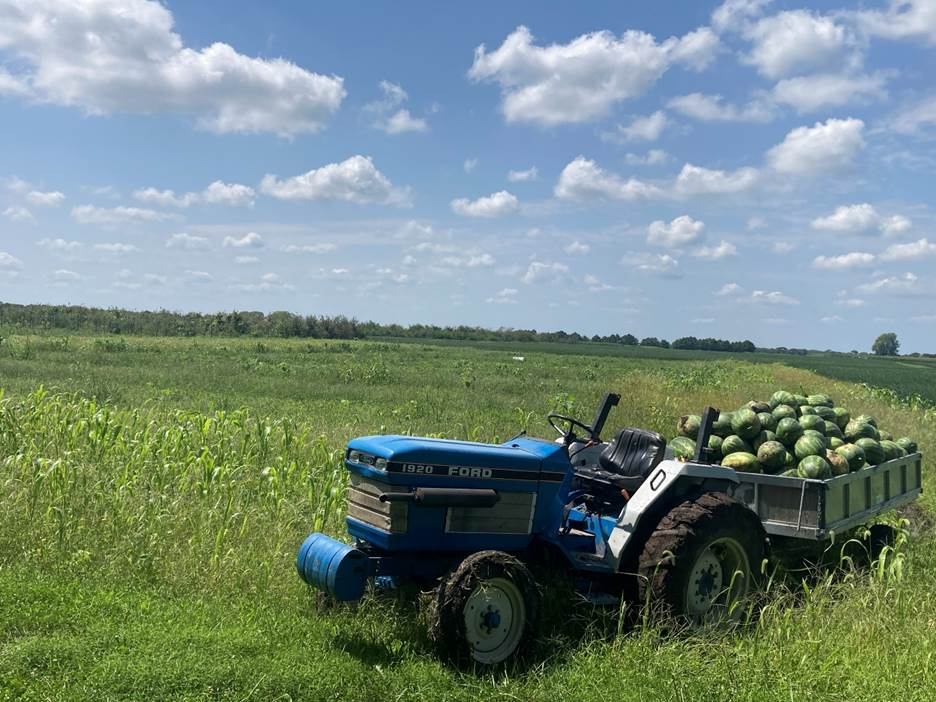
Brian: Watermelons, eggplant, and cut flowers. But we have also done grapes, apples, peaches, hot peppers.
Wil: Basically, whatever research is going on out here. If Chris wants it, it’s his.
Q: So, what is your favorite part of working at Meigs?
Brian: Sending food to the student farm and collaborating with professors
Wil: Yes, my favorite part is sending food to people who eat it, be it food finders, the student farm, friends, or neighbors.
Q: What is the biggest challenge, working at Meigs?
Brian: Mine has been adopting my commercial production mindset to research. In commercial production, if you came up to an orchard block with half the trees missing, you would think “we need to pull that out today. That is a clear failure”. But here, every tree has research value. And so it is worth the investment to keep maintaining that whole block. Before this job, I wouldn’t have had that perspective on the block’s worth.
Wil: We have access to a wide range of equipment, and we do put a strong emphasis on safety. But the nature of this work is still pretty dangerous. I did break my fingers last year, and I have handled toxic pesticides. We take a lot of steps to mitigate danger, but when you work with such a variety of equipment, it is still there. *Laughs* My second answer is having to work. Meigs is such a beautiful place, I just want to enjoy it.
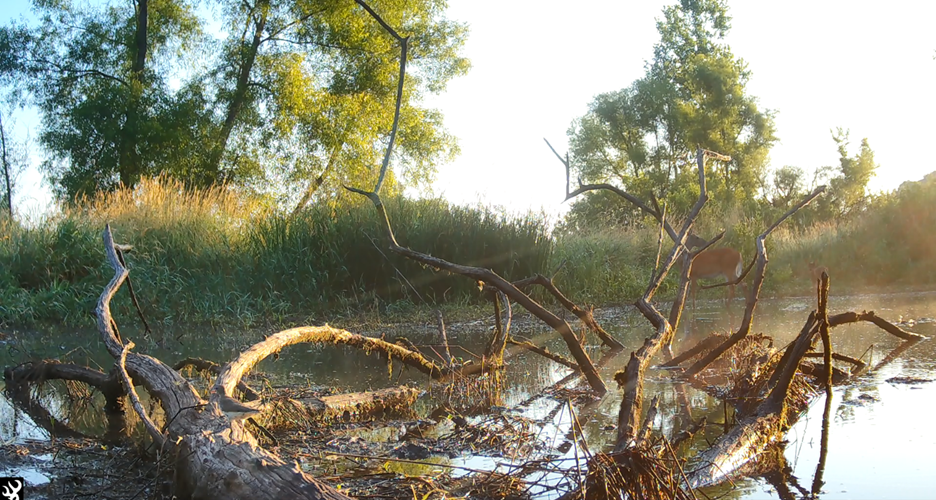
The wetland out at Meigs
Q: What is something cool that you’d want people to know about Meigs?
Wil: The CSA’s member’s ability to enjoy food is a big motivator for us to come to work and do our best. Otherwise, we’re just taking care of research projects. Obviously, we want to help them get usable data, but the fact that they’re growing food for that data and that food has to go somewhere is more of a motivating factor for me. Meigs is a unique farm. It is an incredibly diverse habitat for birds, amphibians, wildlife in general. We have woods, wetlands, and we have crop fields surrounded by trees. It’s a cool place and we’re trying to attract more research in the realm of ecology and wildlife studies. Brian has his own endeavor too, with the bluebird boxes.
Brian: I got a small grant to build and install 20 birdhouses. They were to provide habitat for eastern bluebirds and tree swallows. I’m trying to build a collaboration with those boxes and the Forestry and Natural Resources Dept. at Purdue. Last year was the first season they were installed. We had a lot of interest from the Purdue chapter of the wildlife society, and we fledged 5 broods of eastern bluebirds (3-5 birds per brood).
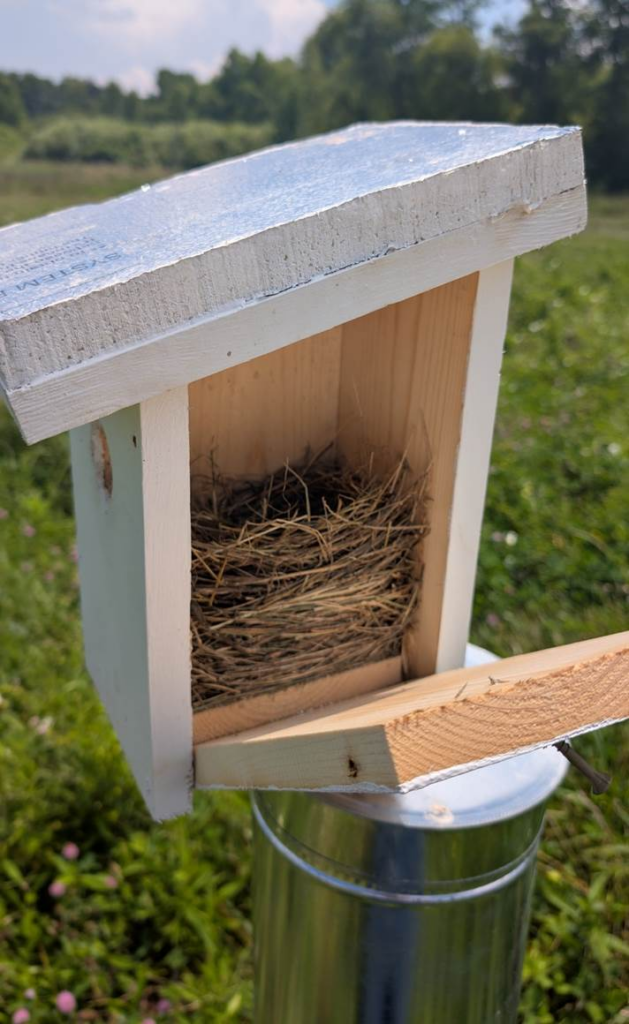
A nesting box @ Meigs
Q: Any parting words?
Brian: Make life into something you enjoy.
Wil: A better world is possible.