From the brain to the body, Purdue Health and Human Sciences researchers and clinicians take multidisciplinary approach to eating disorders
Written By: Rebecca Hoffa, rhoffa@purdue.edu
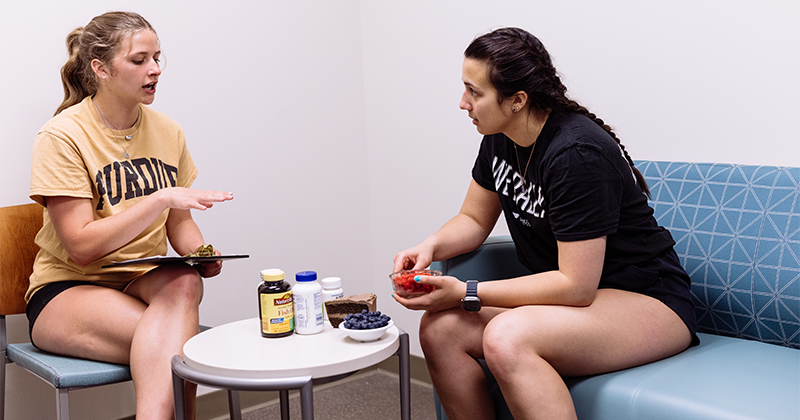
Two Department of Nutrition Science students practice nutrition counseling. (Photo by Brian Powell)
Every 52 minutes, one person dies as a direct consequence of an eating disorder, according to the National Eating Disorders Association. Treatment and management of eating disorders requires a variety of disciplines throughout the Purdue University College of Health and Human Sciences, from psychological sciences to nursing to dietetics.
“Anorexia nervosa is very much about control,” said Kim Kinzig, professor and head of the Department of Psychological Sciences. “The standardized mortality ratio is five to six times higher than the general population.”
The brain behind the disorder
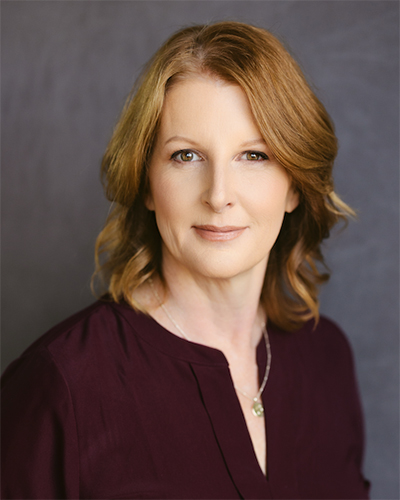
Kim Kinzig(Photo provided)
Kinzig has been doing research related to eating disorders since her postdoc at Johns Hopkins University, where she worked in psychiatry.
“We found certain hormonal responses to eating remain abnormal, even after patients have regained their body weight, which then raised a critical question of why all the biological abnormalities don’t reverse with recovery” Kinzig said. “When they’re severely underweight, the way their body responds to food is altered, and some of that goes back to normal, but some of it doesn’t.
“There’s so much misinformation out in the media about what’s healthy for us and what’s not, and if you want to know what’s healthy for your body, you should talk to a dietitian,” Kinzig said. “They’re really good about helping with the dietary component of it, but psychologists then can understand things like how anxiety is triggered, how it plays a role in relapse and understanding that process. And then nurses are often the ones implementing the day-to-day and observing how patients actually respond, so they might see patterns that other people might miss. When I was at Johns Hopkins, every day, the patients met with psychiatrists, social workers and dietitians. They had the full gamut of people, an interdisciplinary team treating them. You really can’t treat just with one discipline.”
Kinzig, who takes a multimodal approach to her research through basic neuroscience and clinical research, explained taking multiple research approaches has helped her get a better picture of what’s happening in the brain of individuals with eating disorders. She noted an interdisciplinary approach is essential to understand the complex things happening with hormones, body weight and behavior in relation to eating disorders, particularly anorexia nervosa, in order to better inform treatment strategies. It was during her work with a clinical population that she recognized a gap in the pre-clinical research for modeling the effects of anorexia nervosa on adolescent females.
“In my lab, we’ve found anxiety disorders or the anxiety-like behavior persists long-term, in an animal model of anorexia nervosa,” Kinzig said. “There’s some controversy in the literature that you can’t have anorexia nervosa if you don’t already have an anxiety disorder, and then there’s others that say the eating disorder comes first and drives the anxiety. We’re starting to show a relationship between those two and how at least the experience with underfeeding and hyperactivity lends itself to creating an individual who experiences more anxiety.”
A personalized approach to nutrition
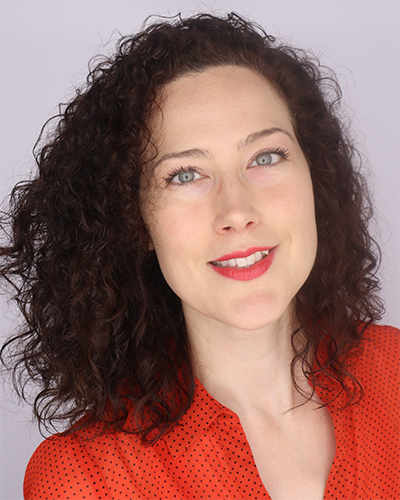
Selena Baker(Photo provided)
With a joint appointment as a lecturer in the Department of Nutrition Science and a registered dietitian with Purdue University Student Health Services, Selena Baker not only treats patients with disordered eating but also teaches the next generation of dietitians in the Master of Science in Dietetics program to recognize the signs of disordered eating. Baker also advises the Eating Disorder Awareness at Purdue student organization, which provides awareness and education around eating disorders.
Throughout all of these realms, Baker noted it’s always important to remember that disordered eating falls on a spectrum.
“Eating disorders are all about food, and they’re not about food at all,” Baker said. “Sometimes it feels like eating disorder diagnoses are these specific boxes, but they can look so different for different people. There’s a whole range of different thoughts and behaviors and the amount of time we spend worrying about food, worrying about body image. Even that area (of the spectrum) before a full eating disorder diagnosis can have a huge negative impact on quality of life.”
Baker explained it’s important to catch eating disorders early to maximize possibility of a quicker recovery. She uses a three-stage progression to help with the physical, nutritional treatment of the eating disorder: frequency, adequacy and variety. Starting with frequency, she encourages her clients to start by eating a healthy breakfast one to two hours after waking to get hunger cues on track for the day and then re-fueling every three to five hours throughout the day. Next, she explores adequacy, finding amounts of food that leave the client feeling “gently full.” Finally, she looks at variety of foods and overcoming triggers around certain types of foods.
Baker has also found encouraging her clients to log their meals through photographs is helpful.
“Looking back at it with a little bit of distance and perspective where the ‘wise mind,’ as opposed to the eating disorder voice, can help them see the meal and say, ‘That’s a healthy amount of food. This is good,’” Baker said.
Ultimately, Baker explained the shift toward a hyper-thin ideal, especially with the rising use of GLP-1 medicines for weight loss, can be damaging for individuals with eating disorders, noting that talking about nutrition in a healthy way is essential.
“I think we need to be really conscious about how we’re talking about food, fitness and weight loss or gain so that our messages are intentional and not triggering for those who are experiencing or at risk of disordered eating and eating disorders,” Baker said. “So, thinking about health messages, how can we have a balanced approach to that? Nutrition needs to be personalized as much as possible.”
Stability starts with mental health
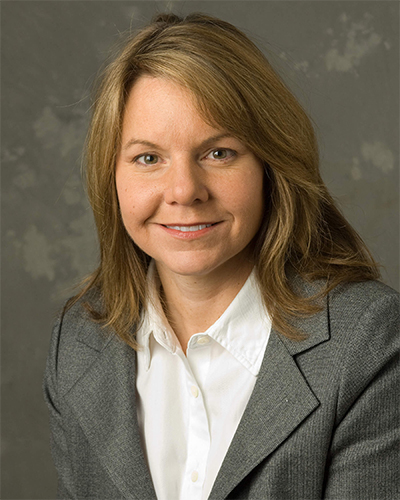
Susan Kersey(Photo provided)
Susan Kersey, clinical assistant professor in the School of Nursing, has been treating patients with eating disorders as a psychiatric nurse practitioner since the 1990s. While there are limited medications indicated for eating disorders, Kersey noted treating co-occurring psychiatric disorders is often goal of medication. Co-occurring disorders can include major depressive disorder, bipolar disorder, obsessive-compulsive disorder and substance use disorders.
“Whenever you can treat a co-occurring disorder to remission, you really give that patient a leg up in treatment, whether it’s an eating disorder or a substance use disorder,” Kersey said. “It allows them to be able to then access and utilize treatment for that disorder.
While using a care team of psychologists, psychiatric nurses and dietitians are critical in getting the patient on the road to recovery, Kersey mentioned disordered eating is a lifelong condition that always has to be managed.
“It is not uncommon for a patient to need to move between levels of care, depending where they are in their treatment response,” Kersey said. “Because of the longevity of the disorder and how the symptoms can kind of wax and wane, you can think that you’re doing fine and have a period of stability for years, but then maybe you have a death of a loved one or the breakup of a significant relationship or you lose your job, and then those symptoms can start creeping back in. It’s always something that needs to be managed.”
If you or someone you know is struggling with disordered eating, resources are available through the National Eating Disorders Association. Purdue students with concerns about their eating can also make a free appointment with a Purdue University Student Health Services dietitian and medical provider, as well as with a Counseling and Psychological Services therapist.
Discover more from News | College of Health and Human Sciences
Subscribe to get the latest posts sent to your email.