Guiding the Boilermaker journey: HHS academic advisors share inside look at shaping student success
Written By: Rebecca Hoffa, rhoffa@purdue.edu

Advice about majors, suggestions on courses and help through personal challenges — academic advisors are a constant source of support for all Purdue University College of Health and Human Sciences (HHS) students. From their first moments on campus until they walk across the stage at graduation, HHS academic advisors make lasting differences in their students’ Boilermaker journeys.
“Advising is different all across the country — every college and university does things differently,” said Andrew Bradburn, academic advisor for the School of Health Sciences. “Purdue is considered to have some of the best advising practices in the nation, which is really cool.”
From student to advisor
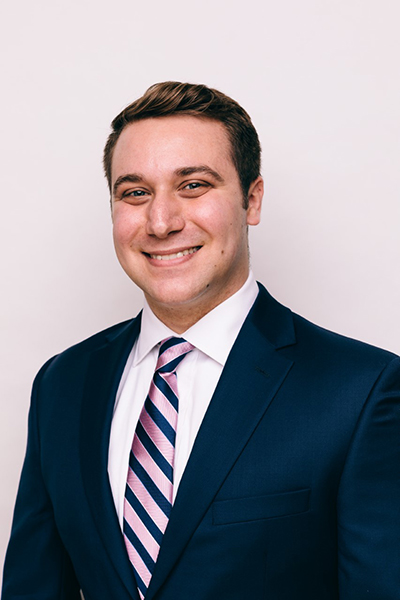
Andrew Bradburn
A previous HHS student himself, Bradburn’s leadership experiences in the college, especially in the HHS Success Mentors program, helped form his interest in working in higher education. Now, having been back for four years as an advisor, Bradburn’s students remind him daily why he’s chosen the right path.
What is your favorite thing about being an academic advisor in HHS?
The students I work with are wonderful, and they’re so interesting. It’s so amazing to hear about the things they do — the clubs they’re part of, the things they volunteer for. Knowing that I play a little part in helping to guide them is really awesome.
Are there any memories or moments that stand out?
The coworkers I have are so wonderful to work with. All of us in HHS Student Services are one big team, and that makes it a really enjoyable work environment. Otherwise, it’s just going back to the students and the things they accomplish. I had a student who started a club, and they asked me to be the club advisor. Getting to hear what my students get involved in is really enjoyable.
What is your best piece of advice for students?
Use your resources. With Purdue being such a large university, there’s basically a resource for everything here, and sometimes students just don’t know where to look for their resources. Academic advisors are a go-to resource — even if I don’t directly have an answer, I can always help point students where to go.
What resources do you often find yourself recommending?
One of the biggest ones is Pre-Professional Advising. Most of the students I advise have the goal to pursue some kind of professional or graduate program, so it is a great resource. They talk to students about all the different types of professional programs. They can help students prepare for the application process and understand the terminologies schools use.
Top-tier advising

Jennifer Fecher
For Jennifer Fecher, lead academic advisor for the Department of Health and Kinesiology, academic advising is like putting together a puzzle. Each student brings a new journey filled with opportunities. In 2024, Fecher was recognized by the Global Community for Academic Advising with an Outstanding Advising Certificate of Merit, which recognized her as one of the best academic advisors in the nation.
What is your favorite thing about being an academic advisor in HHS?
It’s the students we have in our college. When they come in, they always say they want to help people, and that really resonates with me. A lot of my students are interested in health care, and so they really have the desire to make a big impact on people and their quality of life.
Are there any memories or moments that stand out?
I’ve had two students who have been commencement responders to speak on behalf of their class about their experience at Purdue. That’s really cool, and I nominated them for that. When I can put somebody forward for something — commencement responders, scholarship winners, Outstanding Seniors — those good things stand out. I have been able to be present for military and graduation ceremonies. One of my students was in the Boiler Bhangra (dance) group, and she invited me to her performance, and it was awesome. Things like that over the years — it’s just cool to see them do something other than sit in my office and talk about school. I’ve also had some people who have overcome some really shocking life circumstances. A lot of development and life can happen at this age. When people make it across the stage, it’s amazing.
What is your best piece of advice for students?
I always tell them to ask questions — that’s the big one. Students are very intelligent and often try to figure everything out on their own, but it’s important for them to meet new people and to build a solid network of support. Those connections will be valuable during their time at Purdue and beyond.
What resources do you find yourself recommending most to students?
Supplemental Instruction is huge in our area because our students take a lot of science and math, so that’s a big help. The HHS Success Mentors program is amazing to help students make those connections and find their place here. Almost all of my students want to go on to advanced education of some sort, so Pre-Professional Advising is another resource.
Guiding from day one

Bobbe Molter
Bobbe Molter, lead academic advisor for the Department of Nutrition Science, has been with HHS from the beginning, starting in the former College of Consumer and Family Science in 2000. After vacillating between career paths in human resources and teaching as an undergraduate at Purdue, Molter was thrown into the advising world when she became a teaching assistant and never looked back.
What is your favorite thing about being an academic advisor in HHS?
I have always had really interesting students, and the reason they pick their major is always fascinating to me. There’s also always been exceptional leadership in HHS, which is one reason I’ve always stayed with the college.
Are there any memories or moments that stand out?
In 2012, Purdue sent a group of us to China to do freshman orientation in Beijing and Shanghai, so we were able to be in each city for a week. It gave us the perspective of being an international student and arriving on a campus 12 hours from home where everything is different. When I came back, I advocated for giving all advisors that opportunity.
I also have a handful of former student-athletes in the NFL, and it’s fun to watch them play. It’s also fun to see the full-circle moment when you meet a parent at graduation, and they remember you from a recruiting event when their student was still in high school.
What is your best piece of advice for students?
You have to get involved and participate. Observe and keep your eyes open for opportunities. You never know what is around the corner or what’s going to turn into something else. If you’re not open and looking for those new challenges, you might miss something.
What resources do you often find yourself recommending?
All of my students right now want to be dietitians or are pre-med, so we’re very science-focused. I’m always pushing Supplemental Instruction and these types of academic success workshop opportunities to constantly layer the material the ways that they learn it. Purdue has endless resources if you need help.
Putting inspiration into practice

Jazmyn Nichols
Inspired by her own academic advisor at Purdue, Jazmyn Nichols, academic advisor for the Department of Psychological Sciences, saw her ability to succeed as an academic advisor when she was an undergraduate student. As an advisor, she enjoys guiding her students as they transition into adulthood, just as her advisor once did for her.
What is your favorite thing about being an academic advisor in HHS?
We have a nickname of being “the Caring College.” That comes through with my coworkers and the students. Everybody genuinely cares about everybody.
Are there any memories or moments that stand out?
The most memorable moments are when my students come back and tell me how their advising experience with me changed their lives.
What’s the best piece of advice you provide your students?
Don’t compare your journey to anybody else’s. When I have incoming first-year students, I tell them, “You’re going to look around, and it’s going to feel like everybody has a handle on college. It’s going to feel like everybody else is doing so much better than you. Nine times out of 10, you guys are all in the same boat. Everybody is trying to figure it out. Own your journey and focus on your journey.”
What resources do you often find yourself recommending?
The Center for Career Opportunities — often students are coming (to Purdue) and they’re not really sure what they want to do, whether they’re considering grad school or pre-med or something else. I’m always directing students to make a meeting with the Center for Career Opportunities, to take a look at the myCCO handbook and to create a myCCO account.
Discover more from News | College of Health and Human Sciences
Subscribe to get the latest posts sent to your email.