Category Archives: Chapter 3 Homework

Homework H3.I – Sp 26

Problem statement
Solution video

DISCUSSION THREAD

Any questions??


Discussion and hints:

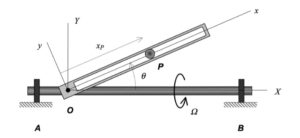
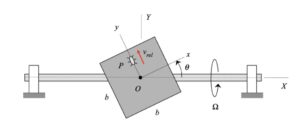
Your first decision on this problem is to choose your observer. Since an observer on the tube will have the simplest view of the motion of the particle P, attaching the observer to the tube is recommended. Also, attach you xyz-axes to the tube.

Next write down the angular velocity and angular acceleration of the tube. Based on what we have been doing up to this point in Chapter 3, hopefully it is clear that the tube (and observer) has two components of angular velocity: Ω about the fixed X-axis and θ_dot about the moving z-axis. Take a time derivative of the angular velocity vector to find the angular acceleration of the tube (observer).

Following that, determine the motion of the particle P as seen by the observer on the tube.

Use these results with the moving reference frame kinematics equation to determine the velocity and acceleration of the particle P.
Homework H3.J – Sp 26

Problem statement
Solution video

DISCUSSION THREAD

Any questions??


Discussion and hints:

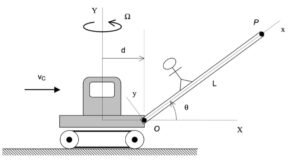
Your first decision on this problem is to choose your observer. Since an observer on the plate will have the simplest view of the motion of the insect, attaching the observer to the plate is recommended. Also, attach your xyz-axes to the plate.

Next write down the angular velocity and angular acceleration of the plate. Based on what we have been doing up to this point in Chapter 3, hopefully it is clear that the plate (and observer) has two components of angular velocity: Ω about the fixed X-axis and θ_dot about the moving z-axis. Take a time derivative of the angular velocity vector to find the angular acceleration of the plate (observer).

Following that, determine the motion of the insect as seen by the observer on the plate.

Use these results with the moving reference frame kinematics equation to determine the velocity and acceleration of the insect.


Homework H3.G – Sp 26

Problem statement
Solution video

DISCUSSION THREAD

Any questions??


Discussion and hints:

It is recommended that you use an observer attached to the boom. As we have discussed in class, your choice of observer directly affects four terms in the acceleration equation: ω and α  (how the observer moves), and the relative velocity and relative acceleration terms (what the observer sees). Note that the remainder of the discussion here is based on having the observer attached to the boom.

The boom shown above has TWO components of rotation:

  • a rotation rate of Ω about a fixed axis (the “+” Y-axis), and,
  • a rotation rate of θ_dot about a moving axis (the “+” z-axis)

(Be sure to make a clear distinction between the lower case and upper case symbols.)

Therefore, the angular velocity of the wheel is given by:

ω = Ω J + θ_dot k

The angular acceleration vector α is simply the time derivative of the angular velocity vector ω : α = dω/dt. In taking this time derivative,

  • Recall that the J-axis is fixed. Since J is fixed, then dJ/dt = 0.
  • Recall that the k-axis is NOT fixed. Knowing that, how do you find dk/dt?

With the observer attached to the boom, what motion does the observer see for point P? That is, what are (vP/O)rel and (aP/O)rel?

NOTE: Pay particular attention to the motion of the reference point O. What path does O follow? And, based on that, how do you write down the acceleration vector of point O, aO?


Homework H3.H – Sp 26

Problem statement
Solution video

DISCUSSION THREAD

Any questions??


Discussion and hints:

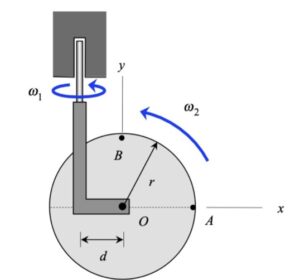
It is recommended that you use an observer attached to the wheel. As we have discussed in class, your choice of observer directly affects four terms in the acceleration equation: ω and α  (how the observer moves), and the relative velocity and relative acceleration terms (what the observer sees). Note that the remainder of the discussion here is based on having the observer attached to the wheel.

The wheel shown above has TWO components of rotation:

  • a rotation rate of ω1 about a fixed axis (the “+” Y-axis), and,
  • a rotation rate of ω2 about a moving axis (the “+” z-axis)

(Be sure to make a clear distinction between the lower case and upper case symbols.)

Therefore, the angular velocity of the wheel is given by:

ω = ω1J + ω2 k

The angular acceleration vector α is simply the time derivative of the angular velocity vector ω : α = dω/dt. In taking this time derivative,

  • Recall that the J-axis is fixed. Since J is fixed, then dJ/dt = 0.
  • Recall that the k-axis is NOT fixed. Knowing that, how do you find dk/dt?

With the observer attached to the wheel, what motion does the observer see for points A and B? That is, what are (vA/O)rel and (aA/O)rel, and (vB/O)rel and (aB/O)rel?

NOTE: Pay particular attention to the motion of the reference point O. What path does O follow? And, based on that, how do you write down the acceleration vector of O, aO?


Homework H3.E – Sp 26

Problem statement
Solution video

DISCUSSION THREAD


Any questions??


Discussion and hints:

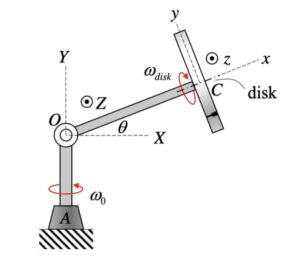
The disk shown above has TWO components of rotation (note that ω0 = 0):

  • a rotation rate of θ_dot about a fixed axis (the “+” K-axis), and,
  • a rotation rate of ωdisk about a moving axis (the “-” x-axis)

(Be sure to make a clear distinction between the lower case and upper case symbols.)

Therefore, the angular velocity of the disk is given by:

ω =θ_dot* K – ωdisk i

The angular acceleration vector α is simply the time derivative of the angular velocity vector ω : α = dω/dt. In taking this time derivative,

  • Recall that the K-axis is fixed. Since K is fixed, then dK/dt = 0.
  • Recall that the i-axis is NOT fixed. Knowing that, how do you find di/dt?


Homework H3.F – Sp 26

Problem statement
Solution video

DISCUSSION THREAD


Any questions??


Discussion and hints:

It is RECOMMENDED that you choose to put your observer on the disk. In that case, the ω and α  that go into your acceleration equation will be that of the disk.

The discussion below follows a choice of putting the observer on the disk.

The disk shown above has TWO components of rotation:

  • a rotation rate of ω0 about a fixed axis (the “-” Z-axis), and,
  • a rotation rate of ωdisk about a moving axis (the “+” y-axis)

(Be sure to make a clear distinction between the lower case and upper case symbols.)

Therefore, the angular velocity of the disk is given by:

ω = -ω0K + ωdisk j

The angular acceleration vector α is simply the time derivative of the angular velocity vector ω : α = dω/dt. In taking this time derivative,

  • Recall that the K-axis is fixed. Since K is fixed, then dK/dt = 0.
  • Recall that the j-axis is NOT fixed. Knowing that, how do you find dj/dt?


Homework H3.C – Sp 26

Problem statement
Solution video

DISCUSSION THREAD


Any questions??


Discussion and hints:

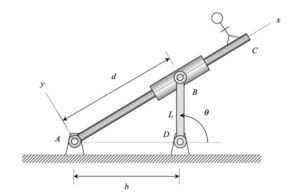
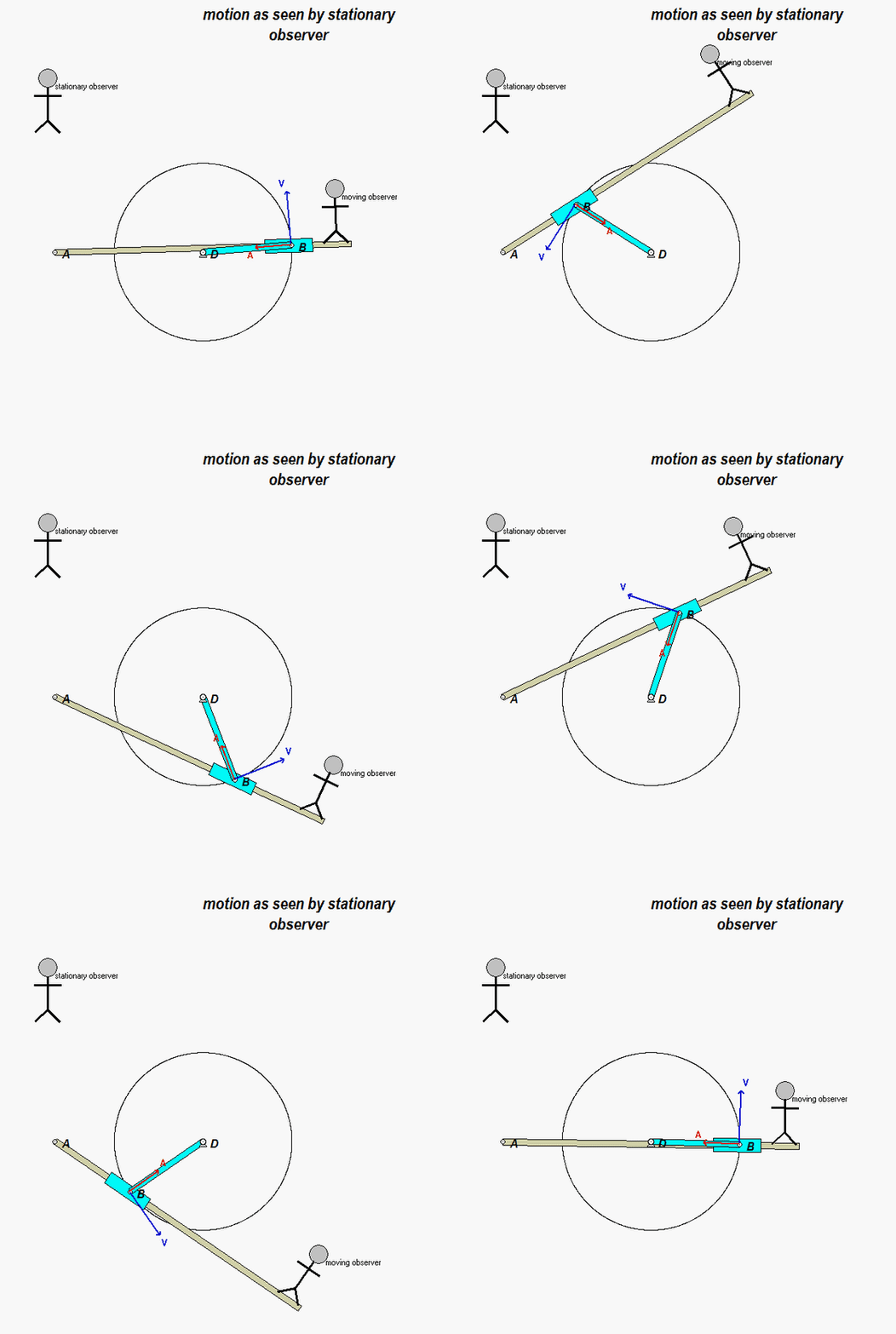
Let’s first take a look at the motion of point B. This motion of B is shown in the simulation results below.

The motion of B is circular, with the center of the path located at point D. This is expected since link BD is pinned to ground at point D.

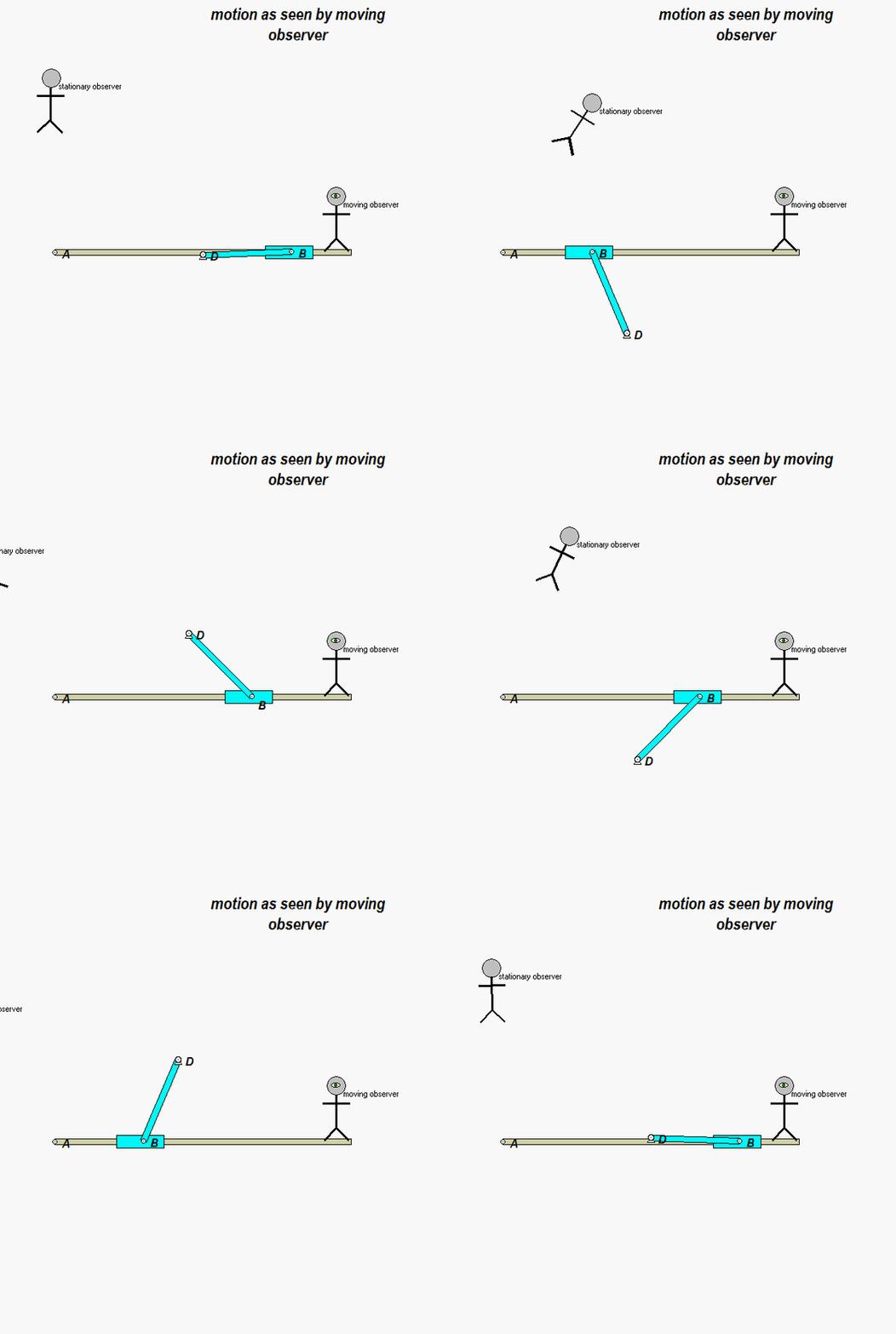
Now, let’s attach an observer to link AC. Keep in mind that this observer is unaware that they are moving. The motion of B that this observer sees is straight, with this straight path aligned with the collar sliding on link AC. Since the xy-axes are attached to AC, this relative motion is in the x-direction:

(vB/A)rel = vrel = d_dot i

(aB/A)rel = arel i = d_ddot i

where d_dot and d_ddot are unknowns (you will solve for these in your analysis). You can see this is the following animation shown from the perspective of the observer attached to link AC.


Homework H3.D – Sp 26

Problem statement
Solution video

DISCUSSION THREAD

Discussion

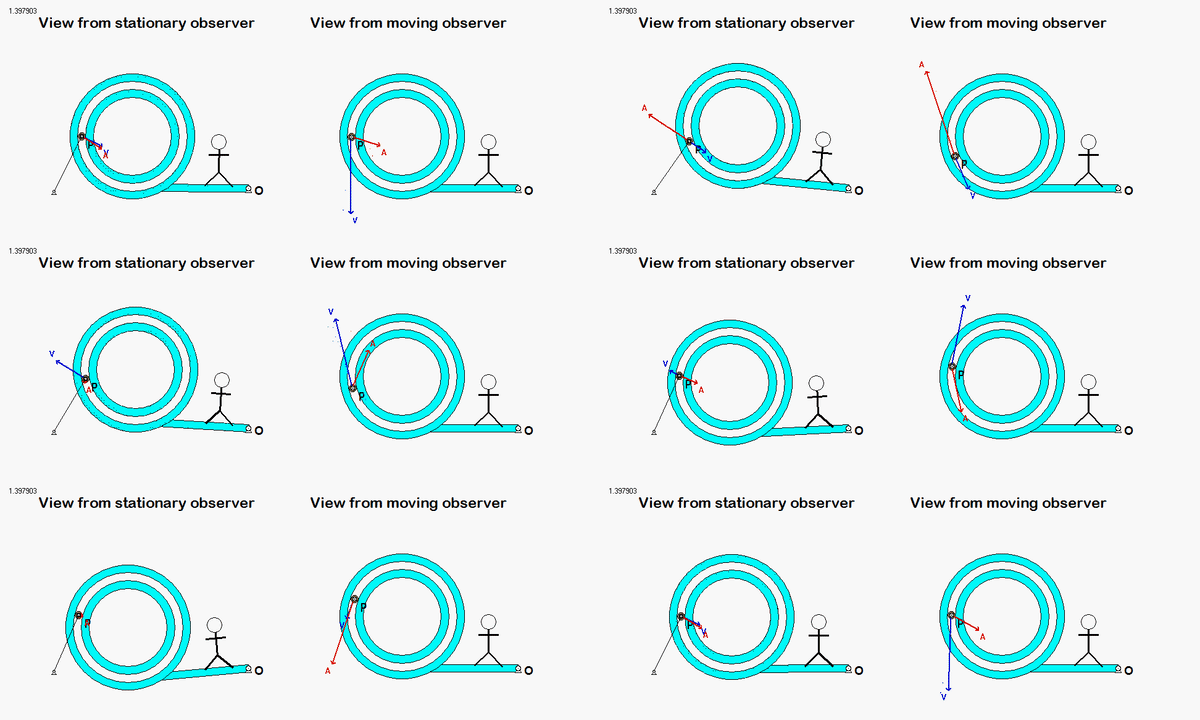
  • Shown above left is the motion of the mechanism as seen by a fixed observer. Note that the stationary observer sees P moving on a circular path centered at point A.
  • And, shown above right is the motion of P as seen by an observer attached to the slotted arm. Note that the moving observer sees P moving on a circular path centered at point C.

It is suggested that you employ the view of the observer on the slotted arm in your analysis.


Any questions?? Please ask/answer questions regarding this homework problem through the “Leave a Comment” link above.

Homework H3.A – Sp 26

Problem statement
Solution video

DISCUSSION THREAD

Any questions??


Discussion:

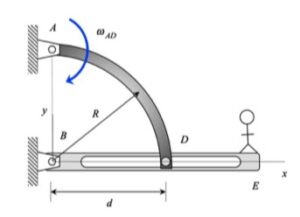
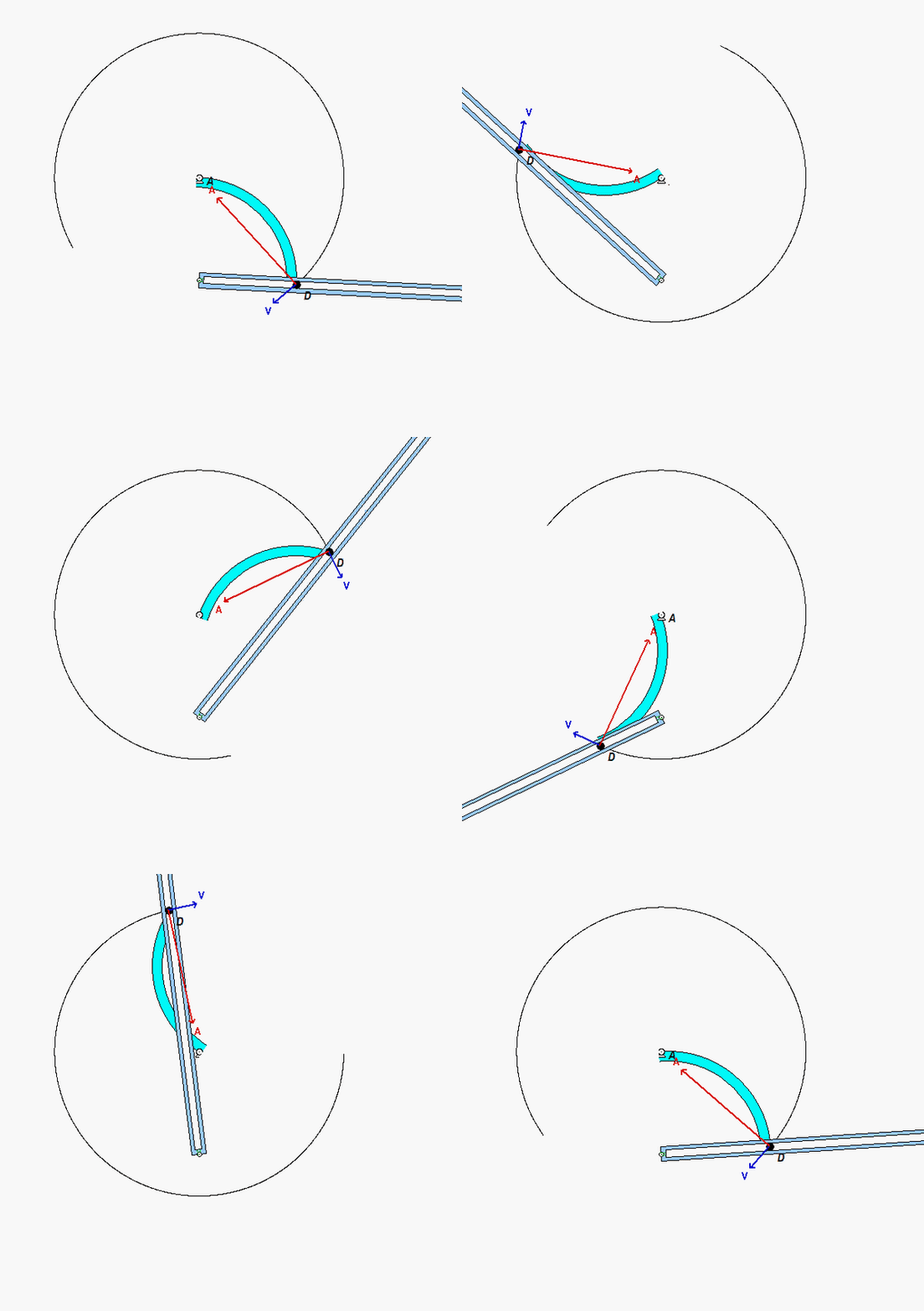
Let’s first take a look at the motion of point D. This motion of D is shown in the simulation results below.

The motion of D is circular, with the center of the path located at point A. This is expected since link AD is pinned to ground at point A.

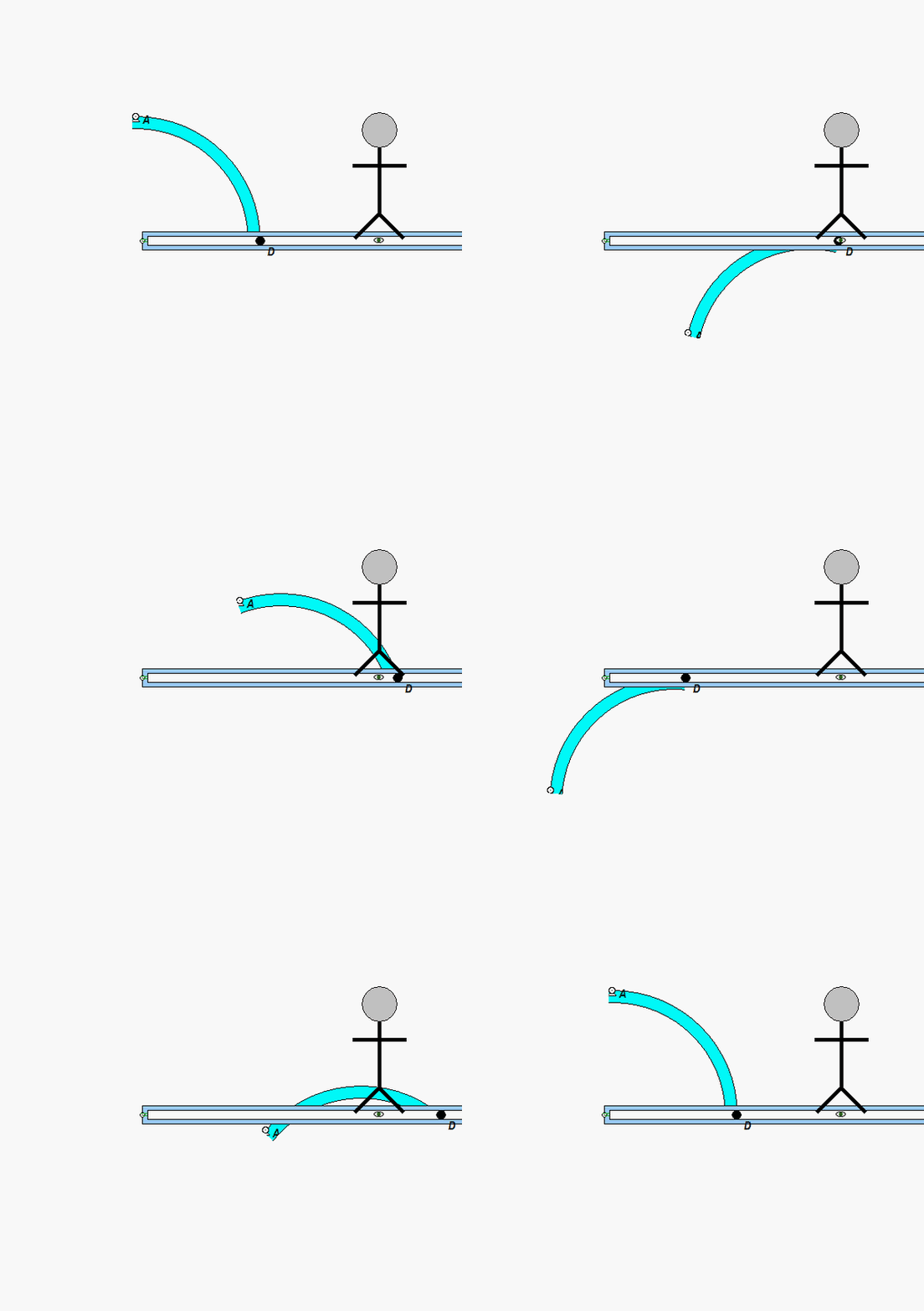
Now, let’s attach an observer to link BE. Keep in mind that this observer is unaware that they are moving. The motion that this observer sees is straight, with this straight path aligned with the slot cut into link BE. You can see this is the following animation shown from the perspective of the observer attached to link BE.


Homework H3.B – Sp 26

Problem statement
Solution video

DISCUSSION THREAD

Any questions?? Please ask/answer questions regarding this homework problem through the “Leave a Comment” link above.


Discussion

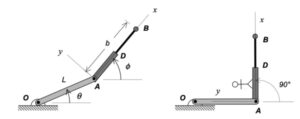
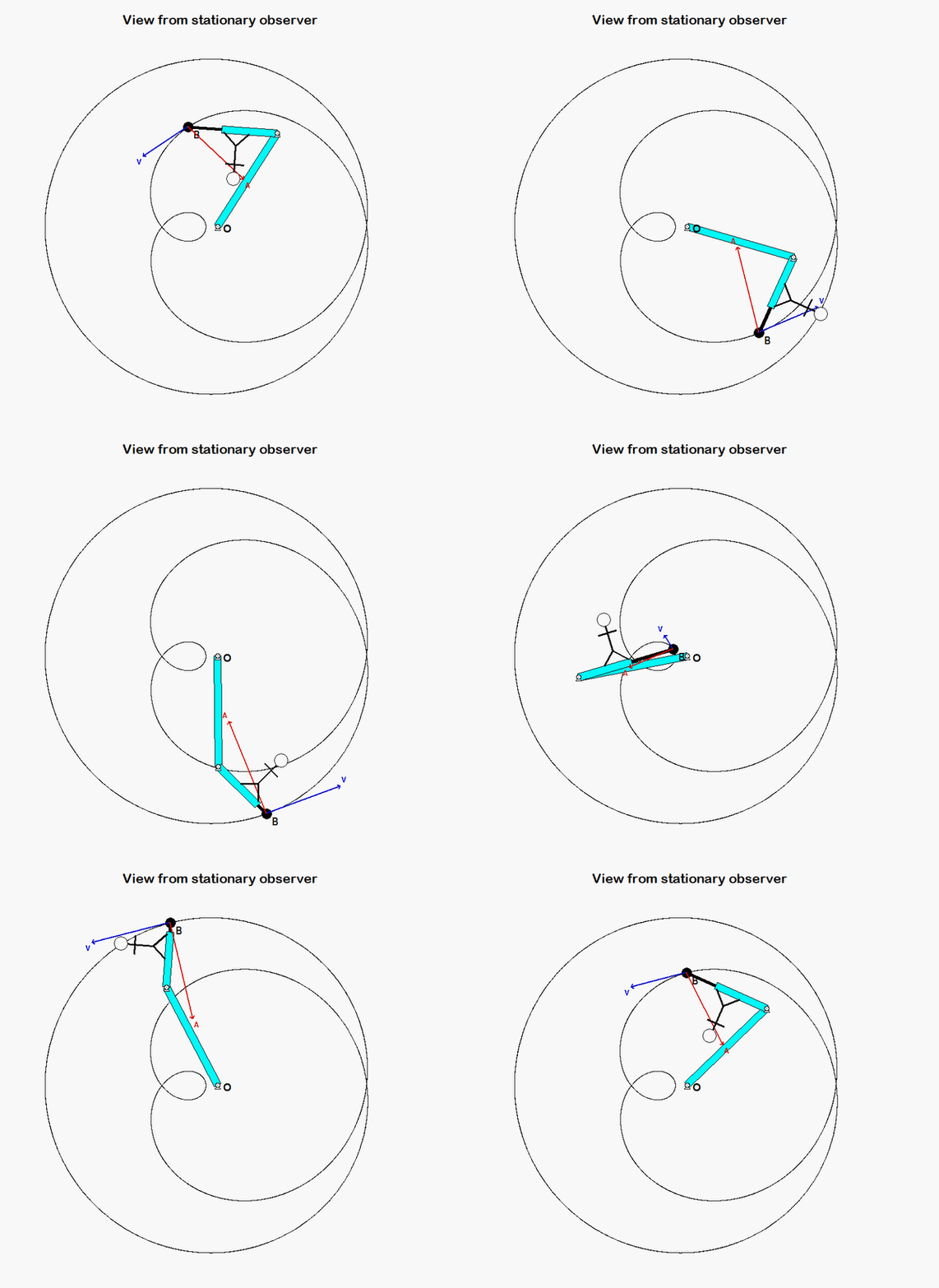
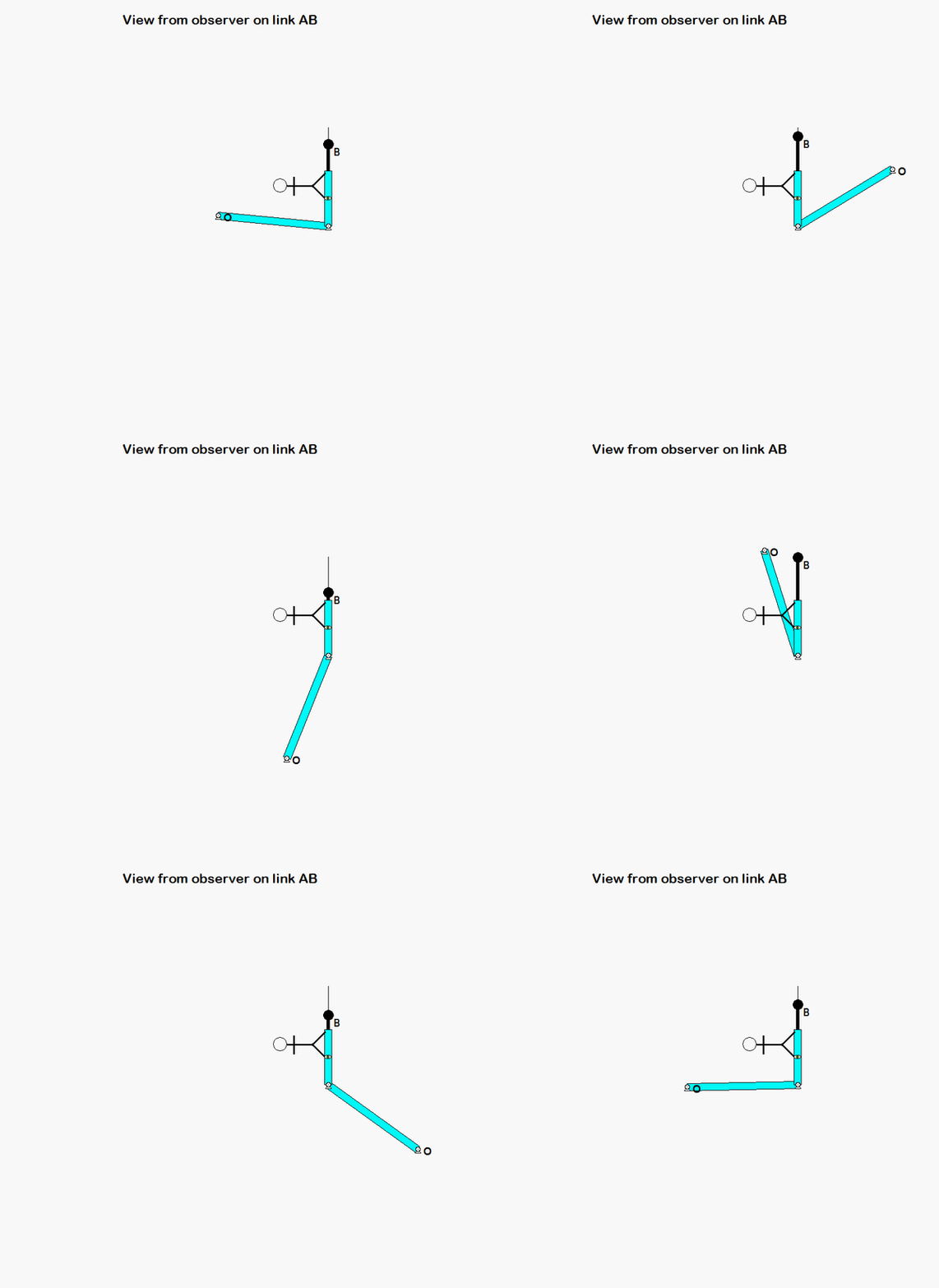
An animation from the simulation of the motion of the robotic arm system is shown above for a fixed observer. The motion of end-effector B is quite complicated, as can be seen. However, if we attach an observer to section AD of the end link of the arm, the observed motion of B is greatly simplified. In fact, the observer simply sees a back-and-forth motion of B in the x-direction, as shown in the animation below.

HINTS: The velocity of point B can be found from the following moving reference frame velocity equation:

vB = vA + (vB/A)rel + ω × rB/A

With the observer on link AD, we know the following:
vA = (L θ_dot) i
ω
  = φ_dot k
(vB/A)rel = b_dot i

Use similar logic for writing down the acceleration of B. Be careful in writing down the expression for aA ; in particular, a0. (A is traveling on a circular path with a constant speed.)