Predator-Prey Interactions
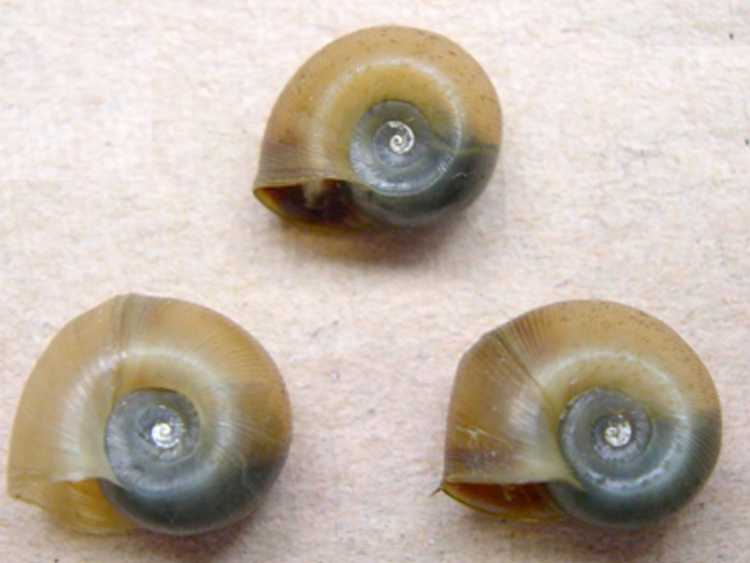
The risk of predation is perhaps the most pervasive form of stress in ecological communities and has substantial effects on the ecology and evolution of organisms and their communities. Using freshwater snails and their predators (e.g., crayfish, fish, insects) as a model system, the Hoverman Lab addresses the ecology and evolution of predator-prey interactions (i.e. inducible defenses). We have discovered that snails adaptively respond to the presence of predators by altering a complex suite of traits (i.e. behavior, morphology, life history). Importantly, snails are capable of identifying the specific predator species and their densities in the environment by eavesdropping on the chemical cues released in the predators’ waste products. The ability to detect specific predator species is critical for snails because predators vary in feeding mode. Recently, we documented that functionally different predator species are a major factor maintaining plasticity in defensive traits. While predator-induced defenses have clear advantages for prey, organisms are not infinitely plastic. We have documented that snails lose their ability to respond to environmental variation in predation risk as they age due to developmental constraints associated with shell development. Lastly, predators can impact prey by direct consumption (i.e. reducing their density) or through inducing phenotypic changes (i.e. inducible defenses). These impacts can cascade through larger communities that contain many predator and competitor species. Using a long-term mesocosm experiment, we have examined: 1) the relative importance of cascades that occur via changes in density versus traits (DMII versus TMII) and 2) the temporal dynamics in the magnitude of DMIIs and TMIIs.