Purdue Nutrition Science head and researcher reshapes understanding of iron deficiency through global work
Written By: Rebecca Hoffa, rhoffa@purdue.edu

For years, Laura Murray-Kolb, professor and head of Nutrition Science in the Purdue University College of Health and Human Sciences, has made strides in understanding iron deficiency in children and women of reproductive age — two groups that are statistically more susceptible to iron deficiencies according to the National Center for Health Statistics. While anemia is the most commonly thought-of form of iron deficiency, the condition across all its levels — mild, moderate or severe (anemia) — results in significant health consequences globally.
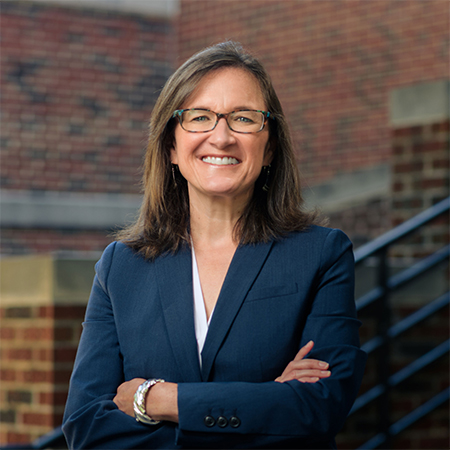
The goal of Murray-Kolb’s work is not only shaping scientific understanding of iron deficiency but also clinical applications and policies surrounding it.
“I’ve always been drawn to the biggest problems,” Murray-Kolb said. “When it comes to nutrients, iron deficiency is the number one micronutrient deficiency in the world. Iron is crucial to various components in the body. For that reason, having an iron deficiency can cause many health issues. … We keep finding that iron deficiency in the absence of anemia does have negative consequences. I think that is something that the medical community needs to recognize and understand, and I think that will then eventually lead to changing policy.”
One particular focus of Murray-Kolb’s work has been the impact of iron deficiency on brain function, whether that’s how it impacts new mothers’ interactions with their children or how it might affect a college student focusing in class.
“Iron deficiency has long been known to be a problem, primarily due to its role in the oxygen-carrying capacity of the blood,” Murray-Kolb said. “There’s been a lot of work in this area showing that it results in things like fatigue. But it has been understood now for several decades that iron is also needed for brain processes, and I became very interested in how iron deficiency might affect the brain.”
Murray-Kolb’s work on iron deficiency has taken her around the world because of iron deficiency’s worldwide prevalence, particularly in lower-resourced countries. She noted one of the most rewarding parts of her global work has been training researchers in other countries, helping them learn best research practices and new methods to generate data and discoveries in this area.
“I think it’s really exciting having the opportunity to do that capacity building, teaching them how to do the data collection and then watching them go into the communities and do such a beautiful job with it as they learn how exciting it can be,” Murray-Kolb said. “One of the first places that I had opportunity to do that was in Nepal, and that was especially rewarding.”

work in Nepal (pictured). (Photo provided)
For Murray-Kolb, the effect her research has had on real women and children is the thing that really energizes her work.
“One of the most exciting moments for me is when I get a random phone call from a woman who will say, ‘I just saw the results of one of your studies. I have suffered from iron deficiency for a long time’ or ‘I’ve been feeling off and I’m not quite sure what it is,’” Murray-Kolb said. “Sometimes they’ll say, ‘For a long time my hemoglobin was tested, and I was told it was normal so I wasn’t iron deficient, but it wasn’t until I finally got ferritin or another biomarker of iron status tested that I realized I was actually really low and started changing my diet or taking a supplement to replenish my iron status, and all of a sudden I felt so much better.’ Those are the stories that excite me the most because I feel like we’re having a direct impact on the individuals themselves.”
In recent years, Murray-Kolb has expanded her work to look at women in perimenopause, who have also been found to struggle with iron deficiency.
“Years ago, when I had first published my dissertation data and found that women of reproductive age who were iron deficient had deficiencies in their ability to pay attention, memory and learning, the findings got some press coverage and a woman actually came to see me, and she was going through menopause. She said, ‘Your findings were really interesting, but I have one request: Please don’t forget about women at the older ages.’ She put that little bug in my ear, and I came back to it from time to time, thinking, one day I’m going to do a study to look at that.”
“I finally had the opportunity to do so and that’s a study that we’re carrying out now where we are trying to understand whether or not women who are going through the perimenopausal period — who are already experiencing so many changes in their life, including cognitive brain type changes — have symptoms that might be caused by iron deficiency. In other words, is iron deficiency adding to the problems they’re experiencing or the symptoms they’re having and might giving them an iron supplement be of benefit?”
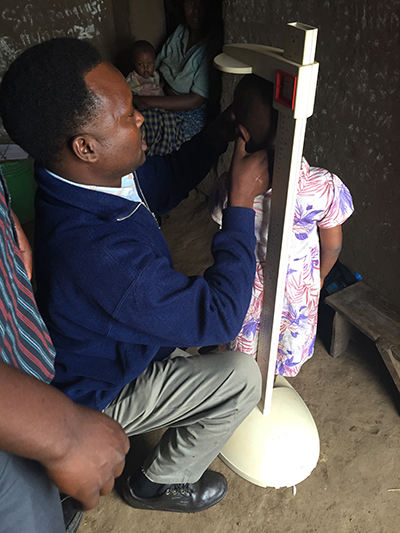
of a child in Tanzania. (Photo provided)
One of Murray-Kolb’s graduate students, Julia Choi, was the perfect student to lead this study forward as she earned her dual-title degree in nutrition science and gerontology.
In addition to her line of research on perimenopausal women and the continuation of her current work with women of reproductive age, Murray-Kolb and another one of her graduate students, Elina Dawoodani, are also beginning a study examining iron and childhood obesity.
“We know there’s a relationship between iron and obesity — this has been known for a while now,” Murray-Kolb said. “We know that obesity induces what we call a low-grade systemic inflammation. We also know that when our bodies are in a state of inflammation, we actually absorb less iron. So, the prevailing thought is that if an individual is obese, that induces inflammation, and that inflammation then induces a reduction in iron absorption, so therefore the person is more prone to iron deficiency. I think that’s true, but we’re wondering if there’s perhaps another pathway also that if iron deficiency is causing certain changes in the brain and our brain plays a large role in our ingestive behavior, maybe iron deficiency induces changes in the brain, which then changes the way we eat, and that leads to obesity.”
Murray-Kolb was recognized in the spring with the prestigious Lu Ann Aday award, which honors outstanding research that has contributed to the health and well-being of society. The award has allowed her to reflect on all the mentors, colleagues, graduate students and research participants who have helped shape her work leading up to this point.
“I feel almost like you shouldn’t be allowed to get an award for just doing something you love doing,” Murray-Kolb said with a laugh. “When I received news that I was selected for this award, I was overwhelmed with gratitude, and it made me reflect on the fact that we do not build a research career in isolation. Science — good science and discoveries that impact people and that have the potential to change policy — takes a real team effort.”
Discover more from News | College of Health and Human Sciences
Subscribe to get the latest posts sent to your email.