Purdue HHS Extension’s rapid response to tornadoes, floods helps Hoosiers statewide
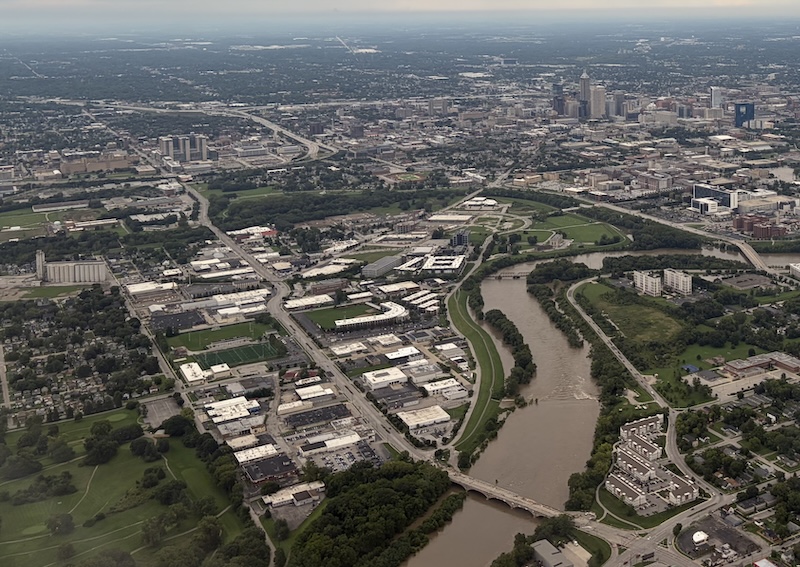
A flooded White River affected multiple Indianapolis neighborhoods after strong storms ripped through Indiana in August. Purdue Extension educators and leaders worked fast to help their communities recovered in the aftermath.(ONUnicorn, via Wikimedia Commons, CC BY 4.0)
Written by: Tim Brouk, tbrouk@purdue.edu
When tornadoes and flooding struck Indiana on Aug. 11-12, Purdue University Health and Human Sciences (HHS) Extension educators across the state quickly shifted into disaster-response mode, providing residents with practical information about food, water, generators, scams and other emergency concerns.
In Lake County, where tornadoes and winds of about 100 mph damaged homes, downed trees and power lines, and left thousands without electricity, Purdue HHS Extension lead regional educator Linda Curley grabbed her iPhone. She flipped the camera to selfie mode and recorded short videos about food safety, generator safety, boil-water advisories and storm-related scams for the Purdue Extension Lake County Facebook page. Followers quickly shared the videos with other community pages.
“It was simply driven by the fact that I was experiencing what everybody else was experiencing,” Curley said. “I had so many questions that I knew others would have as well.”

Linda Curley
The response reflected Purdue Extension’s long-standing disaster preparedness work while taking advantage of social media to deliver critical information quickly and directly to affected residents.
The storms affected 54 of Indiana’s 92 counties, with widespread damage from two tornadoes, a derecho and flooding from 9 to 10 inches of rain in some areas. Seven people died statewide from the severe weather.
Curley saw immediate needs beyond the initial storm damage. Reports of fires caused by improperly placed generators underscored the importance of reminding residents to keep gas-powered generators outside and away from homes.
Flooding and prolonged power outages also created food-safety concerns. Curley’s videos urged residents to discard perishable food that had been without refrigeration and any food that had come into contact with floodwater. They also urged people to be cautious about scammers offering tree removal and other storm-recovery services.
Turning a local experience into statewide preparedness
Orange County Extension educator Veronica Portillo encountered another critical issue: communication about boil-water advisories.
Portillo said a boil-water advisory in her home county, Crawford, had been announced, but neither her water utility company, health department or any other agency contacted her. She learned about it through a friend’s Facebook post — after the advisory had already been lifted.
That experience prompted her to investigate how Indiana communities communicate boil-water advisories and compile resources for Extension educators and community partners.
“I put together information about notification methods, IDEM (Indiana Department of Environmental Management) resources, private wells, emergency drinking water procedures and other resources that educators could use when talking with residents,” Portillo said.
Portillo viewed the experience as an opportunity to improve preparedness. She shared her findings with Extension educators statewide, encouraging them to consider whether residents receive timely notifications through phone calls, texts, email, social media, local news, door-to-door efforts or emergency notification systems.
“Are residents without reliable internet or are those who don’t use social media being reached?” Portillo asked. “And is there a clear process for communicating both the issuance and lifting of an advisory?”
Connecting families with food assistance
Disaster recovery also created challenges for Hoosiers who rely on the Supplemental Nutrition Assistance Program (SNAP).
Blake Connolly, nutrition education program assistant director, helped produce a bilingual, one-page handout for food pantries and shelters statewide explaining how families could seek replacement SNAP benefits for food lost because of flooding or power outages.
“An important part of our work in Extension is being a good collaborator with our state partners and helping connect the people we serve with the programs and opportunities available to them,” Connolly said.
The effort was particularly time-sensitive because SNAP households generally have 10 days after losing food to report the loss and submit documentation for replacement benefits. For a family whose food was lost Aug. 11, that window could close around Aug. 21 — while the family was still dealing with flooding, property damage, power outages, cleanup or displacement.
“That’s why we felt a sense of urgency to get this information into communities through Extension staff and our local partners,” Connolly said.
Building resilience

Michael Wilcox
Recently appointed assistant Extension director and program leader for health and human sciences and community development, Michael Wilcox had barely unpacked his stapler and coffee mug in his new office before the first storms hit northwestern Indiana. He quickly became aware of how the work done by his team will help Hoosiers recover, and the efforts will lay the groundwork for faster and better recovery for future severe weather.
The experience, he said, also highlighted opportunities for Purdue HHS Extension to strengthen its disaster resources and make them available in multiple formats on Purdue Extension’s Indiana Prepared website so communities can access reliable information when they need it most.
“It just reminds us of the importance of disaster preparedness for families — it’s better to have a plan and never use it than to need it and not have it — and of disaster resilience for our communities, so they can respond effectively and in a timely manner,” Wilcox said.
Discover more from News | College of Health and Human Sciences
Subscribe to get the latest posts sent to your email.