From tornados to fires to floods, Purdue faculty and Extension educators partner to support family resilience after natural disasters
Written By: Rebecca Hoffa, rhoffa@purdue.edu

A tornado rakes over Whiteland, Indiana, leaving destruction in its path in 2023. New Pekin, Indiana, experiences floodwaters strong enough to wash away a camper in 2025. Damage and destruction sweep through Lake Village, Indiana, after a tornado in 2026. These are just a few of the natural disasters affecting Indiana residents, and even more are happening throughout the United States.

Kristine Marceau(Photo provided)
Kristine Marceau, associate professor in the Purdue University Department of Human Development and Family Science (HDFS), is leading the charge alongside Cezanne Elias, HDFS clinical associate professor, and Purdue Extension to mitigate the effects for families that often linger beyond the initial emergency response efforts.
“There are resources like FEMA or Red Cross — those immediate responders who come in and help families get back on their feet, but that is a time-limited resource,” Marceau said. “There’s actually a long period of time between the end of those supports and when the families feel like they are in their new normal. That transition period is a place where I think we can help support their resilience, help them grow more connected as a family and help the well-being of all family members and the community.
“We’ve been working in lockstep with Extension to figure out what’s the best way to do this so it’s most applicable for families in this situation. That’s what this project is really: adapting the resource for this use case and making sure that we’ve got a durable plan to hopefully help families recover better and stronger.”
The project is an expansion of the Families Tackling Tough Times Together program, which was launched in 2020 by the College of Health and Human Sciences to support families during the COVID-19 pandemic.
“Families Tackling Tough Times Together, when that originally was developed six years ago, there were a lot of Extension professionals who were really involved in that process,” said Kelsie Muller, Human Development and Family Science Extension specialist. “We’ve done some different revisions to it, but with this one that we’re working on right now, Kristine came to me because of a grant opportunity where we would revise the materials to be used in the aftermath of disasters. With Purdue Extension being heavily involved in all the communities across the state, we’re an ideal partner in that. A lot of our local educators have connections with their emergency management teams. It’s been a good partnership.”

Kelsie Muller(Photo provided)
Because Extension plays an important role in disseminating the resources, project stakeholders have also made sure to involve them in the development of the materials through co-design workshops. Linda Curley, Extension educator in Lake County, has also been instrumental in development of all aspects of the project and especially the resource manual.
“I think when we look at the longevity of educators, they really do know their community,” Curley said. “They know the touch points, the people who are the movers and shakers, how to get this information out, who are the most vulnerable populations — we already have our finger on that. But also, as we think about a method of disseminating information, we can extend our reach by pulling in our community partners. We can extend our reach by pulling everybody into the conversation. We do that really well.”
While the project kickoff resulted from a U.S. Department of Agriculture grant, Marceau noted the significant uptick in natural disasters over recent years makes this resource particularly timely.
“Disasters are increasing and families are in need of support, and it can be challenging for some families to find that community support,” Marceau said. “Also, Extension educators are always interested and excited in having new programs that they can use to help their clientele, and so that seems like a perfect marriage of need and resources.”
For Muller, seeing everyone come together, from Extension educators to Purdue faculty, and the motivation each brings to the table has made the development of this project particularly exciting.
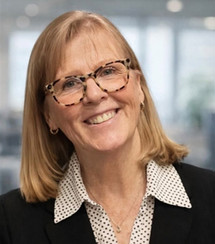
Linda Curley(Photo provided)
“I think I’ve been most excited to see how educators have really re-energized with being able to work creatively,” Muller said. “Also, they’re being asked for input on materials that they’re going to use, and that doesn’t always happen. I think this has allowed educators to use some of their other talents that they have and their knowledge and share it. There are so many great ideas that come out of those meetings and conversations, and I can see their excitement with it.
While the project is starting in Indiana’s 92 counties, partnerships with organizations such as the Extension Disaster Education Network (EDEN) will help the program reach other areas beyond the Hoosier state.
“We’re partnering with EDEN, which is a nationwide disaster recovery network providing resources and education for disaster relief and recovery,” Marceau said. “They are also interested in having more of this intangible emotional well-being support, and they’ve been very responsive and helpful. We’re still deciding where we’re going to house these materials and who’s going to be in charge of them. But it’s going to at least be statewide, and we’ll probably also have some national reach because of EDEN.” The resource is currently in development. Once available, individuals can contact their local Extension educator for more information.
Discover more from News | College of Health and Human Sciences
Subscribe to get the latest posts sent to your email.