Purdue Public Health, Nursing and IU School of Medicine team work to provide smoking cessation, lung cancer screenings for homeless population
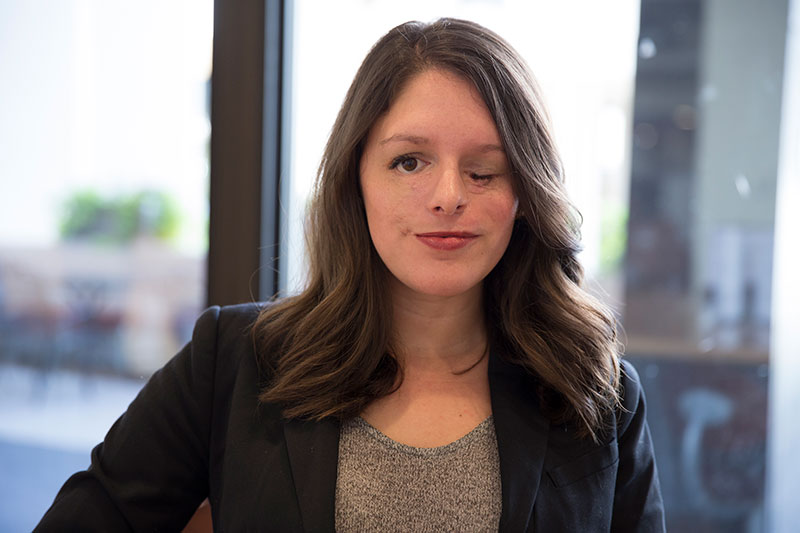
Natalia Rodriguez

Tracy Case
Written by: Tim Brouk, tbrouk@purdue.edu
Tracy Case will never forget one of the most shocking data points in her research career: Her survey filled out by almost 150 homeless individuals in Lafayette and Indianapolis revealed approximately 70% of the respondents are tobacco smokers, mostly puffing on cigarettes.
That is about seven times higher than the approximately 10% of the U.S. overall population who are cigarette smokers. With such widespread cigarette use in a time where most U.S. individuals have put down the packs, the PhD student in the Purdue University Department of Public Health has sought out how homeless individuals are impacted by tobacco use and if there is a way to screen them for lung cancer.
“I was kind of initially questioning if (the data) was even real,” Case recalled. “I think it’s a very alarming problem. … I think this is definitely an area where some work is being done, but it’s very minimal. I do believe this is a field that needs some attention.”
Case is working with Natalia Rodriguez, associate professor of public health; Janelle Tipton, clinical associate professor of nursing; and Dr. Nasser Hanna, professor of medicine at the Indiana University School of Medicine. Hanna also leads End Lung Cancer Now, an initiative of the IU Simon Comprehensive Cancer Center and a statewide network of Indiana patients, survivors, caregivers, providers, researchers and community advocates. The project and End Lung Cancer Now are funded by the Tom and Julie Wood Family Foundation.
The researchers want to see how viable lung cancer screenings are for the homeless via End Lung Cancer Now’s mobile unit. Data already collected revealed most respondents are interested in receiving lung cancer screenings and want to kick cigarettes in the butt.
“I was thinking they probably just get used to it and don’t want to quit. It’s actually quite the opposite. A lot more people are really wanting to quit,” Case said. “That’s a strong interest across the board. They actually understand it’s not good for them.
“Many are motivated to quit, but I guess it’s just a lack of resources. They don’t know there are smoking cessation programs, or they’re not aware of how to get connected with those programs. They don’t know how much it may cost them if at all. They’re not sure. So, they need a lot of help on that as well.”
Why so much smoke?
When Case and Rodriguez combed through the qualitative data, they found many different reasons why so many respondents still smoke: stress and anxiety, addiction issues and appetite suppression. Many started smoking at an early age.
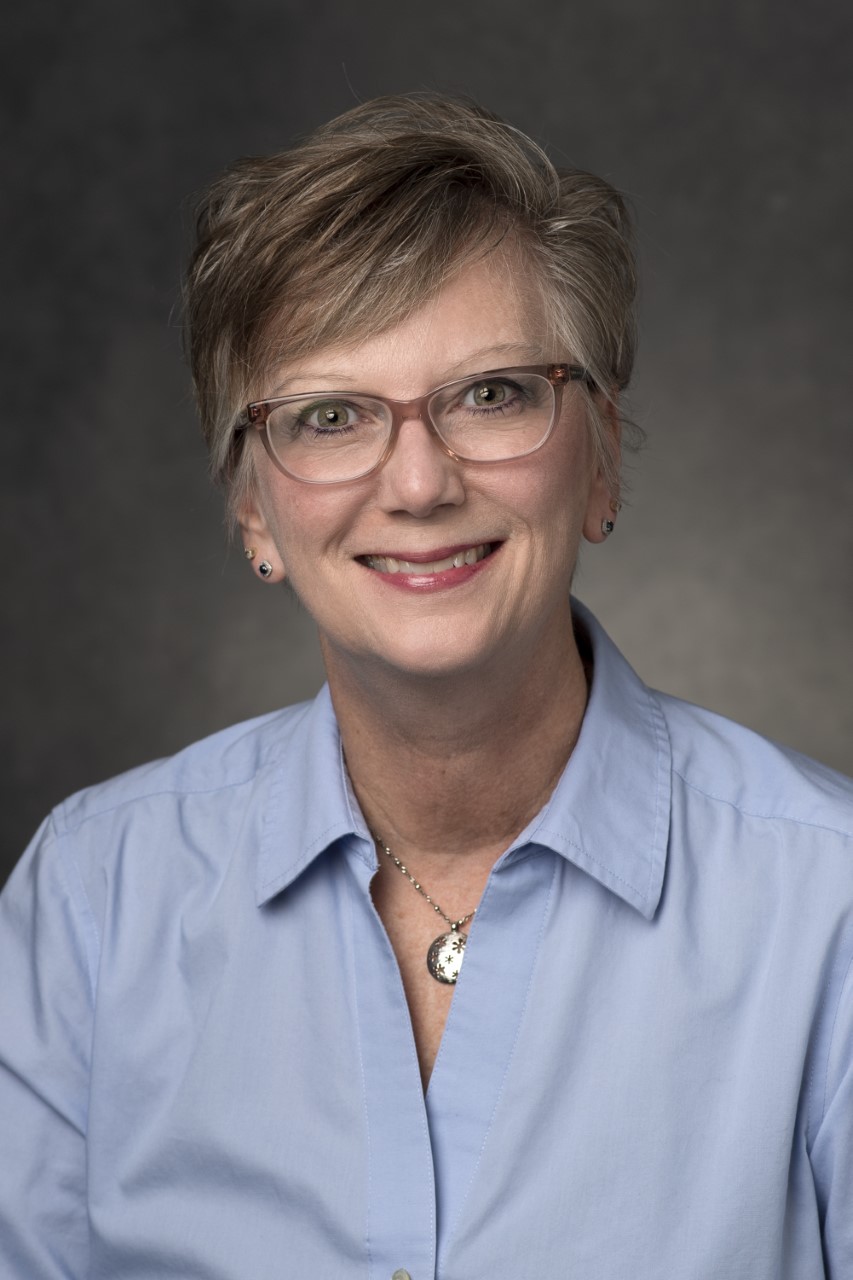
Jan Tipton
Case also realized the role cigarettes play in the culture of the Indiana homeless population. The cigarettes are part of socialization and relaxation for the unhoused individuals.
Tipton has led various wellness screenings of LTHC Homeless Services guests with her Purdue nursing students for years. She also has worked as an oncology nurse. Tipton said educating the population on how to quit and how to recognize signs of lung cancer is key. Like in Case’s survey, Tipton finds her LTHC patients to be genuinely interested in their health, and they wish they could quit smoking.
“It’s a stressful time for them. It is one area that they use for stress relief,” said Tipton of homeless individuals’ prevalent use of cigarettes. “I think that’s going to be an important adjunct to Tracy’s project — sort of improving those services and providing opportunities to become tobacco-free through the products, through getting them connected through medications, potentially behavioral therapies, peer support groups.”
Screening challenges
Current screening guidelines exclude many younger smokers and people who quit more than 15 years ago, even though they may still face elevated risks.
“There’s also very little kind of awareness or even just know-how in terms of accessing a screening,” Rodriguez said. “Many people don’t even realize that they’re eligible or that it’s something they should be doing or how often or when or how.”
A lung cancer screening begins with a CT (computed tomography) scan, which could reveal other maladies. If lung cancer — or a different serious condition — is detected, it will mean more appointments, which could be a challenge for an unhoused person.
“It might find lung cancer; it might find a breast lump; it might find some other issues,” Rodriguez said. “So, what do you do with that information in this population that’s already having so many access barriers?
“It’s not usually a one-and-done scan. It usually requires repeat scans. Being able to follow up with this population is really tricky. Sometimes they have phones; sometimes they don’t. Sometimes the phones get stolen; sometimes they get disconnected. Sometimes people get housed, which is great, but then you lose contact. So that’s a really tricky part of it.”
A mobile unit engaging with the homeless population like the one used by End Lung Cancer Now would be an ideal solution. Logistics, legalities and processes are still to be determined, however.
“What Tracy’s project is doing is trying to figure out what would it take to implement something like this and what are the main barriers and what would we need to address first before this can be a thing,” Rodriguez said.
Breaking the stigma
Hanna was surprised to learn most respondents own cellphones, allowing for would-be unhoused patients to be contacted for follow-up appointments. And many have health insurance, usually in the form of Medicaid or Medicare. Coupled with the unhoused population’s desire to quit smoking, according to Case’s surveys, the barrier of willing participants has been overcome.
“It’s not responsible to do all this screening unless you can follow up on those results and work them up,” Hanna explained. “So, do they have medical insurance? And it turns out the majority of them do. A majority have medical insurance. A majority of them have cellphones. A majority of them are eligible. A majority of them are interested. So now we are in the next phase of the study, which is to understand what the other barriers are from the healthcare professional standpoint. And that’s through structured interviews with a number of key stakeholders. That part is still being done.”
End Lung Cancer Now’s mobile screening unit has visited 45 of Indiana’s 92 counties but has yet to stop at a homeless shelter. Hanna hopes the Purdue College of Health and Human Sciences’ research changes that.
“Lung screening has to be done in a responsible way,” Hanna said. “My goal with this is to determine if we can do a pilot study in a group of people who meet certain eligibility criteria to do lung screenings using our mobile lung program (and get the mobile unit) to come to the homeless shelters, to come to where they are and not require them to navigate their way to the hospital.”
Discover more from News | College of Health and Human Sciences
Subscribe to get the latest posts sent to your email.